





Six-Figure Career Path Finder
Select the statement that best describes your strengths or interests to find your ideal path to $100k.
Your Recommended Path
The old script says you need a four-year degree to hit a six-figure salary. But let's be honest: that script is outdated. In 2026, the market cares more about what you can actually do than a piece of paper from a university. Whether you're tired of your dead-end job or you never stepped foot on a campus, hitting the $100k mark is entirely possible if you stop chasing credentials and start chasing high paying skills.
To make this happen, you need to understand the concept of Skill-Based Hiring, which is a recruitment strategy where employers prioritize demonstrated competencies and portfolios over traditional academic degrees. Companies like Google, Apple, and Tesla have already shifted toward this model because they found that a certification in a specific tool often predicts job performance better than a general liberal arts degree.
Quick Wins for Your Six-Figure Journey
- Focus on "High-Leverage" skills: things that produce a direct, measurable increase in revenue for a company.
- Build a "Proof of Work" portfolio: show, don't tell.
- Use specialized Online Courses to bridge the knowledge gap quickly.
- Network in the "Hidden Job Market" where referrals beat resumes.
High-Income Paths That Don't Require Degrees
You can't just pick any job; you need a role where the ceiling is high and the demand outweighs the supply. Here are the most reliable paths right now.
Digital Marketing and Growth Hacking
Companies are desperate for people who can actually grow their revenue. If you can run a Meta Ads campaign that turns $1 into $5, nobody cares where you went to school. Specialist roles like Performance Marketers or Growth Leads often clear $100k because they are directly tied to the company's profit.
To get here, you don't need a marketing degree. You need a Google Ads Certification and a few real-world case studies. Start by managing a small budget for a local business for free, get a massive win, and use that result as your ticket to a high-paying agency role.
Cybersecurity and Cloud Architecture
Every business is now a tech business, and every tech business is terrified of being hacked. Cybersecurity is a field where certifications are the gold standard. A professional with a CompTIA Security+ or a CISSP certification can often outearn a mid-level manager with an MBA.
The logic is simple: the cost of a data breach is millions of dollars. Paying a skilled professional $120k to prevent that is a bargain for a corporation. Focus on cloud platforms like Amazon Web Services (AWS) or Microsoft Azure to maximize your market value.
Sales and High-Ticket Closing
Sales is the fastest way to $100k without a degree because it's based on a commission structure. If you can sell a $50,000 software package, your income isn't capped by a salary bracket; it's capped by how many deals you can close. High-ticket closing involves selling expensive services-like consulting or enterprise software-to wealthy clients or businesses.
You can learn the psychology of persuasion through specialized bootcamps or by starting as a Sales Development Representative (SDR). The transition from SDR to Account Executive (AE) is where the six-figure magic happens.
| Path | Primary Skill Required | Top Certification/Tool | Time to Entry | Income Potential |
|---|---|---|---|---|
| Digital Marketing | Conversion Rate Optimization | Google Ads / Meta Blueprint | 6-12 Months | High |
| Cybersecurity | Network Defense | CompTIA Security+ / CISSP | 12-24 Months | Very High |
| High-Ticket Sales | Persuasion & Negotiation | Sales bootcamps / Experience | 3-6 Months | Unlimited |
| UX/UI Design | User Psychology | Figma / Adobe XD | 6-12 Months | High |

The "Certification Loop" Strategy
Since you don't have a degree, you need a different way to signal your expertise. The most effective method is the Certification Loop. Instead of spending four years on a general degree, spend three months mastering a specific tool, get certified, and immediately apply that skill to a freelance project.
For example, if you want to enter the data world, don't go back to school for a stats degree. Learn SQL and Tableau via an intensive online course. Build a dashboard that analyzes a real dataset (like public transport trends in Dublin or stock market volatility), and post it on LinkedIn. This proves you can do the work, which is the only thing a hiring manager actually cares about.
Avoiding the "Low-Skill Trap"
A common mistake people make when trying to earn more without a degree is falling into the low-skill trap. This happens when you choose "easy" online jobs-like basic data entry, generic virtual assistance, or low-level transcription. These jobs are easily automated by Artificial Intelligence and have a very low income ceiling.
To hit $100k, you must move toward "Complex Problem Solving." A virtual assistant who just schedules meetings makes $20 an hour. A virtual assistant who manages a company's entire CRM system, optimizes their email funnel, and tracks lead attribution can charge $100+ an hour. The difference is the complexity of the problem they solve.
Building a Portfolio That Outshines a Diploma
Your portfolio is your new degree. If you are a designer, a Behance or Dribbble profile is your transcript. If you are a developer, your GitHub repository is your GPA.
When building your portfolio, don't just show the final product. Show the process. Explain the problem you were solving, the tools you used, and the specific result you achieved. Instead of saying "I designed a website," say "I redesigned the checkout flow for an e-commerce store, which reduced cart abandonment by 15% and increased monthly revenue by $2,000." That is the kind of language that triggers a six-figure offer.
The Psychology of Negotiating a Six-Figure Salary
Once you have the skills and the portfolio, you have to handle the money conversation. Many people without degrees suffer from "imposter syndrome" and accept lower offers because they feel they "lucked into" the job. Stop doing that. You are not being paid for your education; you are being paid for the value you create.
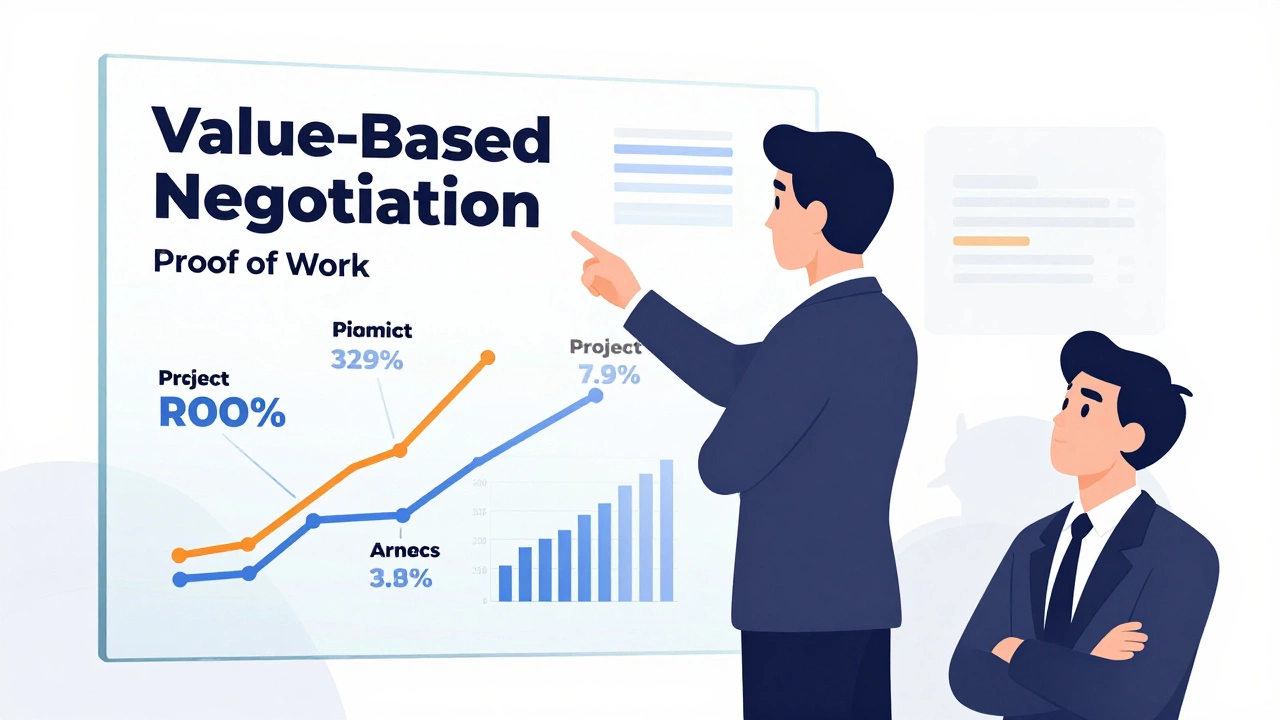
When negotiating, never talk about your needs or your lack of a degree. Talk about the ROI (Return on Investment) you bring. If you can show an employer that hiring you will save them $200k in wasted ad spend or prevent a $1M security breach, asking for $100k is actually a bargain for them. Focus the conversation on outcomes, not credentials.
Is it actually possible to get hired without a degree in 2026?
Yes. The shift toward skills-based hiring has accelerated. Many top tech and creative firms have removed degree requirements from their job postings, focusing instead on technical assessments and portfolios. The key is to possess a specialized skill that is in high demand and low supply.
Which online courses are most respected by employers?
Industry-recognized certifications are generally more valuable than generic certificates. For cloud, look at AWS or Azure certifications. For security, CompTIA and CISSP are gold standards. For marketing, Google and Meta's official blueprints carry weight. The most respected "courses" are those that lead to a verifiable industry credential.
How long does it take to reach $100k starting from zero?
Depending on the path, it usually takes 1 to 3 years. The first 6-12 months are spent in "aggressive learning" and building a portfolio. The next year is often spent in an entry-level or mid-level role where you prove your value. Once you have 1-2 years of documented success, you can pivot to a high-paying role or freelance for multiple clients.
Can I reach this income level through freelancing?
Absolutely. In fact, freelancing is often faster because you can set your own rates. The trick is to move from "hourly billing" to "value-based pricing." Instead of charging $50/hour, charge $5,000 for a project that solves a specific, high-value problem for a client.
What if I have no technical skills at all?
Start with sales. Sales is a "soft skill" that can be learned quickly and has the lowest barrier to entry. Once you are making good money in sales, you can use that financial stability to invest in more technical certifications or specialized training without the stress of poverty.