




Spaced Repetition Schedule Calculator
Calculate when to review your material based on the spacing effect to maximize memory retention. Enter how many days since your last study session.
Enter your study session details to see your recommended review schedule.
You’ve got three days until your exam. You’ve read the notes. You’ve highlighted the key points. But when you close your book, nothing sticks. Sound familiar? You’re not lazy. You’re just using the wrong methods. Memorizing faster isn’t about cramming harder-it’s about working with how your brain actually learns. The good news? Science has figured out what works. And it’s not what most students do.
Stop Rereading. Start Retrieving.
Rereading your notes feels productive. It looks like you’re learning. But studies show it’s one of the least effective ways to memorize. Your brain gets fooled by familiarity. You think, ‘I’ve seen this before,’ but that’s not the same as remembering it on demand.
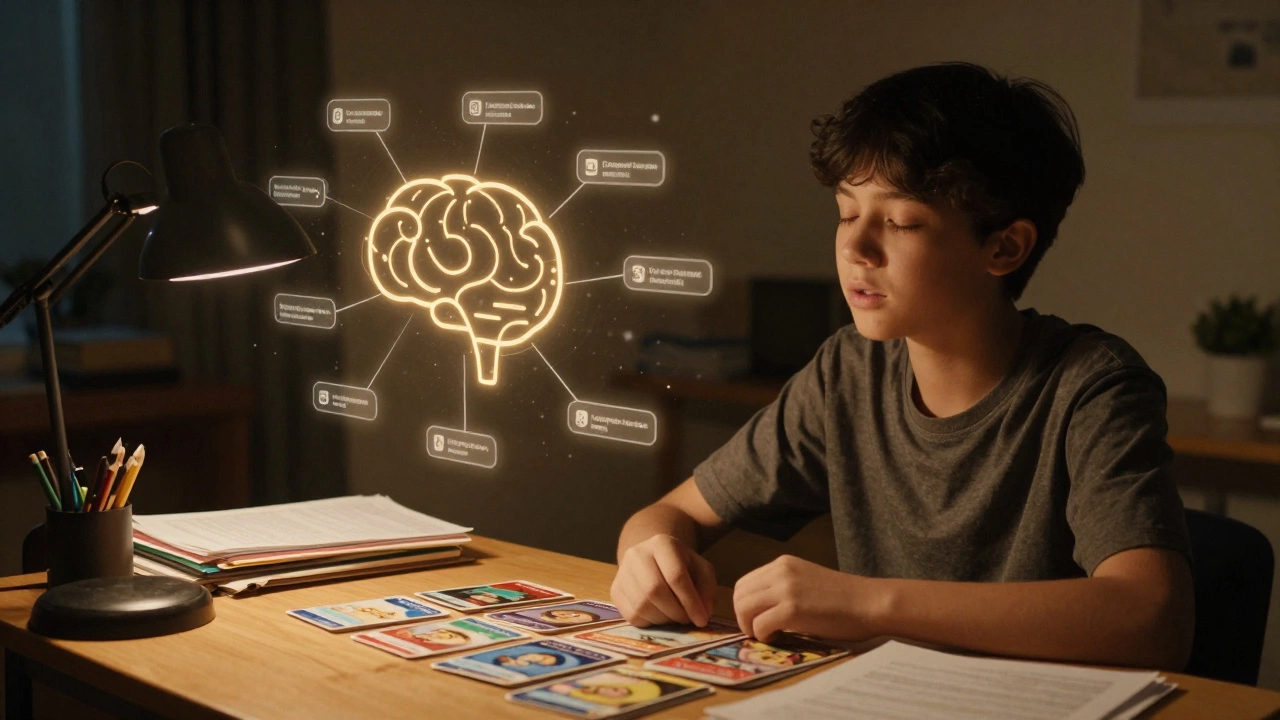
What works better? Retrieval practice. That means testing yourself-out loud, without notes. Flashcards are the simplest tool for this. Write a question on one side, the answer on the other. Quiz yourself. If you can’t recall it, flip the card. Don’t just glance. Force your brain to pull the answer out. Every time you do this, you strengthen the memory pathway.
Try this: After reading a section, close the book. Write down everything you remember. Then check. You’ll be shocked at what you missed. That gap? That’s where your brain needs work. Repeat until you can recall it without hesitation.
Space It Out-Don’t Cram
Studying for five hours straight the night before? That’s a trap. Your brain forgets fast when information is dumped in all at once. The forgetting curve is real. You lose nearly 70% of what you learn within 24 hours if you don’t review it.
Spacing your study sessions fixes this. Instead of one 5-hour block, do five 1-hour sessions over five days. The first review should be 24 hours after learning. Then again after 3 days, then after a week. This tiny delay forces your brain to rebuild the memory each time-and that’s what makes it stick.
Use a free app like Anki or even a paper calendar. Mark your review dates. Treat them like appointments. Skipping one? You’re not just losing time-you’re undoing progress.
Teach It to Someone Who Doesn’t Know
Ever tried explaining something to a friend and realized you didn’t really understand it? That’s the Feynman Technique in action. It’s simple: Take a concept. Explain it out loud as if you’re teaching a 12-year-old. No jargon. No fancy words. Just plain language.
If you get stuck, go back to the material. Find the gap. Then try again. The act of simplifying forces your brain to organize the information logically. You’re not just memorizing facts-you’re building a mental model.
Try it with your biggest topic. Record yourself explaining it on your phone. Play it back. Where did you stumble? That’s your weak spot. Fix it before the exam.
Use Your Body to Lock in Memory
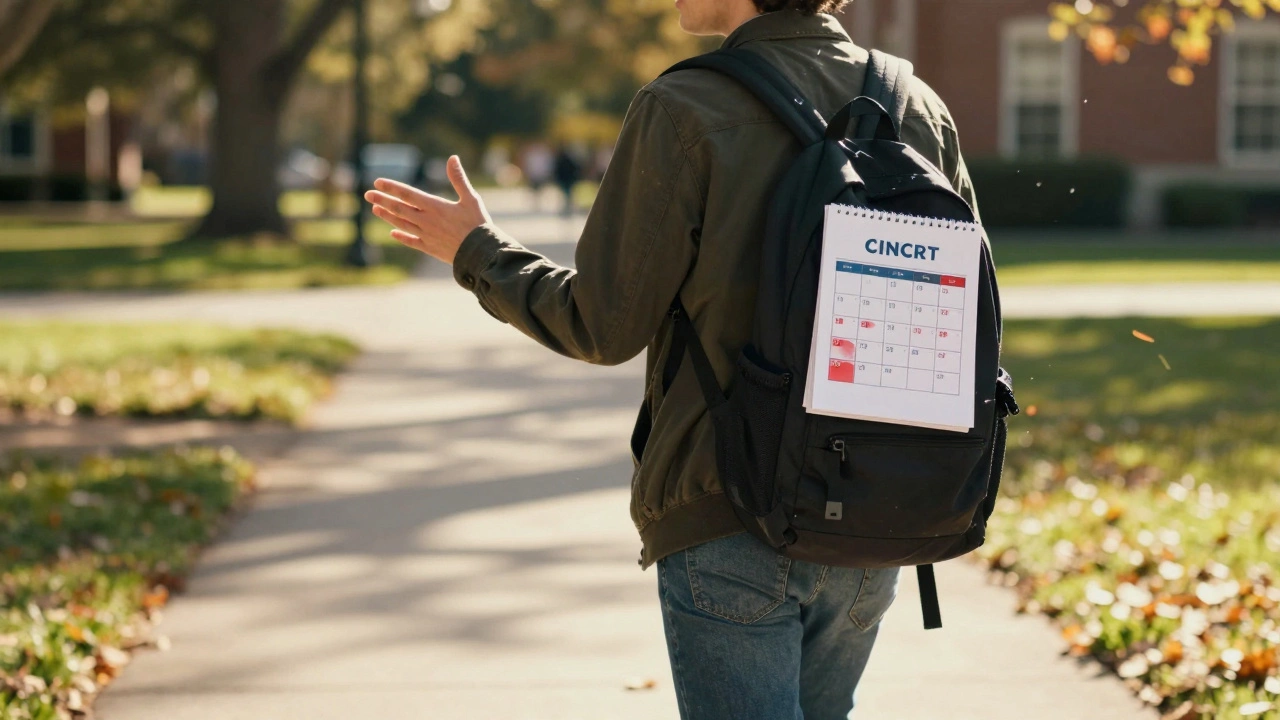
Your brain doesn’t store memories in isolation. It ties them to senses-sight, sound, even movement. That’s why walking while reviewing can boost recall by up to 20%.
Try this: Walk around your room or outside while saying key facts out loud. Move your hands. Gesture as you explain. Stand up when you quiz yourself. Don’t sit still. Movement increases blood flow to the brain and activates areas tied to memory formation.
Also, try writing key terms by hand. Not typing. Writing. Studies show handwriting activates different neural networks than typing. You remember more when you form the letters yourself.
Turn Facts into Stories
Why do you remember your favorite movie plot but not the Krebs cycle? Because your brain loves stories. Facts without context are easy to lose. Stories stick.
Turn dry facts into weird, vivid tales. Need to memorize the order of the planets? ‘My Very Educated Mother Just Served Us Noodles’-Mercury, Venus, Earth, Mars, Jupiter, Saturn, Uranus, Neptune. It’s silly. That’s why it works.
For biology? Imagine mitochondria as tiny power plants with angry workers shouting ‘ATP!’ For history? Picture Napoleon riding a tiny horse through the streets of Moscow, freezing because he forgot his coat. The weirder, the better. Your brain remembers what surprises it.
Get Enough Sleep-Seriously
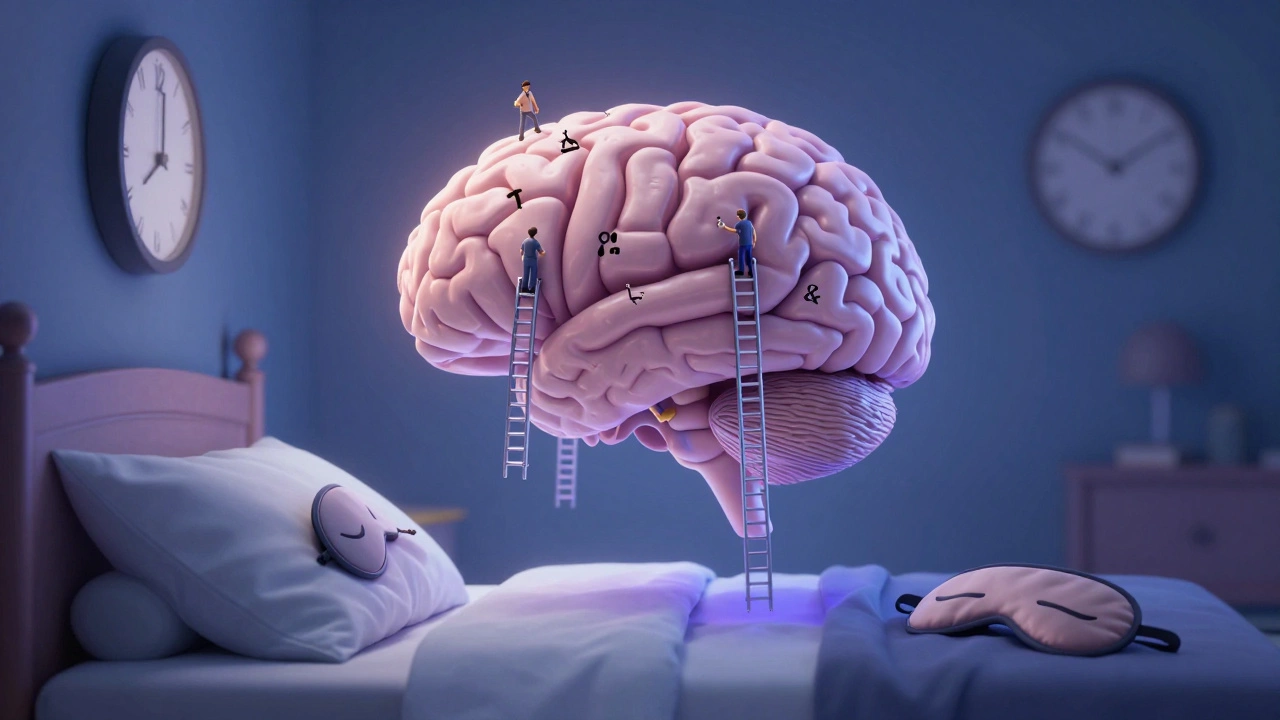
You can’t out-study a sleep-deprived brain. During deep sleep, your brain goes into ‘offline mode’ and sorts through everything you learned that day. It moves short-term memories into long-term storage. Skip sleep, and you erase your progress.
Don’t pull all-nighters. If you’ve studied well, sleep is your final review. Aim for 7-8 hours. Even a 20-minute nap after studying helps. Your brain doesn’t need more hours. It needs quiet time to organize.
Try this: Review your hardest topic right before bed. Then sleep. In the morning, test yourself. You’ll often recall more than you did the night before.
What Not to Do
Here’s what doesn’t work, no matter how many people swear by it:
- Highlighting everything-your brain can’t tell what’s important if everything’s yellow.
- Listening to music while studying (unless it’s plain ambient noise-lyrics compete for attention).
- Studying in bed-your brain associates beds with sleep, not focus.
- Repeating a fact 50 times out loud-without testing yourself, it’s just noise.
These habits feel like work. But they’re illusions. They give you the sense of progress without real learning.
Your 3-Day Exam Prep Plan
Here’s how to use all this in the final stretch:
- Day 1: Break your material into 5 chunks. Use retrieval practice on each. Write down what you forget. Fix those gaps.
- Day 2: Teach each chunk out loud. Record yourself. Watch for pauses. Relearn those parts. Walk while reviewing one section.
- Day 3: Do one full mock test-no notes. Then sleep 8 hours. In the morning, quiz yourself again on the hardest parts.
This isn’t about memorizing everything. It’s about making sure the things that matter stick-so you can recall them under pressure.
Final Tip: Trust the Process
Memorizing faster isn’t magic. It’s strategy. The techniques above aren’t new. They’re backed by decades of cognitive science. But most students ignore them because they’re harder than rereading. They require effort. They feel uncomfortable.
That discomfort? That’s your brain growing. The more you practice retrieval, spacing, and teaching, the faster you’ll learn. Not just for this exam-for every test after it.
You don’t need more hours. You need better methods. Start today. Your future self will thank you.
Can I memorize everything in one night?
No-your brain doesn’t work that way. Cramming might help you recognize facts the next day, but you’ll forget most of it within 48 hours. Long-term memory needs time and repetition. Even if you have only one night, focus on active recall and sleep. Review your hardest topics right before bed, then sleep 7+ hours. That’s better than 8 hours of staring at notes.
Do memory tricks like mnemonics really work?
Yes, but only for specific types of information-lists, sequences, names, dates. Mnemonics help you recall the order or structure, not the meaning. Use them as a bridge, not the final goal. Once you’ve memorized the sequence, go deeper. Explain why it matters. Otherwise, you’ll know the acronym but not the concept.
Should I study in silence or with music?
Silence is best for deep learning. If you need background noise, use steady, instrumental sounds-rain, white noise, or ambient tracks without lyrics. Music with words competes with your internal voice, which you need for recalling facts. Studies show students who study with lyrical music score lower on memory tests than those in quiet rooms.
Is it better to study alone or with a group?
Study alone first. Build your own understanding using retrieval and teaching. Then use group sessions to test yourself-quiz each other, explain concepts out loud. Don’t let the group turn into a chat session. The goal is active recall, not passive listening. Groups help when you’re ready to challenge your knowledge-not when you’re still learning the basics.
How many hours should I study per day?
Quality beats quantity. Two focused hours of retrieval practice are worth more than six hours of rereading. Break your day into 90-minute blocks with 20-minute breaks. Use the breaks to walk, stretch, or nap. Your brain needs downtime to process. Pushing past 4-5 hours of real focus in a day leads to diminishing returns. Rest is part of learning.
What if I forget something during the exam?
If you blank, don’t panic. Take a breath. Move to another question. Often, the answer comes back when you’re not forcing it. Your brain is still searching. When you return, try to recall the context-where you studied it, what you wrote on your flashcard, the story you made up. Context triggers memory. You didn’t lose it-you just need the right key to unlock it.