





Adult Learner Motivation Strategy Generator
Use this tool to generate personalized engagement strategies based on the specific challenges your adult learners are facing.
Recommended Strategies
Think back to the last time you picked up a new skill purely because someone told you to. Chances are, it didn’t stick. Now think about the last time you learned something because you genuinely wanted to solve a problem or advance your career. That spark? That is the engine of adult learning, which operates on fundamentally different fuel than childhood education. If you are an instructor, trainer, or manager trying to engage grown-ups in a classroom or online course, treating them like children is the fastest way to lose their attention. Adults bring baggage-jobs, families, bills, and past educational trauma. Ignoring these realities makes motivation impossible.
The core challenge isn't intelligence; it's relevance. An adult learner will ask, "What’s in it for me?" before they open a textbook. To motivate them, you have to shift from being a lecturer to being a facilitator who respects their autonomy and experience. This approach, often rooted in the principles of andragogy (the method and practice of teaching adult learners), requires specific psychological triggers that differ vastly from pedagogy.
Why Traditional Methods Fail with Adults
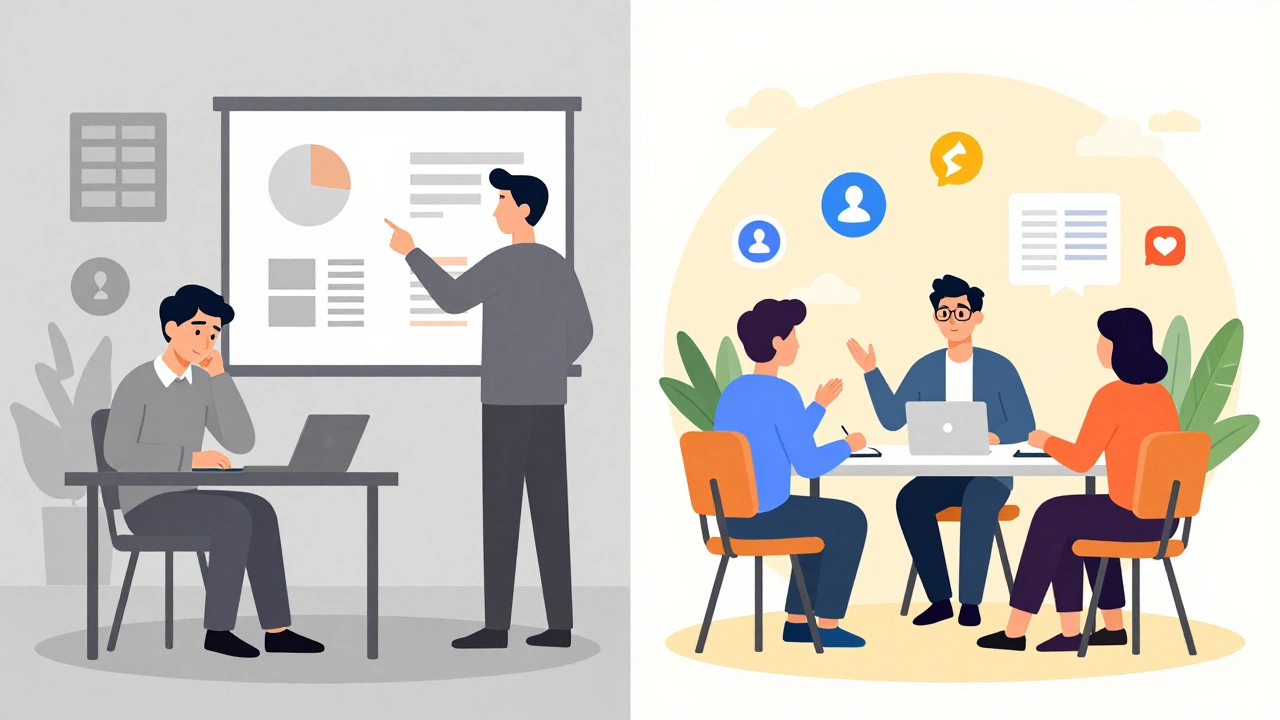
If you walk into a room of thirty-year-olds and start lecturing at them using the same tone you’d use for twelve-year-olds, you will face resistance. This isn't just stubbornness; it's a cognitive mismatch. Children learn primarily through absorption and authority figures. Adults learn through application and peer collaboration. When you ignore this difference, you trigger what psychologists call "reactance"-a motivational state to restore threatened freedoms.
Consider the typical corporate compliance training module. It’s often a twenty-minute video where employees must click "next" every ten seconds. Most people zone out, check their phones, or fake the quiz. Why? Because there is no choice, no relevance, and no respect for their existing knowledge. The content feels imposed rather than invited. To fix this, we need to look at the internal drivers that actually move adults forward.
Leveraging Intrinsic Motivation Over Extrinsic Rewards
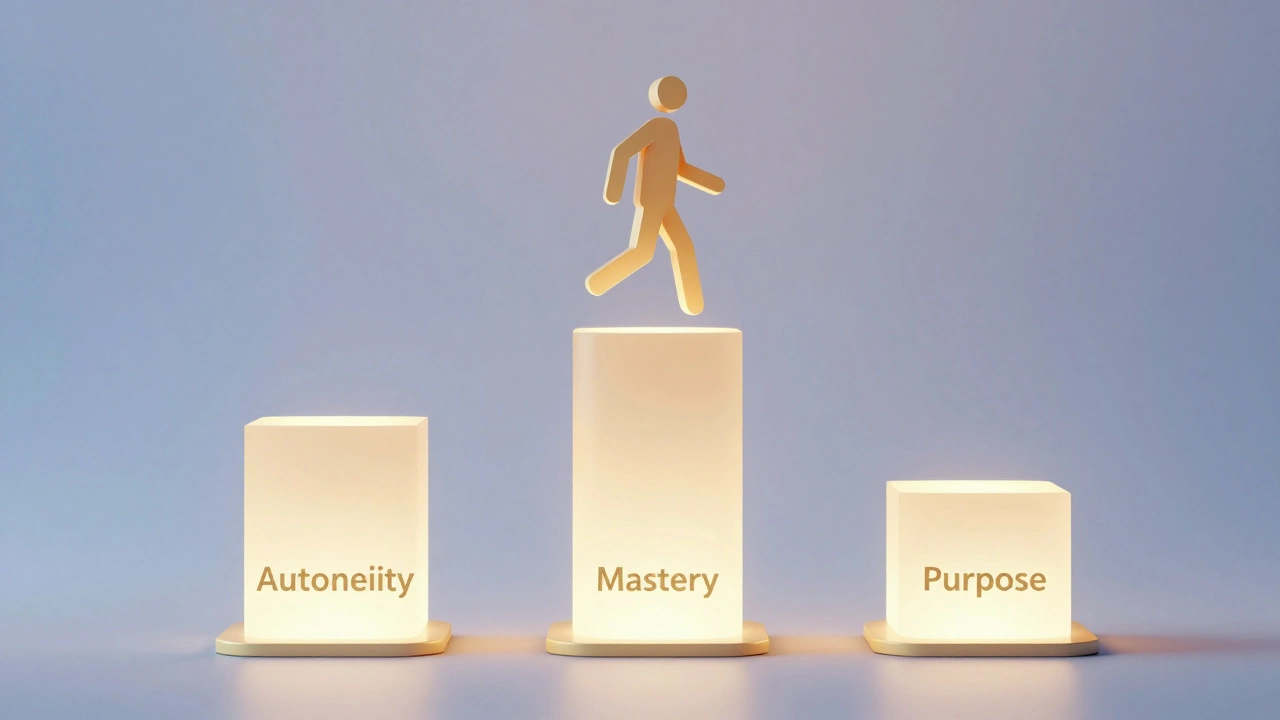
Money works for getting someone to show up, but it rarely keeps them engaged. While bonuses or certificates might get an adult learner through the door, intrinsic motivation is what keeps them studying late at night. Intrinsic motivation comes from three key areas: autonomy, mastery, and purpose. These concepts were popularized by Daniel Pink in his work on human drive, but they are especially potent in adult education.
- Autonomy: Adults need to feel they have control over their learning path. Give them choices. Let them choose between two project topics, pick their own deadline within a reasonable window, or decide how they want to present their final output. When you remove the feeling of being micromanaged, engagement spikes.
- Mastery: We all want to get better at things. Show learners exactly how the skill connects to becoming more competent in their daily lives. Break complex skills into small, winnable chunks so they can see progress. Progress is a powerful motivator.
- Purpose: Connect the learning to a bigger cause. If you’re teaching data analysis, don’t just teach formulas. Explain how those formulas help save lives in healthcare or reduce waste in environmental projects. Adults need to know their effort matters beyond their own paycheck.
When you design a course, ask yourself: "Does this lesson allow the learner to make choices? Does it help them become better at something they care about? Does it connect to a meaningful outcome?" If the answer is no, you are relying on extrinsic pressure, which burns out quickly.
Respecting Experience: The Power of Andragogy
Malcolm Knowles, the father of andragogy, identified six assumptions about adult learners. The most critical one for motivation is that adults carry a reservoir of experience. They are not empty vessels waiting to be filled; they are libraries full of stories, failures, and successes. Ignoring this wealth is a wasted opportunity.
Instead of starting with theory, start with their reality. Use case studies that mirror their actual jobs. Ask questions like, "Has anyone here faced a similar situation? How did you handle it?" This validates their expertise and turns the classroom into a collaborative space. When peers share solutions, the social proof reinforces the value of the learning. It shifts the dynamic from "teacher knows best" to "we are solving this together."
This approach also reduces anxiety. Many adult learners return to education after years away, fearing they’ve lost their sharpness. By tapping into their prior knowledge, you remind them that they already know a lot. You are building bridges, not clearing ground. For example, if you are teaching a coding bootcamp to career changers, acknowledge their previous professional skills. A nurse learning Python has discipline and diagnostic logic; a marketer learning SQL has pattern recognition. Frame the new skill as an extension of their existing identity, not a replacement of it.

Making Learning Relevant and Immediate
Adults are pragmatic. They are goal-oriented and life-centered. They don’t want to know everything about a subject; they want to know what they need to know to solve a current problem. This is known as immediate applicability. If the connection between the lesson and real-world application isn’t clear within the first few minutes, attention drops.
To maximize motivation, structure your content around problems, not subjects. Instead of a chapter titled "Introduction to Budgeting," use a title like "How to Cut Your Project Costs by 10% Next Week." This signals immediate value. Use simulations, role-plays, and real-time projects. Let them leave the session with something they can use tomorrow morning.
Consider the difference between a generic leadership seminar and a workshop where participants bring a specific conflict they are facing with a team member. In the latter, the stakes are real. The motivation is high because the pain point is acute. As an educator, your job is to identify these pain points beforehand and tailor the curriculum to address them directly. If you can’t find a direct link to their daily life, you risk losing them entirely.
Creating a Safe Environment for Failure
One of the biggest barriers to adult motivation is fear. Fear of looking stupid, fear of failing, fear of wasting time. Adults have more to lose when they fail than teenagers do. Their egos are more developed, and their schedules are tighter. If the learning environment feels judgmental, they will shut down to protect themselves.
You must explicitly normalize failure. Share your own mistakes. Show examples of successful people who failed repeatedly. Create low-stakes practice environments where mistakes are treated as data, not deficits. Use phrases like "This is a safe space to experiment" and "We expect errors here-that’s how we learn." When learners feel psychologically safe, they take risks. Taking risks leads to deeper learning. Deep learning builds confidence. Confidence fuels further motivation.
Feedback plays a huge role here. Avoid vague praise like "Good job." Instead, give specific, actionable feedback. "Your argument was strong because you used recent statistics, but try adding a counter-argument next time to strengthen it." Specificity shows you are paying attention and care about their growth. It transforms feedback from a grade into a tool for improvement.
The Role of Social Connection and Community
Learning doesn’t happen in a vacuum. Humans are social creatures, and isolation kills motivation. Adult learners often struggle with loneliness, especially in online courses or evening classes. Building a sense of community can be the glue that holds their motivation together when willpower fades.
Create opportunities for interaction. Pair learners for accountability partners. Set up discussion forums where they can share wins and struggles. Host virtual coffee chats or local meetups. When learners form bonds with their peers, they feel responsible to each other. They don’t want to let their study buddy down. This social accountability is far more effective than any deadline set by an instructor.
Incorporate group projects that require diverse perspectives. Assign roles based on strengths. Let them teach each other. Peer-to-peer teaching reinforces knowledge for the teacher and clarifies it for the learner. It creates a network of support that extends beyond the classroom. A motivated adult learner is often part of a motivated community.
Practical Checklist for Educators and Managers
If you are designing a program or leading a training session, run your plan through this quick checklist. It ensures you are hitting the key motivational triggers for adults.
| Element | Actionable Step | Why It Works |
|---|---|---|
| Relevance | Start with a real-world problem they face today. | Answers "What's in it for me?" immediately. |
| Autonomy | Offer choices in topics, methods, or pacing. | Reduces reactance and increases ownership. |
| Experience | Ask for their input and past examples early on. | Validates their identity and reduces anxiety. |
| Safety | Explicitly state that mistakes are expected. | Encourages risk-taking and deeper learning. |
| Community | Pair learners or create small discussion groups. | Builds social accountability and support. |
Using this framework shifts the burden of motivation from the learner’s willpower to the design of the learning experience. You aren’t forcing them to care; you are creating conditions where caring is the natural response.
What is the difference between pedagogy and andragogy?
Pedagogy is the art and science of teaching children, where the teacher directs the learning process and students are dependent on the instructor. Andragogy focuses on adult learning, assuming learners are self-directed, bring life experience, and are motivated by internal factors like career advancement or personal growth. In andragogy, the teacher acts as a facilitator rather than an authority figure.
How can I motivate reluctant adult learners?
Reluctance usually stems from perceived irrelevance or fear of failure. To motivate them, clearly articulate the immediate benefits of the learning to their specific situation. Lower the barrier to entry by starting with easy wins. Build trust by respecting their existing knowledge and creating a non-judgmental environment where asking questions is encouraged.
Is gamification effective for adult learners?
Gamification can work, but it must be subtle and meaningful. Adults may resent childish points systems or leaderboards if they feel patronized. Instead, focus on elements like progress bars, badges for mastery, and narrative challenges that simulate real-world scenarios. The goal should be to enhance intrinsic motivation, not replace it with superficial rewards.
How does age affect learning styles in adults?
While individual preferences vary, older adults often prefer concrete, practical applications over abstract theories. They tend to learn better through discussion and case studies rather than rote memorization. Cognitive processing speed may slow slightly, but crystallized intelligence (accumulated knowledge) increases, making them excellent at connecting new information to past experiences.
What role does technology play in motivating adult learners?
Technology offers flexibility, which is crucial for busy adults. Mobile-friendly platforms, microlearning modules, and asynchronous options allow them to learn on their own schedule. However, technology should facilitate connection, not isolate learners. Interactive tools, discussion boards, and virtual collaboration spaces help maintain the social aspect essential for motivation.