

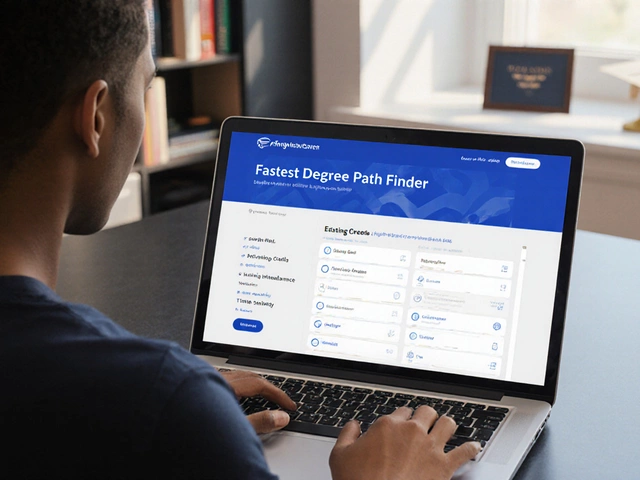




Harvard Application Profile Estimator
Build Your Profile
Academic Foundation
Extracurricular Excellence
Check all that apply to your profile:
Narrative & Fit
Profile Analysis
Fill in your details to see an analysis of your application profile against typical Harvard standards.
Score Breakdown
- Academics (Grades + SAT) 0/40
- Extracurriculars 0/30
- Narrative & Essays 0/30
You’ve spent years grinding through your A-levels is a rigorous pre-university qualification in the UK and several other countries., mastering complex concepts in subjects you love. Now, you’re looking at a dream school like Harvard University is an Ivy League research university in Cambridge, Massachusetts.. The question on your mind is simple but heavy: Is getting three A-levels enough to get you through those gates?
The short answer is yes. Three A-levels are technically sufficient for admission to Harvard. However, saying it’s "enough" misses the entire point of how American elite universities work. They don’t just check boxes. They look at who you are.
The Myth of the "Minimum Requirement"
In the UK, if you meet the grade requirement for a course, you’re usually in. It’s transactional. In the US, especially at top-tier schools like Harvard, Yale, or Princeton, there is no such thing as a minimum requirement that guarantees entry. There’s only the pool of applicants.
Harvard receives over 60,000 applications for roughly 1,900 spots in the incoming freshman class. That’s an acceptance rate hovering around 3%. When you compete against students from across the globe, having three A-levels is the baseline expectation, not a differentiator. Almost every serious applicant will have strong grades. Your job isn’t just to show you can do the work; it’s to show why you deserve the seat more than the thousands of others who also did the work.
How Many A-Levels Should You Take?
While three is the standard number of A-levels taken by students in the UK, many applicants aiming for US Ivies choose to take four. Why? Because it signals academic curiosity and resilience. It shows you aren’t just doing the bare minimum required by your school system.
| Strategy | Pros | Cons |
|---|---|---|
| Three A-Levels | Allows deeper focus; less burnout risk; standard UK path | Might look less ambitious compared to peers taking four |
| Four A-Levels | Demonstrates high capacity; broadens subject range; stands out | Higher stress; potential for lower grades if overwhelmed |
If you stick with three, make sure they are academically rigorous. Taking three A-levels in Math, Physics, and Chemistry carries more weight than three in less demanding subjects, assuming you want to study STEM. If you’re leaning toward humanities, History, English Literature, and Economics might be your trio. The key is depth. Harvard wants to see mastery, not just breadth for the sake of it.
The Holistic Review Process Explained
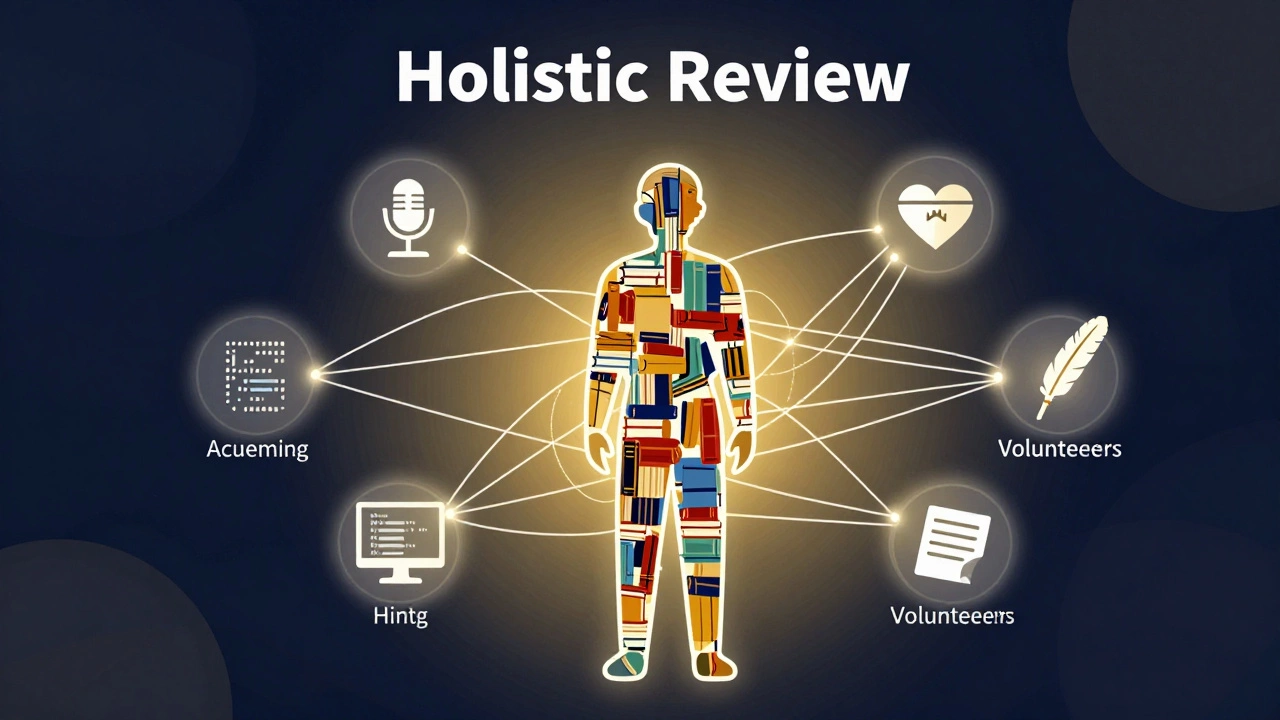
This is where most international students get tripped up. Holistic review is an admissions process that evaluates all aspects of an applicant's profile. means exactly what it says. They look at the whole person.
Your grades are the table stakes. Without them, you don’t even get looked at. But once you’re in the conversation, other factors start pulling the weight. Here’s what actually moves the needle:
- Extracurricular Excellence: It’s not about joining six clubs and doing nothing. It’s about one or two things you’re genuinely passionate about and have achieved something significant in. Did you win a national debate championship? Did you code an app used by your local community? Did you publish research?
- Essays: This is your voice. Harvard reads thousands of essays. Yours needs to tell a story that only you can tell. It shouldn’t be a resume recap. It should be vulnerable, insightful, and authentic.
- Recommendations: Teachers need to write letters that go beyond "good student." They need to speak to your character, your impact on the classroom, and your intellectual vitality.
- Standardized Tests: While many US colleges are test-optional, Harvard has reinstated SAT/ACT requirements for recent cycles. Strong scores here can validate your academic ability, especially if your A-level predictions are still pending.
Subject Choice Matters More Than You Think
Which A-levels you pick sends a signal about your intended major and your intellectual interests. If you plan to study Computer Science at Harvard, having Mathematics and Further Mathematics (or Physics) among your A-levels is crucial. If you’re eyeing Political Science, History or Government & Politics makes sense.
However, don’t feel forced to pick subjects solely based on perceived prestige. Harvard values intellectual passion. If you love Art History and Music, and you excel in them, that’s powerful. Just be prepared to explain how these interests connect to your broader goals in your application essays.
The Role of Standardized Testing
Even though A-levels are respected globally, US admissions officers often use the SAT or ACT to compare applicants from different educational systems. An A* in A-level Math is impressive, but an 800 on the SAT Math section gives them a common metric to benchmark you against a student from India, Brazil, or New York.
For the 2025-2026 cycle and beyond, Harvard requires either the SAT or ACT. Aim for the top percentiles. For Harvard, this typically means an SAT score of 1500+ or an ACT score of 34+. These numbers aren’t magic keys, but falling significantly below them can hurt your chances unless you have extraordinary extenuating circumstances or achievements.
Financial Aid and International Students
One major advantage of applying to Harvard as an international student is their financial aid policy. Harvard is need-blind for all applicants, including internationals. This means your ability to pay does not affect your chances of admission. Furthermore, they meet 100% of demonstrated financial need for admitted students, with no loans-only grants and work-study opportunities.
This removes a huge barrier. You don’t need to worry about scholarships during the application phase. Focus entirely on crafting the strongest possible application. If you get in, they will figure out the money.

Building a Compelling Narrative
Your application needs a thread that ties everything together. Are you the young entrepreneur? The human rights advocate? The theoretical physicist in training? Your activities, essays, and recommendations should all reinforce this narrative.
Let’s say you took three A-levels: Biology, Chemistry, and Psychology. Your extracurriculars include volunteering at a mental health clinic and conducting independent research on neuroplasticity. Your essay talks about a personal experience with mental health that sparked your interest. This creates a cohesive picture. Admissions officers remember stories, not just lists of grades.
Common Pitfalls to Avoid
Many students make mistakes that cost them dearly. Here are the biggest ones:
- Applying too late: Early Action (non-binding) at Harvard has a deadline in November. Regular Decision is in January. Missing deadlines is fatal.
- Generic essays: Don’t write what you think they want to hear. Write what’s true. Clichés kill applications.
- Neglecting interviews: If offered an interview through the Paine Webber Foundation, treat it seriously. It’s a chance to show your personality and communication skills.
- Ignoring fit: Make sure Harvard is the right place for you. If you’re only going because it’s famous, you might not thrive there. Admissions officers can smell desperation or lack of genuine interest.
What If You Get Rejected?
Rejection from Harvard is not a reflection of your worth or your future success. Many brilliant people were rejected from Ivy League schools. It’s a game of odds. Use the rejection as fuel. Apply to other top universities that value your specific strengths. Often, a school that fits you better academically and socially will provide a richer college experience than a prestigious name alone.
Remember, your goal isn’t just to get into Harvard. It’s to find an environment where you can grow, challenge yourself, and contribute meaningfully. Whether that happens in Cambridge, Massachusetts, or somewhere else, is secondary to finding the right fit.
Can I apply to Harvard with only 3 A-levels?
Yes, absolutely. Three A-levels are the standard qualification for UK students. Harvard accepts them fully. However, ensure your grades are exceptional (typically A*A*A or AAA) and that the rest of your application is strong.
Do I need to take the SAT if I have A-levels?
Yes. As of recent admissions cycles, Harvard requires standardized test scores (SAT or ACT) for all applicants, including those with A-levels. This helps them compare applicants from different global education systems.
Is it harder for international students to get into Harvard?
Statistically, yes. The acceptance rate for international students is often lower than for domestic US applicants. However, Harvard is need-blind for internationals, meaning your financial situation won't hold you back. You are competing against a highly qualified global pool.
Should I take 4 A-levels instead of 3 to improve my chances?
It can help, but only if you can maintain high grades. Four A-levels show ambition and capacity. However, three A-levels with perfect grades and a strong extracurricular profile is better than four A-levels with mediocre grades due to burnout.
Does Harvard offer scholarships for international students?
Harvard does not offer merit-based scholarships. Instead, they provide need-based financial aid. They meet 100% of demonstrated financial need for all admitted students, regardless of nationality. Families earning less than $85,000 typically pay nothing.
When is the deadline for Harvard applications?
The Early Action deadline is typically November 1st. The Regular Decision deadline is usually January 1st. Always check the official Harvard College website for the exact dates for your specific application year.
What GPA equivalent do A-levels translate to?
There is no direct conversion, but generally, A*A*A is considered equivalent to a 4.0 GPA. AAA is also highly competitive. Harvard expects top grades, so aim for the highest possible results in your predicted and final A-levels.