



Online School Suitability Calculator
Answer these questions honestly to see if your child (or you) fits the profile of a successful online learner.
Your Suitability Score
Remember the chaos of March 2020? Schools closed overnight, and millions of students were thrust into living rooms with nothing but a laptop and a prayer. Fast forward to 2026, and distance learning is an educational model where instruction is delivered remotely via digital platforms rather than in a physical classroom. It’s no longer an emergency stopgap; it’s a permanent fixture in the global education landscape. But here is the million-dollar question that keeps parents up at night and educators debating over coffee: Is online school actually effective?
The short answer is yes, but with a massive asterisk. Online school works brilliantly for some students and falls apart for others. The difference usually isn’t the technology-it’s the structure, the student’s personality, and the support system at home. If you are trying to decide whether virtual schooling is right for your child (or yourself), you need to look past the marketing hype and examine the real data on engagement, retention, and social development.
The Data Behind Digital Classrooms
We often judge online learning by how it feels-lonely, distracting, or convenient. But feelings don’t always match academic outcomes. When we look at standardized test scores and graduation rates, the picture becomes clearer. Studies from organizations like the National Center for Education Statistics (NCES) have shown that when online courses are well-structured, students perform just as well as, and sometimes better than, their peers in traditional brick-and-mortar schools.
Why? Because self-paced learning is an instructional method that allows learners to control the speed and sequence of their study material. In a physical classroom, if you understand algebra in ten minutes, you still sit through the forty-minute lecture. If you struggle, you might fall behind without anyone noticing until the final exam. Online platforms track every click. They know exactly which problem you got wrong and when. This immediate feedback loop helps cement knowledge faster for motivated learners.
However, this data comes with a caveat. These success stories usually involve hybrid models or highly curated programs. A completely unguided Zoom call with twenty silent faces does not equal effective education. The effectiveness hinges on active learning strategies, not just passive video watching.
Who Thrives in Virtual Environments?
Not every brain is wired for isolation. To determine if online school is effective for a specific individual, you have to look at their learning style. Here is a breakdown of who tends to succeed:
- The Self-Starter: Students who can manage their time without a bell schedule ringing every hour. They treat their bedroom like an office and stick to a routine.
- The Deep Thinker: Introverts who find large classrooms overwhelming. Online environments allow them to process information quietly before participating in discussion forums or breakout rooms.
- The Accelerated Learner: Kids who are bored in standard classes. Online curricula often allow for skipping ahead or diving deeper into niche subjects without holding back the rest of the class.
- The Special Needs Student: For students with anxiety, autism spectrum disorder, or chronic health issues, the controlled environment of home reduces sensory overload and stress, leading to better focus.
If your child struggles with executive function-the ability to plan, organize, and execute tasks-online school can be a trap. Without the external structure of a teacher standing nearby, distractions multiply. The fridge, the bed, and social media are all closer than the whiteboard.
The Social Skills Myth
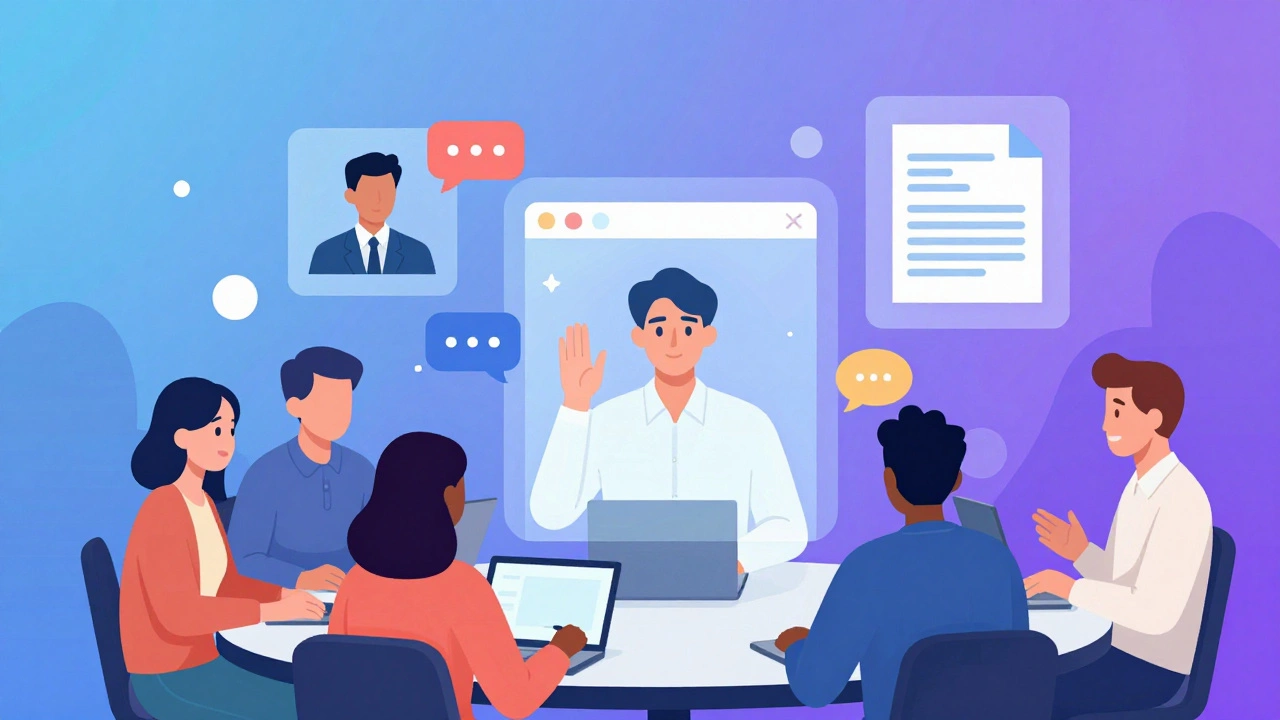
This is the biggest fear for parents. “Will my child become a hermit?” It’s a valid concern, but the definition of “social” has changed. Yes, they miss out on the chaotic energy of the playground. But they gain something else: intentional communication.
In online group projects, students must use written collaboration tools, video conferencing etiquette, and asynchronous messaging. These are the exact skills required in modern remote workforces. According to recent workforce reports, nearly 40% of professional roles now offer remote options. Learning to collaborate digitally is not a deficit; it’s a competitive advantage.
That said, human connection cannot be fully digitized. Effective online schools supplement virtual lessons with in-person meetups, field trips, or extracurricular clubs. If the program offers zero face-to-face interaction, social development will likely suffer. You have to be proactive about finding local sports teams, art classes, or community groups to fill that gap.
| Feature | Traditional School | Online School |
|---|---|---|
| Pacing | Fixed, class-wide speed | Flexible, individualized speed |
| Social Interaction | Constant, informal peer contact | Structured, often digital-first |
| Distraction Level | Moderate (peers, noise) | High (home environment, internet) |
| Cost Efficiency | Taxed locally, hidden fees | Often lower tuition, no commute costs |
| Teacher Access | Limited to class hours | Often available via email/chat 24/7 |
Technical Barriers and Equity Issues
We cannot talk about effectiveness without talking about access. Online school assumes you have high-speed internet and a reliable device. In 2026, this is less of an issue than it was in 2020, but the “digital divide” still exists. Rural areas, low-income households, and older devices can create friction that kills learning momentum.
When technology fails, learning stops. A frozen video stream during a live lecture is frustrating. A crashed platform during a timed exam is catastrophic. Effective online schools have robust IT support and offline backups. If you are considering a program, ask them: “What happens when the Wi-Fi goes down?” If they don’t have a clear answer, run.
How to Make Online Learning Work
If you decide to go virtual, success doesn’t happen by accident. It requires design. Here is how to set up an effective home learning environment:
- Create a Dedicated Workspace: Do not let your child learn from the couch. Set up a desk with good lighting and minimal clutter. This signals to the brain that it is “work mode.”
- Establish a Routine: Wake up, dress, and start at the same time every day. Structure creates security. Use a visual calendar or planner to map out assignments.
- Limit Screen Fatigue: Not all learning needs to be digital. Print out worksheets. Use physical books. Take breaks outside. The 20-20-20 rule (every 20 minutes, look at something 20 feet away for 20 seconds) helps reduce eye strain.
- Engage Actively: Parents should not be teachers, but they should be coaches. Check in on progress weekly. Ask open-ended questions about what they learned, not just if they finished the homework.
- Prioritize Socialization: Schedule playdates, join local clubs, and encourage participation in online group discussions. Don’t let isolation creep in.
The Future of Hybrid Education
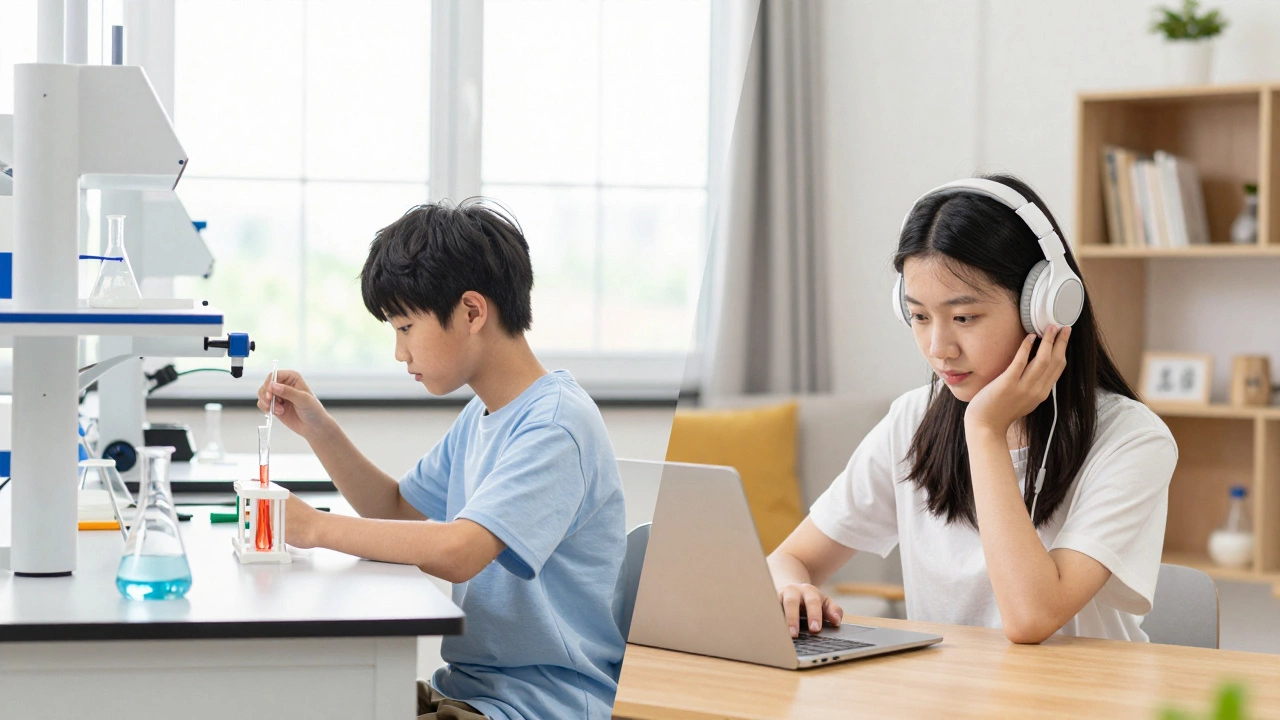
The most effective model emerging in 2026 is not purely online or purely offline-it’s blended. Many top-performing districts now use a hybrid approach where students attend campus two or three days a week for labs, sports, and socializing, while completing lectures and independent study online. This combines the best of both worlds: the flexibility and personalization of digital tools with the community and hands-on experience of physical presence.
As AI tutors become more sophisticated, offering personalized explanations in real-time, the role of the human teacher shifts from “sage on the stage” to “guide on the side.” This evolution makes online school more effective than ever, provided the human element remains central to the experience.
Is online school recognized by universities?
Yes, accredited online schools are fully recognized by colleges and universities worldwide. As long as the institution holds proper accreditation from a recognized body, the diploma carries the same weight as one from a traditional school. Always verify accreditation status before enrolling.
Can online school help with bullying?
It can significantly reduce face-to-face bullying incidents. However, cyberbullying is a risk in any connected environment. Online schools must have strict anti-harassment policies and monitoring systems. Parents should also educate children on digital safety and reporting mechanisms.
What are the best online schools for 2026?
The “best” school depends on your child’s needs. For academic rigor, look for accredited charter networks like K12 or Connections Academy. For creative flexibility, consider micro-schools or unschooling communities. Always check state-specific rankings and parent reviews for current performance data.
Do online students graduate on time?
Graduation rates vary by program quality. High-quality, structured online schools report graduation rates comparable to or higher than traditional public schools. Lack of structure is the main cause of dropout, so choosing a program with strong advising and accountability is crucial.
Is online learning cheaper than traditional school?
Public online charters are typically free, funded by tax dollars. Private online schools charge tuition, which can range from $5,000 to $20,000 annually. However, you save on uniforms, transportation, lunch fees, and extracurricular costs, making the total cost of ownership potentially lower.