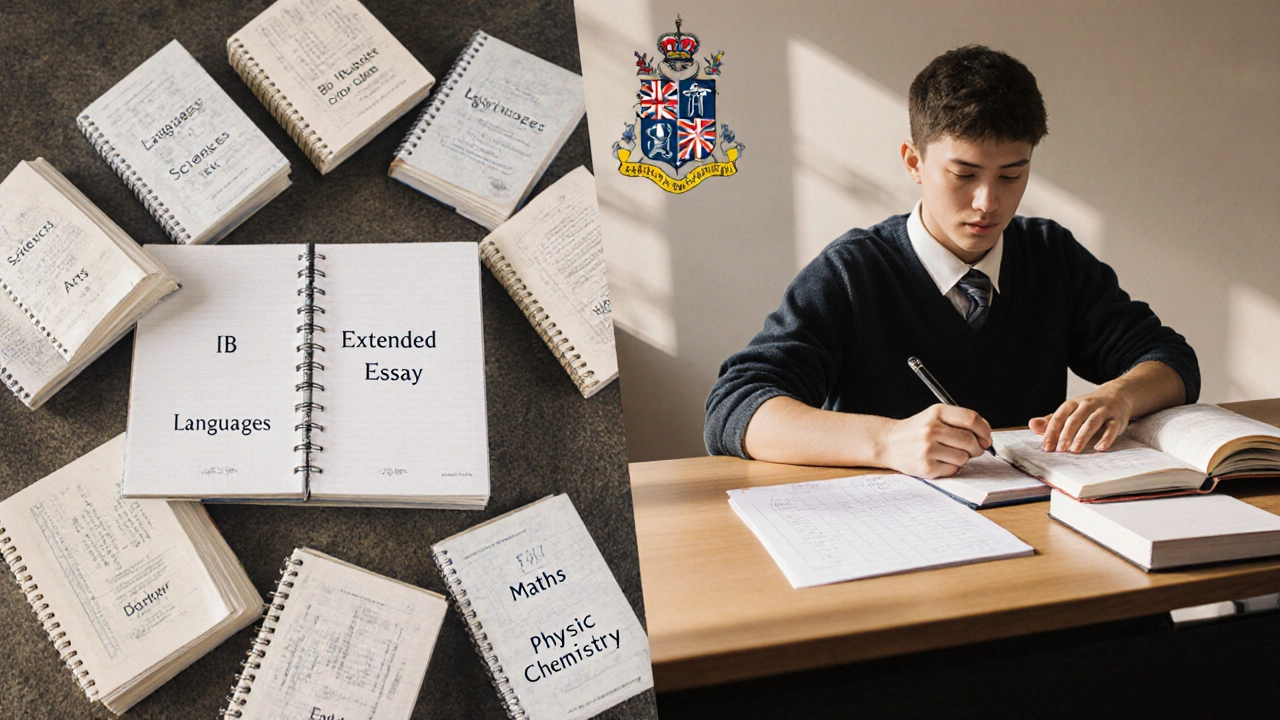
Do UK Universities Prefer IB or A Levels?
UK universities don't prefer IB over A levels or vice versa - they care about your grades and subject choices. Learn how each qualification works and which one suits your goals better.
Read more





When it comes to university admissions UK, the process students go through to enter higher education institutions in the United Kingdom. Also known as UK higher education entry, it’s not just about grades—it’s about timing, subject choices, and knowing what universities actually look for. Unlike some countries where a single test decides everything, the UK system weighs your A-Levels, advanced academic qualifications taken by students aged 16–18, typically in 3–4 subjects heavily, but also checks your GCSEs, the foundational exams taken at age 16 that show your earlier academic performance, personal statement, and sometimes interviews or portfolios.
Most UK universities set entry requirements based on A-Level grades—like ABB or BBB—but that’s just the starting point. If you’re aiming for top schools like Oxford, Cambridge, or Imperial, you’ll need top grades, often A*AA or higher, plus strong extracurriculars or subject-specific tests. But here’s the thing: a B in a subject you’re passionate about can still open doors if you show real interest through reading, projects, or work experience. Universities don’t just want high scorers—they want students who can think, adapt, and contribute.
What you study matters too. If you want to study engineering, you’ll need Maths and Physics at A-Level. Want medicine? You’ll need Biology, Chemistry, and often Maths. And while GCSEs aren’t the main focus, a string of low grades in core subjects like English or Maths can raise red flags, especially if your A-Level predictions aren’t stellar. Some universities even require a minimum of a Grade 6 in English and Maths at GCSE level, no exceptions.
The application process itself is handled through UCAS, a single system where you pick up to five courses. You write one personal statement that goes to all of them. That means your statement needs to be honest, specific, and focused—not a list of achievements, but a story about why you care about your chosen subject. And deadlines? They’re strict. October 15 for Oxford and Cambridge, and January 31 for most others. Miss it, and you’re waiting another year.
There’s no magic formula, but there are patterns. Students who get in usually know what they want, can explain why, and show they’ve done more than just study. They’ve read books, attended lectures, volunteered, or even started small projects. You don’t need to be perfect—you just need to be real.
Below, you’ll find real guides that break down what’s actually taught in A-Levels, how they compare to US equivalents like APs, what grades really mean on the new GCSE scale, and how to prepare when you’re not sure where to start. No fluff. Just what works for students applying to UK universities right now.
UK universities don't prefer IB over A levels or vice versa - they care about your grades and subject choices. Learn how each qualification works and which one suits your goals better.
Read more