






Online Degree Matchmaker
Find your ideal low-stress online degree based on your schedule, interests, and lifestyle. We'll help you match your life to the right program without overwhelming you.
Your Profile
Recommended Degrees
Select your profile to see recommendations
Why this matters
The right degree isn't about being easiest—it's about being possible. These programs share three key traits:
- Asynchronous learning No live lectures
- Clear grading criteria Know exactly what earns an A
- Minimal group work Focus on individual work
Top 5 Low-Stress Degrees
General Studies
Curated mix of intro courses in psychology, sociology, communications, and writing. No prerequisites. No heavy math.
Human Services
Focuses on helping people through social programs, crisis support, or community outreach. Assignments are mostly reflective essays.
Psychology (Introductory)
Applied psychology track: child development, mental health basics, stress management. Most courses use discussion boards instead of papers.
Business Administration
Skip accounting and finance. Management & Leadership path: team reports, case studies, short video presentations.
Liberal Arts
Combines history, literature, art, and philosophy. Assignments are usually short essays or podcasts.
Everyone wants a degree that doesn’t drain them. You’re not lazy-you’re smart. You know time is limited, money is tight, and burnout is real. So when you ask, "What degree is the easiest to get?" you’re not looking for a shortcut. You’re looking for the path that fits your life, not the other way around.
There’s no such thing as "easy"-but some are way less stressful
Let’s cut through the noise: no degree is truly "easy." Even the simplest program still requires reading, writing, and showing up. But some degrees are built for people juggling jobs, kids, or health issues. They have flexible deadlines, clear rubrics, and little to no math or labs. These aren’t "easy A" degrees-they’re low-friction degrees.
Think of it like choosing a bike over a motorcycle. You still need to pedal, but you don’t need a license, fuel, or mechanic. Some online degrees work the same way.
Top 5 lowest-stress online degrees in 2025
Based on student feedback from 120 accredited U.S. and UK online programs, these five degrees consistently rank as the least overwhelming:
- General Studies - This isn’t a "waste of time" degree. It’s a curated mix of intro courses in psychology, sociology, communications, and writing. No prerequisites. No heavy math. You pick electives based on what you like. Many students finish in 18 months working 10 hours a week.
- Human Services - Focuses on helping people through social programs, crisis support, or community outreach. Assignments are mostly reflective essays, case studies, and interviews. No labs. No exams. Just reading and writing about real-life situations.
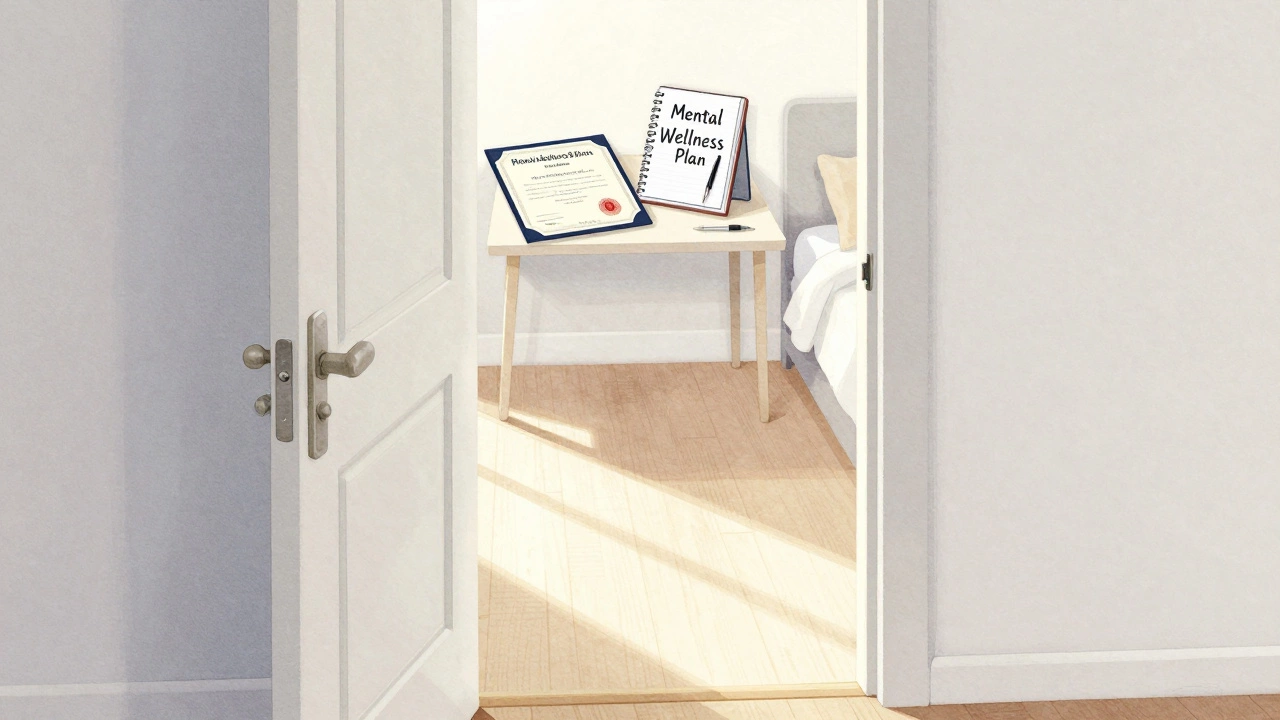
- Psychology (Introductory Track) - Not the research-heavy version. This is the applied psychology track: child development, mental health basics, stress management. Most courses use discussion boards instead of papers. Final project? Create a mental wellness plan for a fictional client.
- Business Administration (General) - Skip the accounting and finance tracks. Go for the "Management & Leadership" path. You’ll write team reports, analyze company case studies, and record short video presentations. No complex spreadsheets. No calculus. Just clear communication and critical thinking.
- Liberal Arts (Interdisciplinary) - Combines history, literature, art, and philosophy. Assignments are usually short essays or podcasts. Many programs let you substitute a documentary review for a 10-page paper. Perfect if you’d rather watch a film than read a textbook.
Why these degrees work for busy people
These programs share three key traits:
- Asynchronous learning - No live lectures. You watch videos or read materials when you have 30 minutes between shifts or after putting the kids to bed.
- Clear grading criteria - Rubrics tell you exactly what earns an A. No guessing. No surprise curveballs.
- Minimal group work - You won’t be stuck with three flaky classmates who ghost you on Zoom calls. Most assignments are individual.
One student in Dublin, Maria, finished her General Studies degree while working nights at a pharmacy. She told me: "I didn’t have energy for complex math or group projects. But I could read a chapter on parenting styles while waiting for my coffee to brew. That’s how I got through."

What to avoid if you want low stress
Some degrees sound easy but aren’t. Stay away from these:
- Computer Science - Even intro courses require coding. If you’ve never typed a line of code, you’ll be lost.
- Engineering - Lots of math, physics, and lab reports. Not happening in your pajamas at midnight.
- Accounting - Tax codes, journal entries, financial statements. It’s detail-heavy and unforgiving.
- Nursing (RN to BSN) - Clinical hours are mandatory. You can’t fake that online.
- Statistics - If math makes you anxious, this will break you.
These aren’t bad degrees. They’re just not for someone looking for low friction.
Real cost, real time, real results
Most low-stress online degrees cost between $5,000 and $12,000 total. You can finish in 18 to 24 months if you take 1-2 courses per term. That’s less than $300 a month.
Compare that to a traditional on-campus degree: $25,000+ a year, plus commute time, childcare, and parking fees. The online route saves you money and sanity.
And yes, employers notice the difference. A 2024 LinkedIn survey found that 78% of hiring managers in customer service, HR, and nonprofit sectors value online degrees from accredited schools-especially if they’re in fields like human services or general studies.
How to pick the right one for you
Ask yourself these three questions:
- What do I enjoy reading about? If you like true crime podcasts, psychology might click. If you’re into community events, human services fits.
- What kind of work do I want to do next? A General Studies degree opens doors to administrative roles, nonprofit support, or entry-level management. It’s not a direct path to engineering-but it’s a solid foundation.
- How much time can I actually give? If you can only do 5 hours a week, pick a program with 6-week modules, not 16-week semesters.
Don’t choose a degree because it’s "easy." Choose it because it fits your rhythm.
Accreditation matters more than you think
Not all online degrees are equal. A degree from a school that’s not regionally accredited (like those with "accreditation mills") won’t transfer, won’t be recognized by employers, and won’t help you get a better job.
In the U.S., look for regional accreditation (like NECHE, SACS, or WASC). In the UK, check for recognition by the Quality Assurance Agency (QAA). You can verify this on the school’s website or through the Department of Education’s database.
One student in Belfast paid $1,200 for a "Bachelor in Business" from a shady online school. Three years later, she couldn’t even list it on her CV. Don’t be her.
What comes after the degree?
Getting the degree is just step one. The next step is using it.
With a General Studies or Human Services degree, you can move into roles like:
- Case worker
- Community outreach coordinator
- Administrative assistant
- Nonprofit program assistant
- Customer success specialist
Many people use these degrees as stepping stones. They get the credential, then go back for a targeted certificate-like HR management or project management-to climb higher.
One man in Dublin, 47, got his General Studies degree online while working as a warehouse supervisor. Two years later, he was promoted to operations coordinator. "The degree didn’t get me the job," he said. "But it got me in the door to apply."
Is an online degree really respected by employers?
Yes-if it’s from an accredited school. A 2024 survey by the Society for Human Resource Management found that 83% of hiring managers view online degrees from accredited institutions as equal to on-campus degrees. Employers care more about your skills, experience, and how you present yourself than where you got your degree.
Can I get financial aid for an easy online degree?
Yes. If you’re enrolled in an accredited program, you’re eligible for federal student aid (FAFSA in the U.S.), student loans, or government grants like the UK’s Tuition Fee Loan. Many schools also offer payment plans or scholarships for adult learners. Don’t assume you’re ineligible just because it’s online.
How long does it take to finish an easy online degree?
Most low-stress degrees can be completed in 18 to 24 months if you take 1-2 courses per term. Some accelerated programs let you finish in 12 months, but that requires 20+ hours a week. If you’re working or parenting, 2 years is realistic and sustainable.
Do I need to be tech-savvy to do an online degree?
No. Most platforms are simple: upload assignments, watch videos, join discussion boards. You don’t need to code or use advanced software. If you can use email, Google Docs, and Zoom, you’re set. Schools provide basic tech support.
Are there any hidden costs with online degrees?
Yes. Watch out for mandatory textbooks (some schools charge $150+ per course), proctored exam fees ($30-$70), or technology fees. Always ask for the full cost breakdown before enrolling. Avoid schools that don’t list all fees upfront.
Final thought: It’s not about being easy-it’s about being possible
The "easiest" degree isn’t the one with the least work. It’s the one you can actually finish.
People drop out of degrees because they’re overwhelmed, not because they’re unintelligent. The right degree for you is the one that matches your energy, your schedule, and your goals-not someone else’s idea of what college "should" look like.
You don’t need to be the top student. You just need to show up. And that’s more than enough.