






2/3, 5/7 Study Method Calculator
Set Your First Study Date
Enter when you first studied the material to calculate your spaced repetition review schedule.
Your Review Schedule
Enter your first study date and click "Calculate Schedule" to see your review schedule.
Studying for exams doesn’t have to mean pulling all-nighters or drowning in flashcards. There’s a quiet, science-backed method that’s been helping students in Dublin, London, and beyond remember more with less stress. It’s called the 2/3, 5/7 study method. You don’t need an app, a fancy planner, or a tutor to use it. Just paper, a pen, and a little discipline.
What Exactly Is the 2/3, 5/7 Study Method?
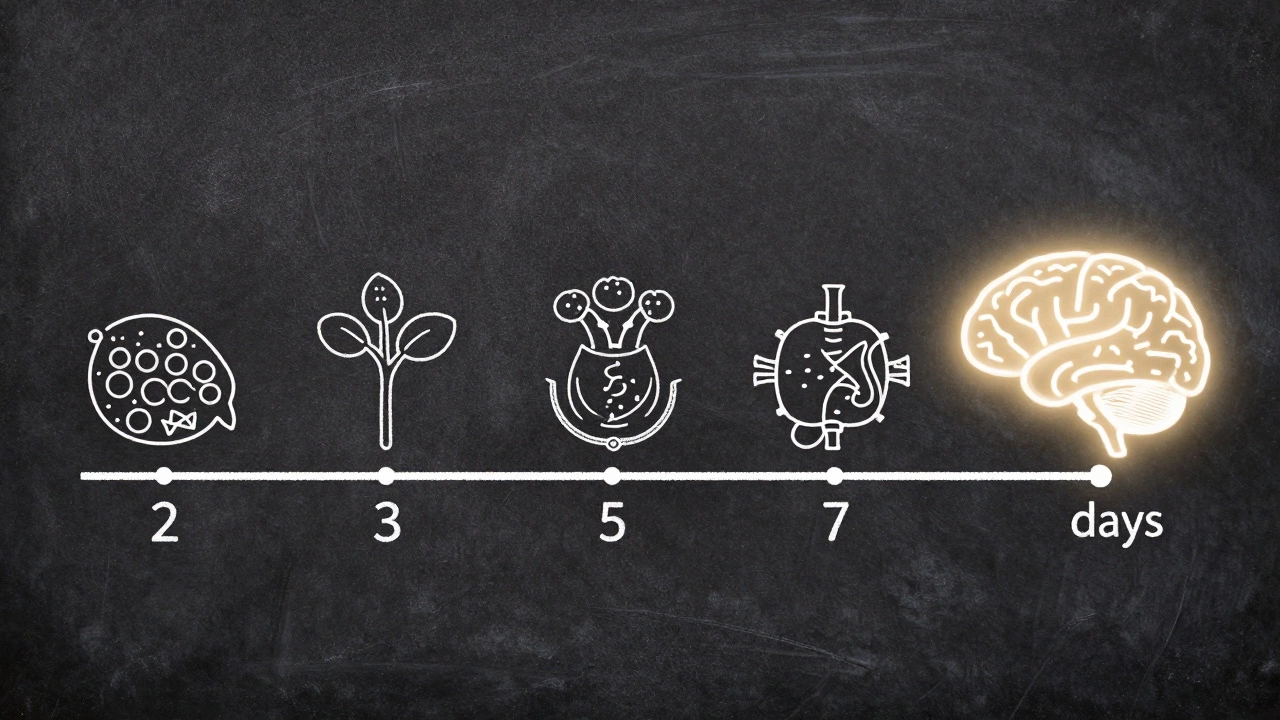
The 2/3, 5/7 study method is a spaced repetition schedule built around how your brain actually remembers things. It tells you exactly when to review your notes so that information sticks-not just for tomorrow’s quiz, but for the final exam weeks later.
Here’s how it breaks down:
- After you first learn something (say, a formula or a historical date), review it again 2 days later.
- Then, review it again 3 days after that (so 5 days total from the first study session).
- Next, review it 5 days after the last review (that’s 10 days from the start).
- Finally, review it 7 days after that (17 days total).
That’s it: 2, then 3, then 5, then 7. The numbers aren’t random. They match the natural forgetting curve-what psychologists call how fast your brain loses information if you don’t revisit it.
This method was adapted from research by Hermann Ebbinghaus in the 1880s and later refined by cognitive scientists like Robert Bjork and Piotr Wozniak. It’s not new. But it’s underused.
Why It Works Better Than Cramming
Most students study like this: read notes once, panic the night before, forget everything by lunchtime the next day.
The 2/3, 5/7 method flips that. It forces your brain to retrieve information just as you’re about to forget it. That’s when learning becomes strongest.
Every time you pull a fact back out of your memory, you strengthen the neural pathway. It’s like lifting weights-you don’t build muscle by holding a dumbbell once. You build it by lifting again, and again, when your arms are tired.
Studies from the University of California, Los Angeles, show that spaced repetition improves long-term retention by up to 200% compared to massed practice (cramming). And the 2/3, 5/7 schedule is one of the simplest ways to apply it without software.
How to Use It in Real Life
Let’s say you’re preparing for your GCSE Biology exam in six weeks. You’ve got 30 topics to cover.
Here’s how to apply the method day by day:
- Day 1: Study Topic 1-cell structure. Write down key points in your own words. Don’t just copy the textbook.
- Day 3: Review Topic 1. Try to recall the parts of a plant cell without looking. Write them down. Check. Correct.
- Day 6: Review Topic 1 again. This time, explain it out loud like you’re teaching someone else.
- Day 11: Review Topic 1. Now combine it with Topic 2 (photosynthesis). How do they connect?
- Day 18: Final review of Topic 1. If you can still recall it clearly, you’re good. Move it to your ‘mastered’ pile.
Repeat this for each topic. You don’t need to review everything every day. Just follow the 2-3-5-7 rhythm for each one as you add it.
By week 5, you’ll be reviewing 10-15 topics at once. That’s fine. It’s not chaos-it’s consolidation. Your brain is linking ideas together.
What to Do When You Forget Something
If you can’t remember a topic during a review, don’t panic. That’s normal. It just means you need to bring it back to the front of the line.
When you blank on something:
- Go back to the beginning of the cycle: review it in 2 days.
- Write a short explanation on a sticky note and put it on your mirror or laptop.
- Turn it into a quiz question: ‘What are the three stages of cellular respiration?’
Forcing yourself to recall-even when it’s hard-is the whole point. If it’s easy, you’re not learning.

Tools That Make It Easier
You don’t need apps, but if you like them, here are a few that sync with the 2/3, 5/7 rhythm:
- Anki (free on desktop): Set custom intervals to 2, 3, 5, 7 days.
- Notion: Create a database with due dates tagged as ‘Review 2’, ‘Review 3’, etc.
- Google Calendar: Block 15 minutes each day for reviews. Label them by topic number.
But here’s the truth: the best tool is a notebook and a calendar you can touch. The physical act of writing down when to review makes it stick better than any notification ever could.
Who This Method Is For (And Who It’s Not)
This method works best for:
- Students preparing for exams with lots of factual content-GCSEs, A Levels, MCATs, nursing exams.
- People who study alone and need structure.
- Those who feel overwhelmed by too many topics and don’t know where to start.
It’s less ideal for:
- Learning skills that require constant practice-like playing piano or coding.
- Subjects that rely on deep conceptual understanding without facts to memorize (though you can still use it for key definitions).
If you’re studying for a law exam or a medical licensing test, this method is gold. If you’re learning how to fix a bike, you’ll need hands-on repetition instead.
Common Mistakes to Avoid
Even when students know the method, they mess it up. Here’s what goes wrong:
- Skipping reviews because ‘I got it yesterday.’ You didn’t. You just recognized it. That’s not memory.
- Reviewing too early-like every day. That wastes energy. Wait until you’re almost forgetting.
- Not testing yourself. Just rereading notes doesn’t count. You have to recall.
- Trying to do it all at once. Start with 3 topics. Master the rhythm. Then add more.
One student I worked with in Dublin tried to review 12 topics every day. She burned out in two weeks. When she switched to 2/3, 5/7, focusing on just 5 topics at a time, her mock exam scores jumped from 52% to 81%.
Why This Beats the Pomodoro Technique for Exams
Many students use Pomodoro-25 minutes of work, 5-minute break. It’s great for focus. But it doesn’t help with memory.
The 2/3, 5/7 method is about timing. It answers the question: When should I come back to this?
Pomodoro says: work now. This method says: work now, and come back on these exact days.
They’re not rivals. Use Pomodoro for your daily study blocks. Use 2/3, 5/7 to decide what to review.
Final Tip: Track Your Progress
Keep a simple chart:
| Topic | First Study | Review 1 (2d) | Review 2 (5d) | Review 3 (10d) | Review 4 (17d) | Mastered? |
|---|---|---|---|---|---|---|
| Cell Division | Jan 5 | Jan 7 | Jan 10 | Jan 15 | Jan 22 | ✓ |
| Photosynthesis | Jan 6 | Jan 8 | Jan 11 | Jan 16 | Jan 23 | ✓ |
| Human Circulatory System | Jan 7 | Jan 9 | Jan 12 | Jan 17 | Jan 24 | ✗ |
Seeing progress on paper builds confidence. And when you start ticking off ‘Mastered?’, you feel in control-not overwhelmed.
Start Small. Stick With It.
You don’t need to overhaul your whole study routine. Pick one subject. Pick three topics. Apply 2/3, 5/7. Do it for two weeks.
By the end, you’ll notice something strange: you’re remembering things you didn’t even try to memorize. That’s the method working. Your brain is learning how to hold onto knowledge.
Exams aren’t about how much you cram. They’re about what you still know weeks later.
This method gives you that edge-without burnout, without panic, without all-nighters.
Is the 2/3, 5/7 study method backed by science?
Yes. It’s based on the spacing effect, a well-documented cognitive principle proven in hundreds of studies since the 1880s. Research from the University of Chicago and the University of California shows that spacing out reviews improves long-term retention far more than cramming. The 2/3, 5/7 schedule is a practical, simplified version of these findings.
Can I use this method for online exams or open-book tests?
Yes, even more so. Open-book exams test your ability to find and apply information quickly-not just recall facts. When you’ve reviewed material on the 2/3, 5/7 schedule, you know where to look and why it matters. You’ll save time and avoid getting lost in notes during the test.
What if I miss a review day?
Don’t stress. If you skip a review, just pick up where you left off. If you were supposed to review on Day 5 but didn’t until Day 7, treat Day 7 as your new Day 5. The rhythm is flexible. What matters is consistency over time, not perfection.
Does this work for younger students, like GCSEs?
Absolutely. GCSE students benefit the most because they’re often overloaded with content. The 2/3, 5/7 method cuts through the noise. One school in Galway used it with Year 10 students and saw a 37% drop in students scoring below a Grade 4 in science over one exam season.
How is this different from Anki or other flashcard apps?
Anki uses algorithms to adjust review timing based on how well you remember each card. The 2/3, 5/7 method is fixed and simple-no tech needed. It’s designed for people who want structure without complexity. You can use both: write your flashcards manually, then use the 2/3, 5/7 schedule to decide when to flip them.
Can I combine this with active recall or self-testing?
You should. Active recall-testing yourself without notes-is the most powerful way to learn. The 2/3, 5/7 method tells you when to test. Together, they’re a powerhouse combo. Don’t just reread. Cover your notes. Write or say what you remember. That’s where the real learning happens.
Next Steps
Start tomorrow. Pick one topic from your next exam. Study it now. Write down the dates: Day 1, Day 3, Day 6, Day 11, Day 18. Set a reminder. Stick to it.
By the time your exam rolls around, you won’t be guessing what you know. You’ll know exactly what you’ve mastered.