



ADHD Fatigue Estimator
How much mental energy does your child expend?
Select daily activities to estimate fatigue levels. Based on neurological research showing children with ADHD use 30% more mental energy for basic tasks.
Your child's mental energy expenditure
Mental energy used
Parents and teachers often notice it: a child with ADHD who starts the day full of energy, only to crash by mid-afternoon. They’re not lazy. They’re not just being difficult. They’re exhausted - and it’s not because they stayed up too late. Kids with ADHD get tired, but not in the way most people think. Their fatigue isn’t caused by too much activity. It’s caused by too much effort.
Why Kids with ADHD Get Tired
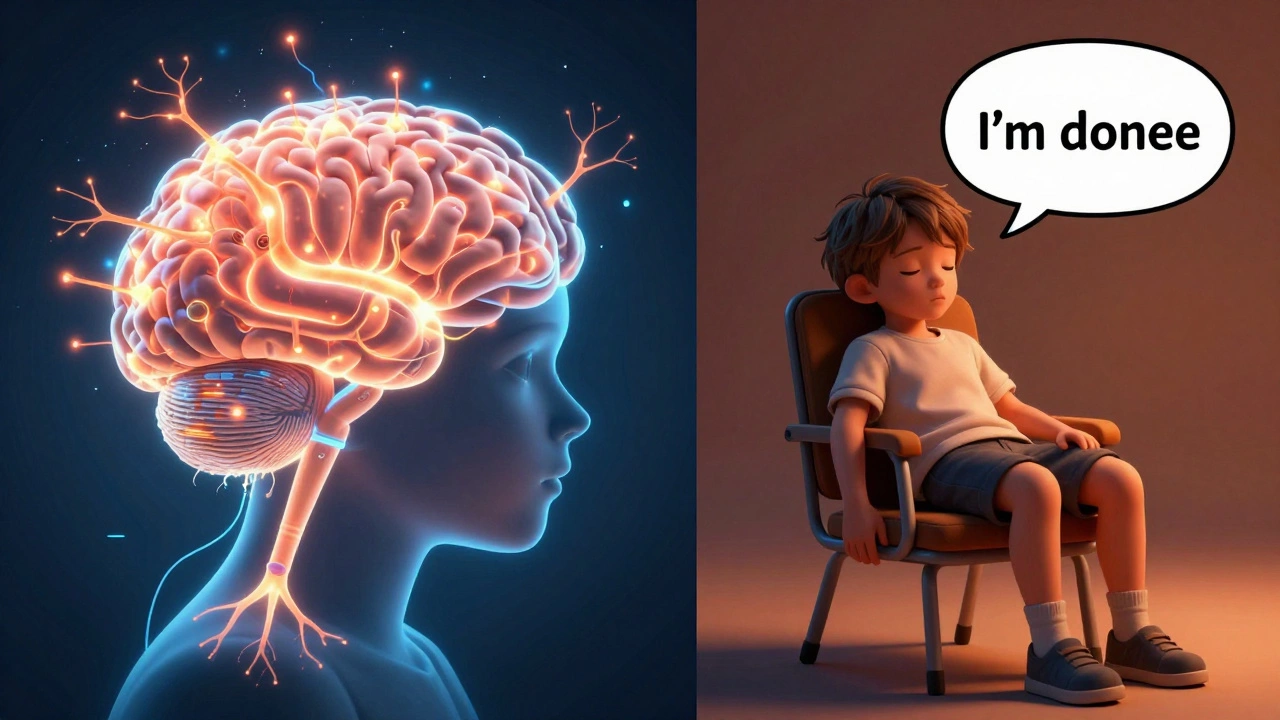
Think of ADHD as a brain that’s always on high alert. A child with ADHD doesn’t just struggle to focus - they’re constantly fighting to keep their attention steady. Every time they sit still in class, ignore background noise, wait their turn, or follow a multi-step instruction, their brain is working overtime. It’s like running a marathon while wearing heavy boots. No one sees the effort. But the child feels every step.
Neuroscientists have found that the frontal lobe - the part of the brain responsible for self-control, planning, and attention - works harder in children with ADHD. This means their brain burns more energy just to do basic tasks. A typical child might zone out for a few seconds during a lesson. A child with ADHD might be actively fighting distraction, monitoring their impulses, and trying to stay seated for the entire 40 minutes. That’s not just concentration. That’s cognitive labor.
Studies show that children with ADHD use up to 30% more mental energy than their peers for the same tasks. That’s why they can be hyperactive one minute and completely drained the next. It’s not a mood swing. It’s energy depletion.
The Hidden Signs of ADHD Fatigue
Fatigue in kids with ADHD doesn’t always look like sleeping. It looks like:
- Suddenly zoning out during a conversation, even if they were talking five seconds ago
- Throwing tantrums after school - not because they’re spoiled, but because they’ve used up all their self-control
- Refusing to do homework, not out of defiance, but because they can’t summon the mental energy to start
- Complaining of headaches or stomachaches, especially after school or during busy routines
- Needing to lie down or withdraw after social events, even if they seemed to enjoy them
These aren’t behavioral issues. They’re neurological responses. The brain is signaling: I’m done. I need rest.
Many parents mistake this for laziness or poor discipline. But if you watch closely, you’ll notice these kids are often the ones who try hardest. They’re the ones who ask, “Can we do this again?” even when they’re clearly worn out. They’re trying to keep up. And that’s exhausting.
How School Makes It Worse
Most classrooms are designed for neurotypical kids. Quiet desks. Long lectures. Constant transitions. Silence is expected. Movement is punished. For a child with ADHD, this environment is like a factory that demands precision from a machine that runs on bursts of energy.
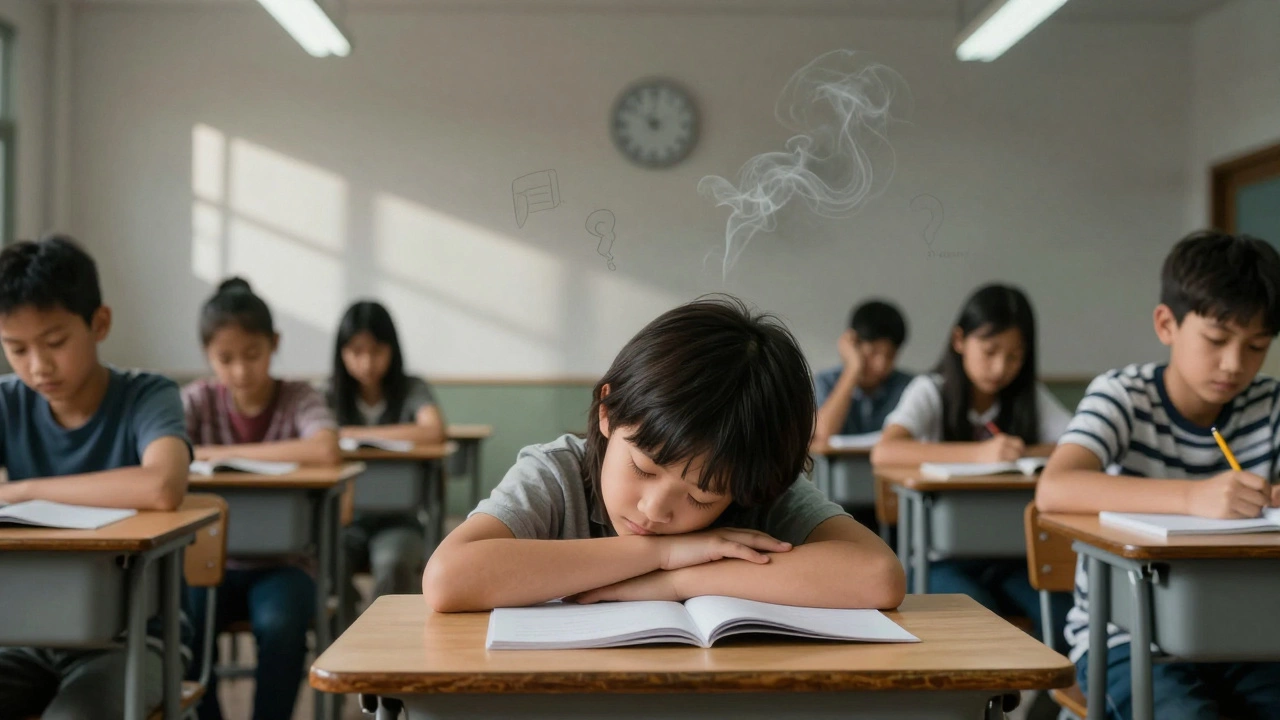
A 2024 study from the University of Dublin found that children with ADHD in mainstream classrooms reported mental exhaustion levels comparable to adults working 12-hour shifts. They weren’t physically active - they were mentally overloaded. The constant need to monitor themselves, suppress impulses, and follow rules drained their reserves.
Think about it: a child with ADHD has to remember to raise their hand, wait to be called on, listen to instructions, write down homework, and not blurt out answers. Each of these is a separate cognitive task. For a neurotypical child, it’s automatic. For a child with ADHD, it’s a full-time job.
Physical Symptoms of ADHD Fatigue
Fatigue isn’t just mental. It shows up in the body too.
- Slowed movements: They move slower, speak quieter, or stop fidgeting - not because they’re calm, but because they have nothing left to give.
- Increased irritability: Small frustrations feel huge. A dropped pencil becomes a meltdown. That’s not bad behavior - it’s a nervous system overload.
- Difficulty sleeping: Paradoxically, tired kids with ADHD often struggle to fall asleep. Their brains are still racing from the day’s effort. They can’t shut off the mental noise.
- Appetite changes: Some lose interest in food. Others crave sugary snacks as a quick energy boost. Both are signs of metabolic strain.
These symptoms aren’t random. They’re the body’s way of saying: You’ve been running on empty all day.
What Helps - and What Doesn’t
Rest isn’t just sleep. It’s recovery. And not all rest is equal.
What helps:
- Structured downtime: 15-20 minutes of quiet time after school - no screens, no talking, just sitting or lying down. This gives the brain time to reset.
- Movement breaks: Short bursts of physical activity (jumping jacks, walking around the yard) actually help restore focus. It’s not about burning energy - it’s about resetting the nervous system.
- Reduced demands: Cutting one or two non-essential tasks from their day (like extra chores or optional homework) can make a huge difference.
- Consistent routines: Predictability reduces mental load. Knowing what comes next means less energy spent on guessing.
What doesn’t help:
- More screen time: Videos and games don’t rest the brain - they overstimulate it.
- Pushing through: Telling them to “just try harder” only deepens the exhaustion.
- Strict discipline: Punishing tired behavior treats symptoms as choices, not biological responses.
When to Talk to a Doctor
If your child is consistently exhausted, irritable, or withdrawn after school, it’s worth talking to their pediatrician or a child psychologist. Fatigue can be a sign of:
- Undiagnosed or poorly managed ADHD
- Co-occurring anxiety or depression
- Sleep disorders like delayed sleep phase syndrome (common in ADHD)
- Nutritional gaps (iron, vitamin D, omega-3s)
Medication isn’t the only solution. But for some kids, properly adjusted stimulant medication helps reduce the mental effort needed to focus - which means less fatigue. Non-stimulant options like atomoxetine or behavioral therapy can also help build coping strategies without drugs.
What Parents and Teachers Can Do Today
You don’t need a diagnosis to start helping. Here are three simple things you can do right now:
- Notice the crash: Track when your child’s energy drops. Is it after lunch? After math class? After group work? Use that pattern to adjust the day.
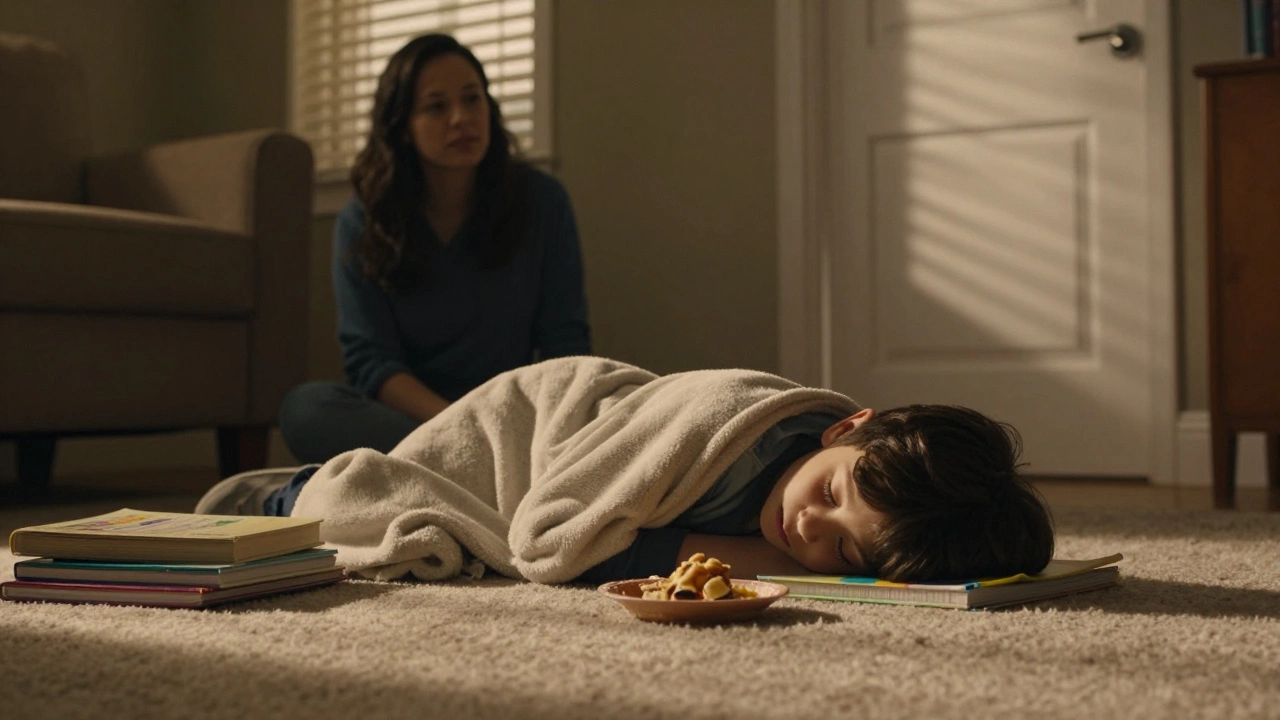
- Offer quiet recovery: Let them sit in a dim room with a blanket. No questions. No demands. Just space.
- Ask, “Do you need a break?” Instead of, “Why are you acting out?” This shifts the conversation from punishment to support.
Children with ADHD aren’t lazy. They’re working harder than most adults realize. Their fatigue isn’t weakness - it’s proof they’re trying.
Do kids with ADHD get tired even if they’re not physically active?
Yes. ADHD-related fatigue comes from mental effort, not physical activity. A child sitting quietly in class may be expending more energy than a peer running on the playground. Their brain is working hard to stay focused, control impulses, and filter out distractions - all of which drain mental reserves.
Is ADHD fatigue the same as being tired from lack of sleep?
Not exactly. While many kids with ADHD also have trouble sleeping, their fatigue is different. It’s not just about hours slept - it’s about how hard their brain worked during the day. A child who sleeps 9 hours but had a high-demand school day may still feel exhausted, while a child who sleeps 7 hours but had a calm, low-stimulus day might feel fine.
Can diet affect ADHD fatigue?
Yes. Low iron, vitamin D, or omega-3 levels are common in children with ADHD and can worsen fatigue. Sugary snacks give a quick spike but lead to crashes. Balanced meals with protein, healthy fats, and complex carbs help stabilize energy. Some parents notice improvements after reducing artificial additives, though evidence is mixed. Always check nutrient levels with a doctor before making big dietary changes.
Why does my child seem hyper at home but tired at school?
At home, they’re in a low-demand environment. There’s less pressure to sit still, follow rules, or filter distractions. Their brain doesn’t have to work as hard. At school, every interaction - raising a hand, waiting for a turn, ignoring noise - requires mental control. The energy they spend there drains them. When they get home, they may act out because they’re overwhelmed, not because they’re being defiant.
Should I let my child nap after school?
A short 15-20 minute rest can help reset their nervous system - especially if they’re consistently exhausted. But longer naps can interfere with nighttime sleep. Try quiet time instead: dim lights, no screens, no talking. Let them lie down, read quietly, or just breathe. The goal isn’t sleep - it’s recovery.