






Adult Learning Method Matcher
Select your primary goal for the upcoming session or course to find the best pedagogical approach.
Practical Skills
I want learners to master a tangible skill (e.g., software, conflict resolution) they can use immediately.
Critical Thinking
I want learners to analyze complex problems and develop solutions for real-world issues.
Flexibility
My students have busy schedules and need to learn at their own pace outside the classroom.
Autonomy
I want to empower motivated learners to take full ownership of their educational journey.
Community
I want to leverage the diverse experiences of the group to build a supportive network.
Deep Insight
I want learners to process past experiences and identify personal biases or patterns.
Recommended Approach
Description goes here.
✔Why it works:
Benefit description.
⚠Watch out for:
Challenge description.
Implementation Strategy:
Imagine walking into a classroom where everyone has a job, kids at home, and bills to pay. They aren't there because they have to be; they are there because they want to change their lives. This is the reality of adult education, which focuses on teaching learners who are past the traditional school age and often bring years of life experience to the table. If you try to teach this group like they are twelve-year-olds, you will likely fail. Adults learn differently. They need respect for their time, relevance to their daily struggles, and practical tools they can use immediately.
The core challenge for educators in this space is shifting from being the "sage on the stage" to a facilitator of knowledge. You aren't just dumping information; you are helping adults connect new concepts to what they already know. This shift requires specific methodologies rooted in andragogy, the art and science of helping adults learn. Unlike pedagogy, which assumes the learner is dependent, andragogy assumes the learner is self-directed.
Understanding Andragogy: The Foundation of Adult Learning
Before diving into specific tactics, we need to understand the engine driving them. Andragogy was popularized by educator Malcolm Knowles in the 1970s. It rests on six key assumptions about how adults approach learning. First, adults need to know why they are learning something. Second, they need to be treated as capable of making their own decisions. Third, they bring a wealth of experience that serves as a resource for learning. Fourth, they are ready to learn things that help them cope with real-life tasks. Fifth, they are problem-centered rather than content-oriented. Finally, they are internally motivated to learn.
If you ignore these principles, engagement drops fast. For example, if you assign a theoretical essay on supply chain logistics without explaining how it helps a manager reduce costs next quarter, an adult learner will check out. But if you frame it as solving a specific bottleneck in their warehouse, they lean in. Understanding andragogy isn't just academic theory; it's the blueprint for keeping adult learners interested and active.
Experiential Learning: Learning by Doing
One of the most powerful methods in adult education is experiential learning. Coined by David Kolb, this method suggests that learning is a process whereby knowledge is created through the transformation of experience. Adults don't just want to hear about a concept; they want to test it.
In practice, this looks like simulations, role-playing, or case studies. Instead of lecturing on conflict resolution, put two students in a scenario where one is a dissatisfied customer and the other is a service rep. Let them struggle through the conversation, then debrief. What worked? What didn't? How did it feel? This method leverages the adult learner's existing experience. They compare the simulation to their past jobs, creating deeper neural connections than passive listening ever could.
- Simulations: Recreate real-world environments (e.g., a mock courtroom for law students).
- Role-Playing: Practice interpersonal skills in low-stakes settings.
- Case Studies: Analyze real business failures or successes to extract lessons.
This approach respects the adult's intelligence and provides immediate feedback. It turns abstract theory into concrete skill-building.
Self-Directed Learning: Empowering Autonomy
Adults are used to managing their own lives. They want that same control in the classroom. Self-directed learning involves the learner taking primary responsibility for diagnosing their learning needs, formulating goals, identifying resources, implementing strategies, and evaluating outcomes.
As an instructor, your job shifts to providing the roadmap, not driving the car. Offer a menu of topics and let learners choose which ones resonate with their career goals. Provide resources-books, videos, articles-and ask them to come prepared with insights. When adults feel ownership over their education, motivation skyrockets. They aren't studying to pass a test imposed by someone else; they are studying to solve a problem they identified themselves.
This method also builds critical thinking skills. Learners must evaluate the credibility of sources and synthesize information independently. In a world flooded with misinformation, this ability is invaluable.
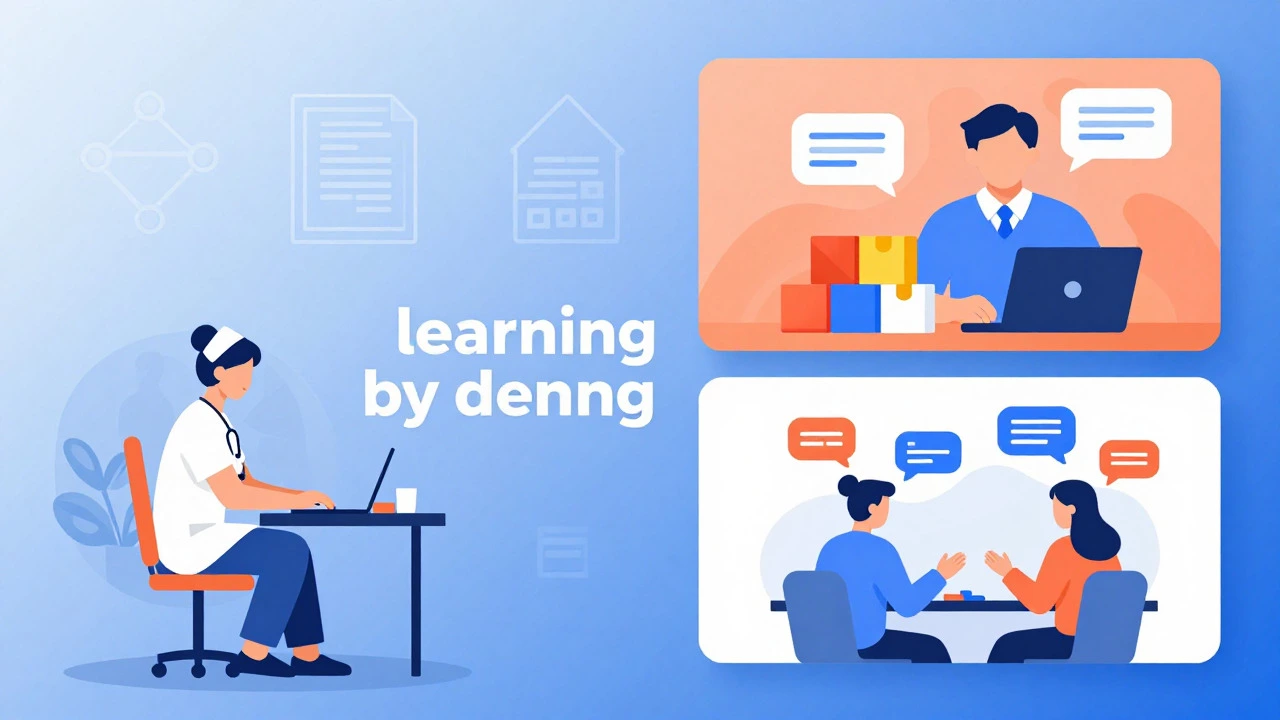
Problem-Centered Learning: Solving Real Issues
Closely related to experiential learning is problem-based learning (PBL). Here, the curriculum is built around complex, open-ended problems relevant to the learners' lives. There is no single right answer, which mirrors the ambiguity of the real world.
For instance, in a community health course, instead of memorizing disease statistics, students might tackle a local issue like rising diabetes rates in their neighborhood. They research causes, interview residents, propose interventions, and present solutions to community leaders. This method integrates multiple disciplines and encourages collaboration. It shows learners that education is a tool for social change and personal improvement, not just a credentialing exercise.
PBL keeps the focus on application. Adults are pragmatic. If they can't see how a lesson applies to their job, family, or community, they question its value. Problem-centered learning answers that question directly.
Collaborative Learning: Leveraging Peer Experience
Adult classrooms are unique because every participant brings decades of life and work history. Collaborative learning harnesses this diversity by having learners work together to achieve common goals. Group discussions, peer teaching, and team projects allow participants to share perspectives they wouldn't encounter in isolation.
When a nurse teaches a class on patient care, her colleagues might share stories from different specialties-pediatrics, geriatrics, emergency room. These exchanges broaden everyone's understanding. Collaborative learning also reduces the power distance between teacher and student. The instructor becomes a moderator, ensuring respectful dialogue and guiding the group toward key takeaways.
This method fosters a sense of community, which is crucial for retention. Adult learners often feel isolated, juggling work and study. Knowing they are part of a supportive network makes the journey less daunting.

Blended Learning: Flexibility Meets Structure
In 2026, flexibility is non-negotiable for many adult learners. Blended learning combines online instruction with face-to-face meetings. Online modules allow learners to consume content at their own pace, while in-person sessions are reserved for discussion, debate, and hands-on practice.
This hybrid model respects the adult's time constraints. They can watch lectures during their commute or after the kids go to bed. Then, when they meet in person, they dive deep into application. Technology platforms enable quizzes, forums, and resource sharing, keeping learners engaged between sessions. Blended learning also supports diverse learning styles, offering visual, auditory, and kinesthetic options.
However, it requires careful design. Without clear structure, adult learners can drift. Set deadlines, provide regular feedback, and maintain active communication channels to keep momentum going.
| Method | Best For | Key Benefit | Challenge |
|---|---|---|---|
| Experiential Learning | Skill acquisition | Immediate application | Requires safe environment |
| Self-Directed Learning | Motivated individuals | High autonomy | Risk of distraction |
| Problem-Based Learning | Critical thinking | Real-world relevance | Time-intensive |
| Collaborative Learning | Diverse groups | Peer support | Group dynamics issues |
| Blended Learning | Busy schedules | Flexibility | Tech barriers |
Reflective Practice: Making Sense of Experience
Finally, reflective practice encourages learners to think critically about their experiences and actions. Through journals, discussions, or guided questions, adults analyze what happened, why it happened, and how they can improve. This metacognitive process deepens understanding and promotes continuous growth.
Reflection transforms routine activity into meaningful learning. It helps adults identify biases, recognize patterns, and plan future actions more effectively. In professional development, reflective practice is essential for lifelong learning.
What is the difference between pedagogy and andragogy?
Pedagogy refers to the method and practice of teaching children, where the teacher directs the learning process. Andragogy focuses on adult learning, emphasizing self-direction, relevance, and leveraging prior experience. Adults are internal motivators, while children are often externally motivated.
Why is experiential learning effective for adults?
Experiential learning allows adults to apply new knowledge to real-world scenarios immediately. Since adults learn best when they see practical applications, doing rather than just listening reinforces memory and skill retention.
How can I implement self-directed learning in my course?
Start by setting broad goals and letting learners choose specific topics or projects. Provide resources and checkpoints for feedback. Encourage learners to assess their own progress and adjust strategies as needed.
Is blended learning suitable for all adult learners?
Blended learning works well for most adults due to its flexibility. However, ensure access to technology and digital literacy support. Some learners may prefer fully in-person or fully online formats based on their personal circumstances.
What role does reflection play in adult education?
Reflection helps adults process experiences, identify areas for improvement, and integrate new insights into their existing knowledge base. It fosters deeper understanding and promotes lifelong learning habits.