



Free Online School Cost Estimator
While many public online schools are tuition-free, there are often hidden costs. Use this tool to estimate your annual out-of-pocket expenses.
Fill out the form and click "Estimate" to see your potential savings vs. private options.
Most parents assume that if a school is "online," it must be expensive. They picture private academies charging $20,000 a year or massive university fees. But here is the twist: for K-12 students, the answer to is online school free in the US is often yes. Not always, and not everywhere, but yes. If you are looking at distance learning for your kids, you might not need to sell a kidney to afford it.
The confusion comes from mixing up different types of institutions. There are private online schools, which are businesses selling a service. Then there are public online schools, which are government-funded entities delivering the same curriculum as brick-and-mortar buildings. The latter are where the money-saving magic happens. Let’s break down exactly how this works, who qualifies, and what the hidden costs actually look like.
Understanding the Landscape: Public vs. Private Online Schools
To understand why some online schooling is free, you have to look at how American education is funded. In the United States, public education is supported by tax dollars. This applies whether the classroom has four walls or exists entirely on a computer screen. When a student enrolls in a public online school, they are still considered a resident of their district or state. The state pays the school per pupil, just like it would for a traditional neighborhood school.
Virtual Charter Schools are publicly funded schools that operate independently of local school districts but receive state funding based on enrollment. These institutions are legally required to provide a free education to eligible students. Unlike private platforms such as Khan Academy (which offers free content but no degree) or Outschool (a marketplace for classes), virtual charters grant diplomas and transcripts recognized by colleges and employers.
On the flip side, Private Online Schools are independent institutions that charge tuition fees and do not receive direct state funding for individual students. Examples include Stanford Online High School or various religious academies. These schools offer specialized curricula, smaller class sizes, or specific pedagogical approaches. You pay for these perks. The price tag can range from $5,000 to over $30,000 annually. So, when someone asks if online school is free, they are usually conflating these two very different worlds.
Which States Offer Truly Free Online K-12 Education?
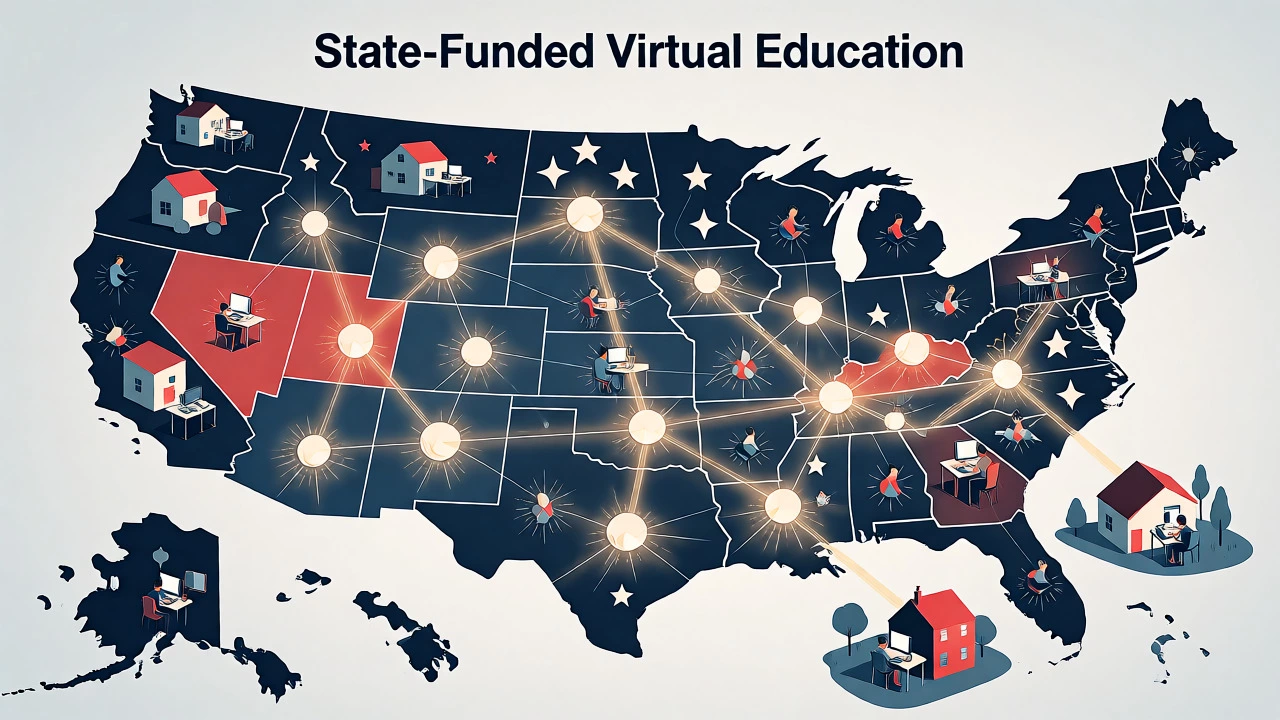
Not every state allows residents to enroll in any online public school. Education policy is determined at the state level, creating a patchwork quilt of access. Some states are incredibly open, while others restrict online options to students with specific needs or those living in rural areas.
States like Florida is one of the most prominent states for virtual schooling, offering statewide programs like Florida Virtual School (FLVS), which is largely free for residents. Similarly, Ohio has a robust network of e-schools that are fully state-funded. In these regions, if you live within state borders, you can often enroll without paying tuition.
However, other states are more restrictive. California, for instance, has seen significant growth in independent study programs post-pandemic, but funding models vary by county and district. Texas has a mix of open-enrollment charters and district-run programs. In New York, many online options are tied to specific districts, meaning you cannot simply pick a school across the state line; you generally must attend one affiliated with your local district or an approved charter.
| School Type | Tuition Cost | Funding Source | Diploma Recognition | Best For |
|---|---|---|---|---|
| Public Virtual Charter | $0 (Free) | State Tax Dollars | Yes (State Accredited) | Residents seeking standard curriculum |
| District Online Program | $0 (Free) | Local District Budget | Yes (District Accredited) | Students wanting local support |
| Private Online Academy | $5k - $30k+ | Tuition & Endowments | Yes (Often Higher Ed Prep) | Specialized interests or elite prep |
| MOOCs / Content Platforms | $0 - Low Fee | Grants / Users | No (Certificates only) | Lifelong learners or supplemental study |
The Hidden Costs: It’s Not Always $0
Even when tuition is zero, "free" is a strong word. Parents frequently report unexpected expenses that pop up during the first semester. Because online schools rely on technology, the burden of infrastructure shifts partially to the home.
- Technology Requirements: While some states provide laptops or tablets, many do not. You might need to buy a reliable computer, webcam, and microphone. Internet service is another major factor. If your current plan caps data usage, streaming video lessons could result in overage charges. Some families upgrade to fiber-optic connections specifically for remote learning.
- Materials and Supplies: Textbooks are often digital now, but science labs require physical components. Chemistry kits, art supplies, or musical instruments may not be provided. Check the syllabus early. A $50 lab fee might seem small, but multiplied by three children, it adds up.
- Proctoring Fees: Standardized tests often require proctoring. While some schools handle this internally, others use third-party services like Examity. If your child takes AP exams or SATs through a testing center, registration fees apply regardless of whether your school was free.
- Time Opportunity Cost: This isn’t a cash expense, but it matters. Younger students often need a parent present to manage schedules and troubleshoot tech issues. If one parent reduces work hours to supervise online schooling, that lost income is a real economic cost.
Who Qualifies for Free Online Schooling?
Eligibility hinges primarily on residency. To attend a free public online school, you generally must be a legal resident of the state operating the program. Moving out of state mid-year can complicate transfers, though interstate agreements exist for military families.
There are also niche groups who find free online education particularly beneficial:
- Gifted Students: Many virtual schools allow acceleration. If your child finishes math in half the time, they can move ahead without waiting for peers. This flexibility is often unavailable in rigid traditional classrooms.
- Students with Health Issues: Chronic illness or disabilities that make commuting difficult can qualify students for Individualized Education Programs (IEPs) delivered online. The school must provide necessary accommodations, including speech therapy or occupational therapy sessions via video call.
- Athletes and Performers: Elite gymnasts, actors, or musicians who travel constantly benefit from asynchronous learning. They can complete coursework between tournaments or rehearsals. As long as they meet attendance and grading standards, their schedule is flexible.
- Rural Families: In areas where the nearest high school is an hour away, online schooling eliminates transportation costs and safety concerns associated with long bus rides.
How to Enroll: Step-by-Step Process
Getting into a free online school is rarely as simple as clicking a button. It involves paperwork and verification steps similar to traditional enrollment.
- Research State Policies: Visit your state Department of Education website. Look for "virtual schools," "cyber schools," or "online charter networks." Identify which ones accept new applications.
- Check Accreditation: Ensure the school is accredited by a recognized body like Cognia or AdvancED. Without proper accreditation, your child’s credits might not transfer to other high schools or universities.
- Gather Documents: Prepare birth certificates, immunization records, previous report cards, and proof of residency (utility bill or lease). Digital uploads are common, but keep originals handy.
- Complete Application: Fill out the online form accurately. Some schools have entrance assessments or interviews, especially for middle and high school levels.
- Attend Orientation: Most successful enrollments require attending a virtual orientation session. This covers platform navigation, communication expectations, and technical setup.
Common Myths About Free Online Schooling
Despite its popularity, misconceptions persist. Let’s clear the air on a few big ones.
Myth 1: Online school means less rigor. Studies suggest that motivated students perform equally well or better in online environments because they learn self-regulation skills early. However, it requires discipline. Without a teacher physically watching you, procrastination is the enemy.
Myth 2: There is no social interaction. Modern virtual schools emphasize community. They host field trips, sports leagues, proms, and club meetings. Students log in for live discussions, not just pre-recorded videos. Socialization depends on family effort to participate in these optional events.
Myth 3: It’s easy to cheat. Proctoring software tracks mouse movements and browser tabs. Teachers design assignments that require critical thinking rather than rote memorization. Plagiarism detectors are standard. Cheating leads to failing grades quickly.
Final Thoughts: Is It Right for Your Family?
If you want a diploma, a structured curriculum, and zero tuition bills, public online schooling is a powerful option. It democratizes access to quality education, removing geographic and financial barriers. But it demands active parental involvement and student autonomy.
Before signing up, ask yourself: Can my child manage their time? Do we have reliable internet? Are we willing to navigate occasional tech glitches? If the answers are yes, then yes, online school can be free-and potentially the best fit for your family.
Do I have to pay for textbooks in free online schools?
In most cases, no. Public online schools typically provide digital textbooks included in the state funding. However, if a course requires physical materials like art supplies or science lab kits, parents might need to purchase them. Always check the specific course syllabus for material lists.
Can I switch back to traditional school later?
Yes, transferring credits from an accredited online school to a traditional public or private school is standard practice. As long as the online school is regionally accredited, the credits should transfer seamlessly. Keep detailed transcripts and syllabi available in case the receiving school requests proof of coursework.
Are teachers certified in free online schools?
Absolutely. Teachers in public virtual schools must hold valid state teaching licenses, just like their counterparts in brick-and-mortar buildings. They undergo background checks and professional development requirements mandated by the state department of education.
What happens if my internet goes out?
Most online schools have policies for connectivity issues. Students are usually given extensions on assignments if they document the outage. Some schools allow downloading materials for offline completion. It is crucial to communicate with teachers immediately during outages to avoid penalties.
Is online school good for college admissions?
Yes, colleges recognize diplomas from accredited online schools. Admissions officers value the self-discipline and time-management skills demonstrated by successful online students. Strong GPA, rigorous course selection, and extracurricular involvement matter more than the delivery method of the education.