






Study Strategy Optimizer
Analyze your current struggle to find the exact method needed to hit 100% on your next test.
Your Recommended Strategy:
Key Takeaways for Perfect Scores
- Stop rereading notes; start retrieving information from your brain.
- Study in short, timed bursts rather than marathon sessions.
- Analyze your mistakes to find the "why" behind every wrong answer.
- Optimize your sleep and environment to maximize cognitive function.
The Myth of the "Study Hard" Mentality
Most students think that if they just read the textbook one more time, the information will stick. This is a trap called the illusion of competence. When you read a page for the third time, it looks familiar, so your brain tricks you into thinking you've mastered it. But familiarity isn't the same as mastery. Mastery is the ability to produce the answer from scratch without any prompts.
To actually get a 100, you need to shift from passive learning to Active Recall is a study method where you challenge your brain to retrieve a memory without looking at the source material. Instead of highlighting a sentence, close the book and try to explain the concept out loud. If you stumble, that's exactly where your knowledge gap is. That gap is where your missing points are hiding.
Mastering the Timing with Spaced Repetition
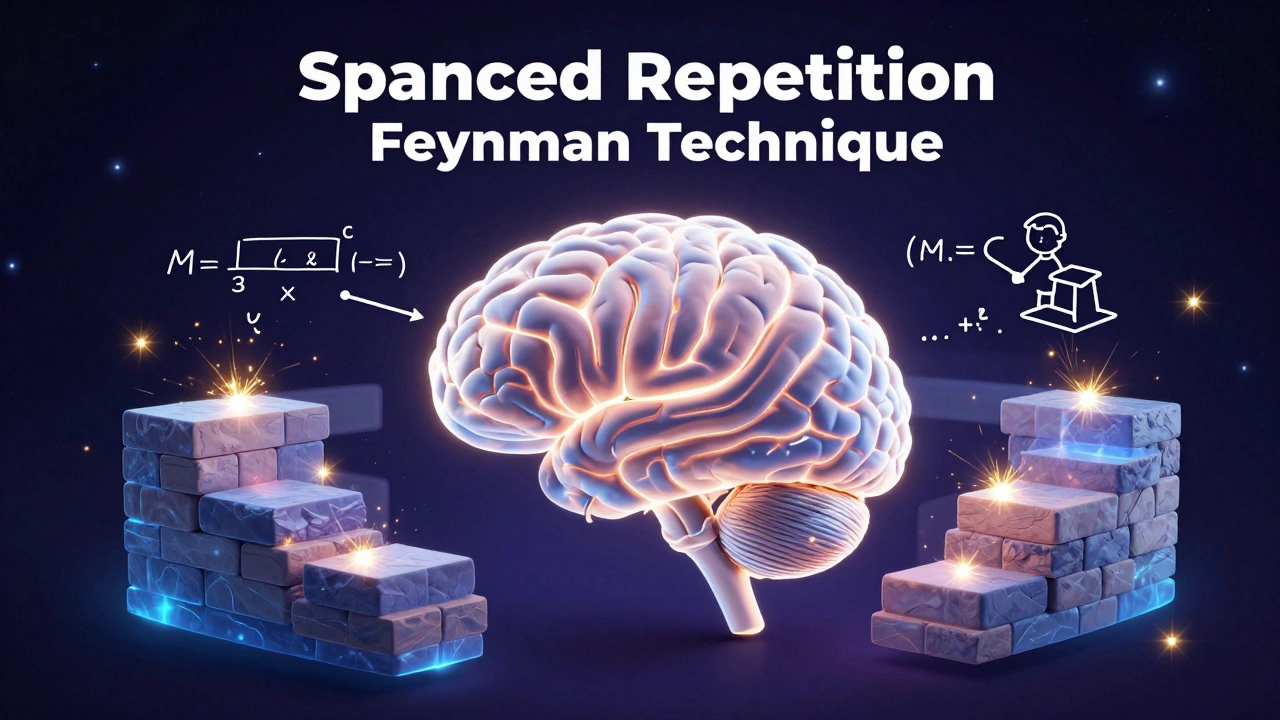
Your brain is designed to forget. It's a survival mechanism. If you cram for ten hours on a Sunday, you'll remember a lot on Monday, but by Thursday, half of it is gone. This is known as the forgetting curve. To fight this, you need Spaced Repetition, which is the practice of reviewing information at increasing intervals to move it from short-term to long-term memory.
Think of it like building a brick wall. You can't put all the mortar on at once and expect it to hold; you have to let each layer set. If you learn a concept on Monday, review it on Tuesday, then again on Thursday, and once more the following week, you're telling your brain that this information is vital. Tools like Anki or traditional flashcards are perfect for this. They force you to face the hardest material most often, ensuring no single topic is a weak link in your preparation.
The Science of High-Efficiency Study Systems
If you want a perfect score, you need a workflow that eliminates waste. Many students waste time on the things they already know because it feels good to be right. To get a 100, you have to embrace the discomfort of being wrong. This is called desirable difficulty.
One of the most effective ways to do this is the Feynman Technique. This involves picking a complex topic and trying to explain it in the simplest terms possible, as if you were talking to a six-year-old. If you can't simplify it, you don't actually understand it. When you hit a wall in your explanation, go back to the source material, fill the gap, and try again. This process transforms a surface-level understanding into a deep, conceptual grasp that allows you to answer even the most "trick" questions on a test.
| Method | Effort Level | Retention Rate | Best For... |
|---|---|---|---|
| Rereading/Highlighting | Low | Low | Initial familiarity |
| Active Recall | High | High | Fact retrieval & concepts |
| Spaced Repetition | Medium | Very High | Long-term memory |
| Feynman Technique | High | Maximum | Deep understanding/Logic |
Strategic Exam Preparation and Simulation
The biggest difference between an 'A' student and a '100%' student is how they handle the actual test environment. Anxiety and time pressure can make a genius forget the simplest formula. The only way to stop this is through high-fidelity simulation. You shouldn't just do practice problems; you should recreate the exam conditions.
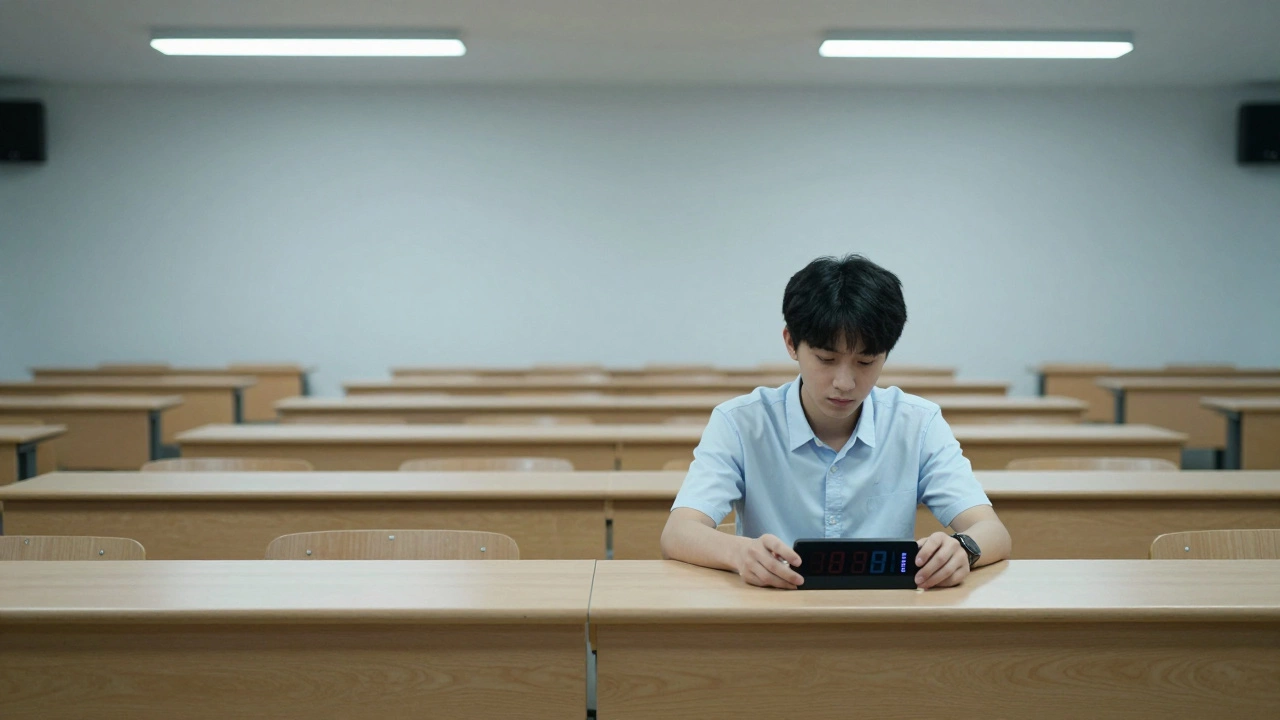
Set a timer for the exact duration of the test. Sit in a quiet room with no music, no phone, and no snacks-whatever the actual rules are. This trains your brain to handle the stress and helps you manage your time. You'll discover if you're spending too long on one difficult question, which is a common reason students miss a few points at the end of a test. Practice Time Boxing to ensure you have a buffer at the end for reviewing your answers.
The Art of the Post-Game Analysis
Most people finish a test, get their grade, and throw the paper in the bin. If you want 100s, you need to treat every mistake as a goldmine of information. You must perform a root-cause analysis on every single point lost.
Ask yourself: Why did I miss this? Was it a Careless Error (I knew the answer but wrote it wrong)? Was it a Knowledge Gap (I didn't know the material)? Or was it a Conceptual Error (I thought I understood it, but I was wrong)?
Once you identify the type of error, you can fix it. Careless errors require better checking systems (like reading the question backward). Knowledge gaps require more spaced repetition. Conceptual errors require the Feynman Technique. By systematically eliminating these errors, you move your floor from an 80% to a 100%.
Optimizing Your Biological Hardware
You can have the best study plan in the world, but if your brain is foggy, you'll make mistakes. Cognitive function is tied directly to physical health. Sleep is not a luxury; it is when Memory Consolidation happens. During deep sleep, your hippocampus ships information to the neocortex for long-term storage. If you pull an all-nighter, you're essentially deleting the work you just did.
Similarly, hydration and glucose levels affect your focus. A brain running on low fuel makes more mistakes. Instead of relying on high-sugar energy drinks that cause a crash mid-exam, stick to slow-release energy like nuts or fruit. The goal is a steady stream of energy to the brain, keeping your concentration sharp from the first question to the last.
Is it possible to get 100% on every single test?
Yes, but it requires a shift from studying "hard" to studying "strategically." It involves using active recall, spaced repetition, and a rigorous analysis of your mistakes. While a few points might be lost to subjective grading in essays, in objective tests, it is entirely possible with the right system.
How do I stop making careless mistakes?
Careless mistakes usually happen because your brain is moving faster than your pen. To fix this, develop a "verification checklist." For example, always double-check the units in a math problem or re-read the last sentence of a question to ensure you're answering what was actually asked. Simulation is also key; the more you practice under pressure, the less likely you are to panic and slip up.
How much time should I spend on active recall?
Active recall should take up at least 60-70% of your total study time. Reading and highlighting are only for the initial phase of learning. Once you have a basic grasp, spend the majority of your time testing yourself, writing from memory, or explaining concepts. If it feels hard, it's working.
What if I run out of time during a test?
Use the "Three-Pass System." On the first pass, answer every question you know instantly. On the second pass, tackle the ones that require more thought. On the third pass, spend your remaining time on the hardest problems. This ensures you collect all the "easy" points first and never leave a simple question blank because you got stuck on a difficult one.
Can these methods work for essay-based exams?
Absolutely. For essays, use the Feynman Technique to master the core arguments and a structured outline for your points. Instead of memorizing a full essay, memorize the key evidence and the logical flow (the "skeleton") of your argument. This allows you to adapt your writing to the specific prompt while maintaining high-quality content.
Next Steps for Your Journey to 100%
If you're starting today, don't try to change everything at once. Start with one subject. Replace one hour of reading with one hour of active recall. Use a flashcard app like Anki for your most difficult vocabulary or formulas. Once you see your scores climb, the psychological win will give you the momentum to apply these systems to every class you take. Remember, the goal isn't just the grade, but the habit of efficient learning that will serve you long after you leave the classroom.