





Distance Learning Weekly Planner
Build Your Optimal Study Week
Click on any day slot to add activities. Follow the article's advice: schedule hard subjects during peak energy hours, use time-blocking, and include regular breaks.
Weekly Overview & Recommendations
It’s July 2026, and the idea of sitting in a lecture hall feels almost like a memory from another era. For millions of students, professionals, and lifelong learners, the classroom is now wherever they can get a decent Wi-Fi signal. But here is the hard truth: distance learning isn’t just about watching videos on your laptop while lying in bed. It requires a completely different set of skills than traditional schooling. If you treat it like a passive TV show, you will fail. If you treat it like a job, you will thrive.
You might be asking yourself why this matters so much right now. The landscape has shifted. Platforms are smarter, AI tutors are everywhere, and the expectation for engagement is higher than ever. Whether you are picking up a new skill, finishing a degree, or trying to keep up with work certifications, the mechanics of how you learn remotely define your success. Let’s break down exactly how to make it work without burning out.
Setting Up Your Physical and Digital Space
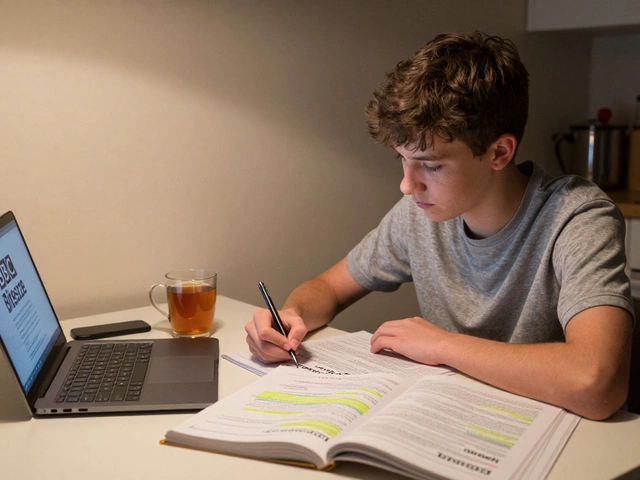
The biggest mistake people make is assuming that distance learning means studying anywhere. It doesn’t. Your brain needs cues to switch into "focus mode." If you study on the couch where you also watch Netflix, your brain gets confused. You need a dedicated zone. It doesn’t have to be a whole room-a corner of the kitchen table works if you clear it off every morning.
Think about your lighting and ergonomics. Sitting hunched over a laptop on your lap leads to back pain within an hour, which kills your concentration. Invest in a simple external keyboard and mouse if you are using a laptop. Keep your phone in another room. Yes, really. Notifications are the enemy of deep work. When you are ready to start, create a ritual. Maybe it’s making a cup of tea or putting on noise-canceling headphones. This signals to your brain that it is time to work.
Digital clutter is just as distracting as physical mess. Close all browser tabs except the one you need. Use apps like Forest or a focus timer app that gamifies staying off your phone to lock yourself out of social media during study blocks. Your environment should support your intent, not fight against it.
Mastering Time Management Without a Bell Schedule
In a traditional school, someone else decides when class starts and ends. In distance learning, you are the principal, the teacher, and the student. This freedom is terrifying for many people. The key is structure. You need to build a schedule that respects your energy levels, not just the clock.
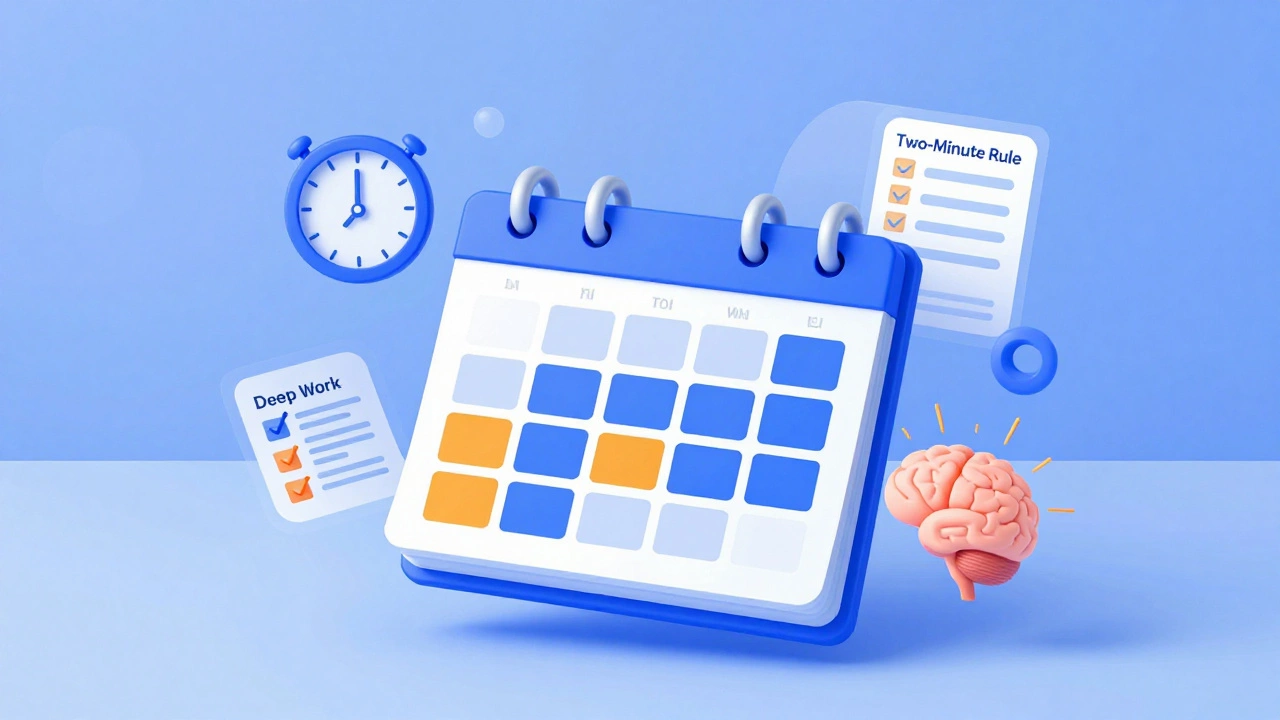
Start by identifying your peak productivity hours. Are you sharp at 8 AM or do you hit your stride at 9 PM? Schedule your hardest subjects during those windows. Save administrative tasks like emailing instructors or organizing files for your low-energy times. Use time-blocking. Instead of saying "I’ll study today," say "I will study Module 3 from 10:00 to 11:30 AM." Specificity wins.
- The Pomodoro Technique: Work for 25 minutes, break for 5. After four cycles, take a longer break. This prevents mental fatigue.
- The Two-Minute Rule: If a task takes less than two minutes (like submitting a quiz), do it immediately. Don’t let small tasks pile up.
- Weekly Reviews: Every Sunday, look at what you accomplished and plan the next week. Adjust based on what worked and what didn’t.
Remember, consistency beats intensity. Studying for one focused hour every day is far better than cramming for ten hours on Sunday night. Your brain needs sleep to consolidate memory. Skipping sleep to study more is counterproductive.
Staying Engaged in Virtual Classrooms
One of the hardest parts of remote education is the lack of social pressure. No one is looking at you to see if you are paying attention. This makes it easy to drift off. To combat this, you must become an active participant, not a passive observer.
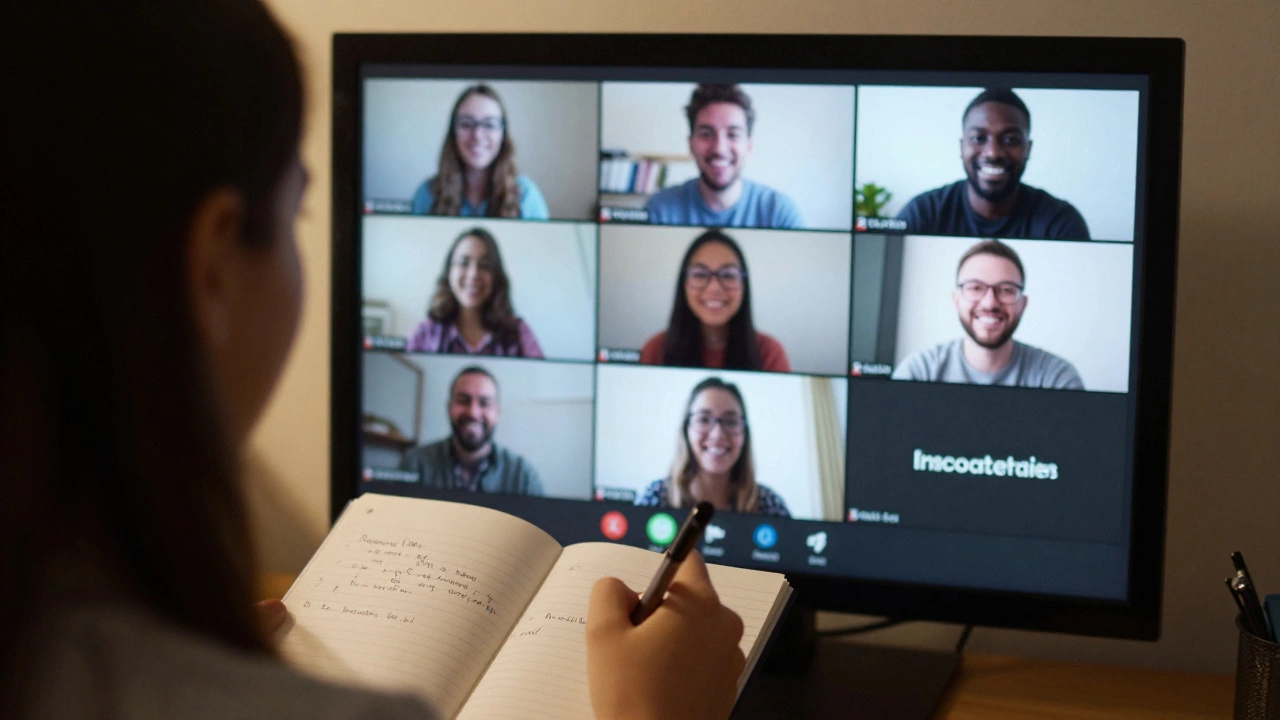
If you are joining live sessions via Zoom or Teams, turn your camera on if you can. Seeing other faces creates a sense of accountability. Even if you don’t speak, being visible keeps you engaged. Take handwritten notes. Studies consistently show that writing by hand improves retention compared to typing. It forces you to summarize ideas rather than transcribing them word-for-word.
When you feel stuck, reach out. In a physical classroom, you might raise your hand. Online, you use the chat box or send a direct message to the instructor. Don’t wait until the deadline is due. Build relationships with your peers. Form a study group on Discord or WhatsApp. Explaining concepts to others is one of the best ways to solidify your own understanding. Isolation is the silent killer of distance learning motivation.
Leveraging Technology and AI Tools
We are living in the age of intelligent assistance. By 2026, AI tools are integrated into most learning platforms. Use them wisely. They are not there to do your work for you, but to help you understand it faster.
Use AI chatbots to explain complex topics in simpler terms. If a textbook paragraph confuses you, paste it into an AI tool and ask, "Explain this like I’m fifteen." Use translation tools if you are studying in a second language. However, always verify information. AI can hallucinate facts. Cross-reference with your course materials.
Organize your resources using cloud storage. Google Drive or Dropbox should be your central hub. Create folders for each module. Name your files clearly (e.g., "Week_4_Essay_Draft_v1"). Losing a file because it was saved as "Untitled.docx" on your desktop is a frustration you can avoid. Use citation managers like Zotero or Mendeley if you are doing academic research. They save hours of formatting time later.
Maintaining Mental Health and Avoiding Burnout
Distance learning blurs the lines between work, life, and rest. You can end up feeling like you are always "on." This leads to burnout. You need strict boundaries. When your study session ends, shut down the laptop. Physically close it. Put it away. Do not check emails after 7 PM unless it is an emergency.
Exercise is non-negotiable. It boosts blood flow to the brain and reduces stress. A twenty-minute walk outside can reset your focus better than scrolling through Instagram. Connect with friends and family who aren’t part of your study group. Remind yourself that you have a life outside of these modules.
If you feel overwhelmed, talk to someone. Many online institutions offer counseling services. There is no shame in struggling. The pace of modern education is fast. Taking a break to recharge is not quitting; it is strategy.
| Aspect | Traditional Classroom | Distance Learning |
|---|---|---|
| Schedule | Fixed by institution | Self-managed (requires discipline) |
| Social Interaction | Automatic face-to-face | Intentional digital connection |
| Note-Taking | Often reactive | Must be proactive and organized |
| Support Access | Office hours | Email, forums, async messaging |
Troubleshooting Common Pitfalls
Even with the best plans, things go wrong. Here is how to handle the most common issues.
Technical Glitches: Always record your lectures if allowed. Internet drops happen. Having a backup recording saves you from missing critical content. Keep a power bank charged for your devices. Test your microphone and camera before every live session.
Procrastination: Break large projects into tiny steps. Instead of "Write Essay," write "Outline Introduction." Small wins build momentum. If you are stuck, set a timer for five minutes and just start. Often, the hardest part is beginning.
Loneliness: Join online communities related to your field. LinkedIn groups, Reddit subreddits, or professional associations can provide peer support. You are not alone in this journey.
Is distance learning as effective as traditional classroom learning?
Yes, research shows that distance learning can be just as effective, provided the student is self-motivated and uses active learning strategies. The key difference is the level of personal responsibility required. Students who engage actively with materials and peers often perform equally well or better than their in-person counterparts.
How do I stay motivated when studying alone?
Motivation fluctuates, so rely on discipline and systems instead. Set clear, achievable goals for each session. Reward yourself after completing tasks. Connect with study partners online to create accountability. Remember your long-term reason for studying-whether it’s a career change or personal growth-and revisit that vision when energy dips.
What technology do I need for successful distance learning?
You need a reliable computer or tablet, stable high-speed internet, and a quiet workspace. Essential software includes a video conferencing tool (like Zoom), a note-taking app (like OneNote or Notion), and a file organizer. Noise-canceling headphones are highly recommended for minimizing distractions during live sessions.
Can I balance a full-time job with distance learning?
It is challenging but possible with careful time management. Look for asynchronous courses that allow you to complete work on your own schedule. Communicate openly with your employer about your commitments. Prioritize your health and ensure you get enough sleep. Consistency is more important than speed.
How do I avoid plagiarism in online assignments?
Always cite your sources properly using the required style guide (APA, MLA, etc.). Use plagiarism checker tools available through your institution before submitting. Understand the material deeply enough to explain it in your own words. Never copy-paste from AI or websites without proper attribution and critical analysis.