





The Adult Learning Blueprint
Configure Your Profile
Enter your details to see how your brain is optimized for learning right now.
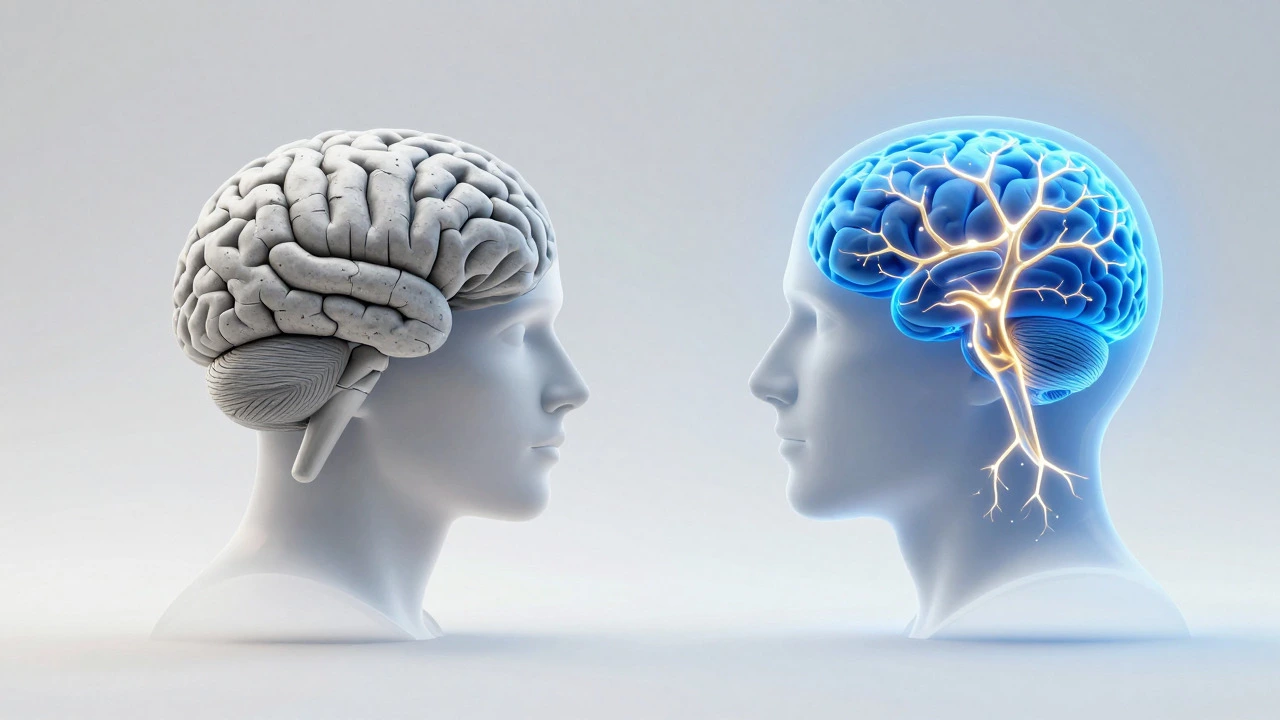
There is a persistent myth that once you pass your twenties, your brain hardens like concrete. You might have heard the phrase "you can't teach an old dog new tricks" or felt the frustration of trying to learn a language in your forties while remembering how easy it was at sixteen. But here is the truth: adults never stop learning. In fact, neuroplasticity-the brain's ability to reorganize itself by forming new neural connections-continues throughout your entire life.
The question isn't *when* we stop learning, but rather *how* our learning changes as we age. While children absorb information like sponges, adult learners operate more like architects, building on existing frameworks. Understanding this shift is crucial for anyone looking to upskill, change careers, or simply keep their mind sharp in later years.
The Myth of the Fixed Brain
For decades, scientists believed that the brain was "fixed" after childhood. They thought that once neural pathways were established, they couldn't be significantly altered. This view suggested that intelligence and learning capacity peaked early and then declined steadily. However, modern neuroscience has completely overturned this idea.
Neuroplasticity is the lifelong capacity of the brain to change its structure and function in response to experience. It is not just about recovering from injury; it is the fundamental mechanism of all learning. When you learn to play the guitar, navigate a new city, or master a coding language, your brain physically changes. Synapses strengthen, new neurons are born (a process called neurogenesis, particularly in the hippocampus), and white matter tracts become more efficient.
This means there is no specific age where learning switches off. A 70-year-old learning piano undergoes similar structural changes in their motor cortex as a 10-year-old does, though the speed and strategy may differ. The brain remains malleable until death. The key takeaway? Your potential to acquire new skills is not capped by your birth year.
How Adult Learning Differs from Child Learning
If we never stop learning, why does it feel harder as we get older? The answer lies in the difference between implicit learning (absorbing without conscious effort) and explicit learning (conscious, effortful study).
Children excel at implicit learning. Drop them in a Spanish-speaking household, and they will pick up the language naturally through immersion. Their brains are optimized for pattern recognition and rapid absorption. Adult brains, however, prioritize efficiency. We rely heavily on crystallized intelligence-accumulated knowledge and experience-to interpret new information.
- Speed vs. Depth: Children learn faster initially because they have fewer preconceived notions to unlearn. Adults often struggle with "interference" from previous habits. For example, an adult learning French might constantly translate from English, slowing down fluency. However, adults understand grammar rules faster due to prior educational experience.
- Motivation: Adult learning is typically self-directed and goal-oriented. You aren't learning because a teacher told you to; you're learning because you need to fix a leaky faucet or get a promotion. This intrinsic motivation often leads to deeper retention, even if the initial acquisition feels slower.
- Contextualization: Adults connect new information to existing mental models. This makes complex abstract concepts easier to grasp if you have the right background knowledge. A 40-year-old manager understands "supply chain logistics" better than a 15-year-old because they can map it to real-world business scenarios.
So, while the raw processing speed might decline slightly with age, the ability to synthesize, analyze, and apply knowledge actually improves. You trade velocity for precision.
Cognitive Changes Across Decades
To set realistic expectations, it helps to look at what happens to specific cognitive functions over time. Not all parts of the brain age at the same rate.
| Age Range | Peak Abilities | Challenges | Learning Strategy |
|---|---|---|---|
| 20s - 30s | Processing speed, working memory, fluid intelligence | Distractibility, lack of deep expertise | High-volume exposure, trial-and-error |
| 40s - 50s | Crystallized intelligence, pattern recognition, emotional regulation | Rigid thinking habits, multitasking fatigue | Spaced repetition, connecting to prior knowledge |
| 60s+ | Vocabulary, wisdom, social cognition | Slower retrieval speed, reduced attention span | Focused single-tasking, frequent breaks, sleep optimization |
Fluid intelligence-the ability to solve novel problems independent of past knowledge-does tend to peak in young adulthood and gradually decline. However, crystallized intelligence-your store of facts, vocabulary, and skills-continues to grow well into your 60s and 70s. This is why older adults are often better at trivia, strategic planning, and nuanced communication, even if they take longer to memorize a phone number.

Barriers to Learning in Adulthood
If the brain is capable, why do so many adults give up on learning? The barriers are rarely biological; they are logistical and psychological.
- Time Scarcity: Adults juggle careers, families, and aging parents. Finding consistent blocks of time for deliberate practice is difficult. Unlike school, where learning is scheduled, adult learning requires aggressive time management.
- The "Imposter Syndrome": Many adults feel embarrassed starting from scratch. Returning to basics after years of professional success can trigger feelings of inadequacy. This fear of judgment is a massive deterrent.
- Inefficient Methods: Most adults try to learn using methods designed for teenagers (passive reading, cramming). These methods are ineffective for the adult brain, which requires active recall and spaced repetition to encode long-term memory.
- Health Factors: Sleep deprivation, chronic stress, and poor diet directly impact hippocampal volume. Cortisol, the stress hormone, can literally shrink the part of the brain responsible for memory formation. If you are burnt out, your brain is chemically less receptive to new input.
Addressing these barriers is more important than worrying about age. A rested, motivated 50-year-old will outlearn a stressed, distracted 20-year-old every time.
Strategies for Effective Adult Learning
To maximize your brain's plasticity, you need to adapt your approach. Here are evidence-based strategies tailored for the adult learner.
1. Leverage Spaced Repetition
Cramming doesn't work for long-term retention. Instead, use spaced repetition systems (SRS). Review material at increasing intervals-after one day, three days, one week, one month. This forces your brain to retrieve information just as it’s about to forget it, strengthening the neural pathway each time. Apps like Anki are popular tools for this.
2. Embrace Active Recall
Stop re-reading notes. Start testing yourself. Closing the book and trying to explain the concept aloud is far more effective than passive review. This "desirable difficulty" signals to your brain that the information is important and worth storing.
3. Connect to Existing Knowledge
Your brain loves hooks. When learning something new, explicitly ask: "How does this relate to what I already know?" If you are learning Python programming and you know Excel, compare Python loops to Excel formulas. This scaffolding technique accelerates understanding.
4. Optimize Biological Hardware
You cannot download RAM into your brain, but you can upgrade the hardware maintenance.
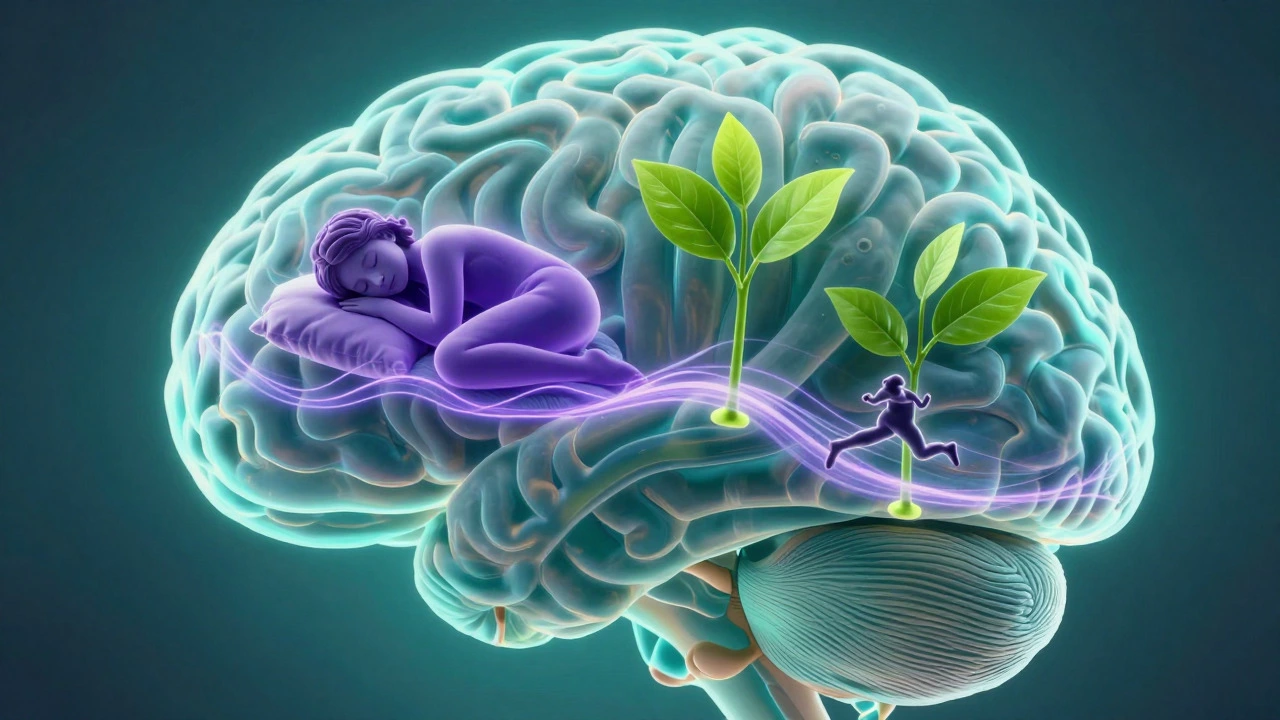
- Sleep: Memory consolidation happens during deep sleep. Aim for 7-9 hours.
- Exercise: Aerobic exercise increases blood flow to the brain and stimulates the release of BDNF (Brain-Derived Neurotrophic Factor), often described as "fertilizer" for neurons.
- Nutrition: Omega-3 fatty acids and antioxidants support neuronal health.
The Benefits of Lifelong Learning
Why bother? Beyond career advancement, continuous learning is the best insurance policy against cognitive decline. Studies show that engaging in mentally stimulating activities reduces the risk of dementia and Alzheimer's disease by creating "cognitive reserve." Essentially, the more you use your brain, the more resilient it becomes to age-related damage.
Furthermore, learning fosters neurogenesis. Even in old age, the dentate gyrus of the hippocampus continues to produce new neurons. Engaging in novel, complex tasks encourages these new cells to survive and integrate into existing circuits. This keeps your mind agile, curious, and emotionally balanced.
Finally, there is the joy of mastery. The feeling of understanding a complex topic, playing a piece of music, or speaking a foreign sentence correctly releases dopamine. This reward loop makes learning addictive in the best possible way. It combats the stagnation that often accompanies routine adult life.
Conclusion: It Is Never Too Late
So, what age do adults stop learning? The answer is none. You stop learning only when you decide to stop challenging yourself. The biological machinery for growth is intact. The differences in learning style are manageable. The barriers are surmountable.
Whether you are 30, 50, or 80, your brain is waiting for input. Pick a skill that excites you. Be patient with the slow start. Use smart techniques. And remember that every new neuron fired is a victory against entropy. The best time to plant a tree was twenty years ago. The second best time is now.
Does the brain really change after age 40?
Yes. Neuroplasticity persists throughout life. While the speed of processing may slow, the brain's ability to form new connections and reorganize itself remains active. Structural changes occur in the hippocampus and cortex when adults learn new skills, regardless of age.
Is it harder to learn a language as an adult?
It is different. Adults may struggle more with accent acquisition and implicit grammar absorption compared to children. However, adults often learn vocabulary and grammatical structures faster due to higher literacy levels and explicit learning strategies. With consistent practice, adults can achieve high fluency.
Can exercise improve my ability to learn?
Absolutely. Aerobic exercise boosts the production of BDNF (Brain-Derived Neurotrophic Factor), which supports the survival of existing neurons and encourages the growth of new synapses. Regular physical activity is linked to improved memory, focus, and overall cognitive performance.
What is the best method for adult learners?
The most effective methods for adults include spaced repetition, active recall, and connecting new information to existing knowledge bases. Passive consumption (like watching videos without taking notes) is significantly less effective for long-term retention.
Does stress affect learning in older adults?
Yes, chronic stress elevates cortisol levels, which can impair memory formation and reduce the size of the hippocampus. Managing stress through mindfulness, adequate sleep, and relaxation techniques is crucial for maintaining optimal learning capacity in adulthood.