


Classroom Accommodation Planner
Select all disability types that might apply to your student. Many students have multiple needs.
These accommodations align with evidence-based practices from the article and best educational standards.
Key Accommodations for Students
- Provide multiple means of representation (visual, auditory, hands-on)
- Allow alternative formats for assessments (typed responses, oral responses)
- Implement flexible seating arrangements
- Use clear, consistent routines and expectations
- Provide access to assistive technology
Specific Accommodations
Based on selected needsUniversal Supports
- Use visual schedules and timers
- Provide written instructions alongside verbal
- Offer movement breaks
- Use color-coded materials
Specialized Supports
When we talk about disability in education, it’s easy to think of a few common examples-wheelchairs, hearing aids, or Braille books. But disability isn’t one thing. It’s a wide, complex range of experiences that affect how people learn, move, communicate, and interact with the world. In schools today, educators are seeing more diversity than ever in how students process information, manage emotions, or handle physical tasks. Understanding the full picture matters-not just for compliance, but because every student deserves to be seen for who they are, not just what label they carry.
Physical Disabilities
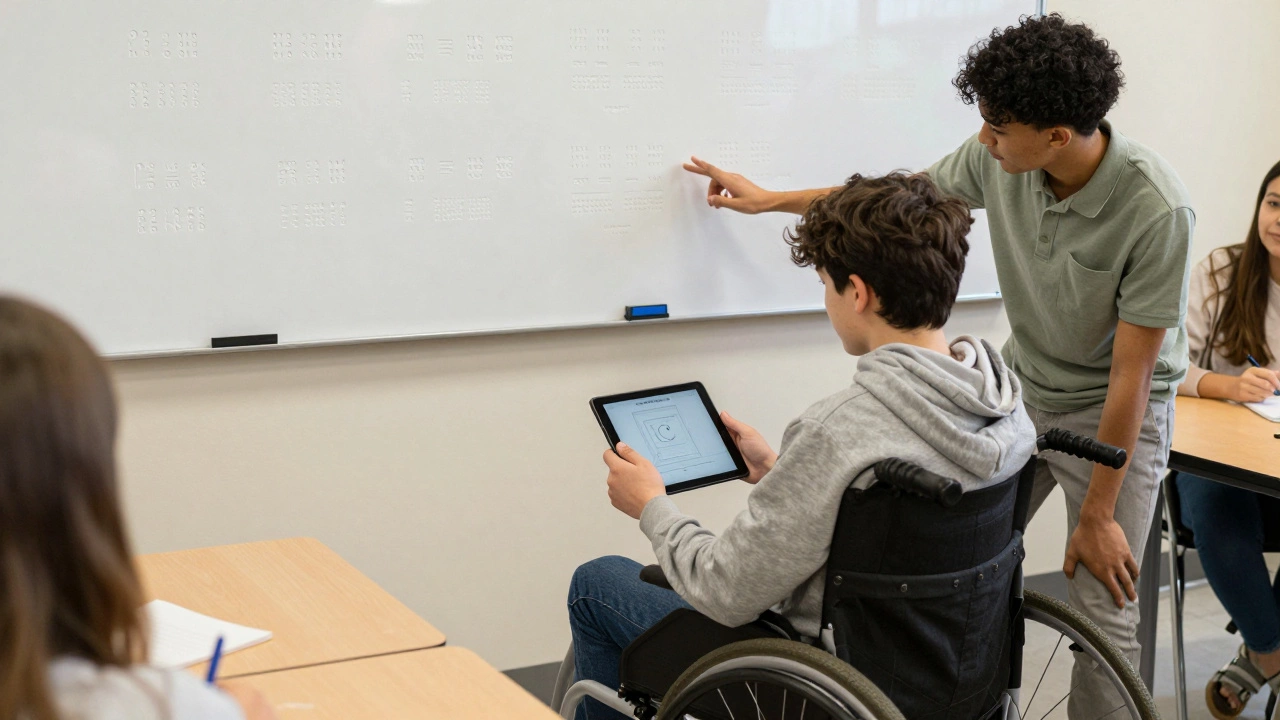
Physical disabilities cover conditions that affect movement, coordination, or bodily function. These can be present from birth or result from injury or illness. Common examples include cerebral palsy, muscular dystrophy, and spina bifida. In a classroom, this might mean a student needs adapted desks, extra time to move between classes, or assistance with writing. But it’s important to remember: a physical disability doesn’t define a student’s ability to think, create, or lead. Many students with physical disabilities excel in subjects like math, literature, or coding-they just need the right tools and environment to do so.
Visual Impairments
Visual impairments range from partial sight loss to total blindness. This isn’t just about not seeing the board. It affects how students access textbooks, navigate hallways, or even recognize faces. Schools that support these students use screen readers, tactile graphics, audio descriptions, and large-print materials. Some students learn Braille early; others rely on assistive tech like smart canes or apps that describe surroundings. The key is flexibility. A student with low vision might need bright lighting one day and a screen magnifier the next. One-size-fits-all doesn’t work here.
Hearing Impairments and Deafness
Hearing loss isn’t a single category. Some students hear faint sounds with hearing aids. Others rely entirely on sign language. In Ireland, Irish Sign Language (ISL) is recognized as a full language, not just a tool for communication. Schools with deaf students often have ISL interpreters, captioned videos, and visual alert systems. But beyond equipment, it’s about culture. Deaf students don’t need to be “fixed.” They need access to peers who share their language and identity. Many thrive in bilingual classrooms where both spoken and signed language are valued.
Speech and Language Disorders
These aren’t about being shy or quiet. Speech and language disorders affect how students understand words, form sentences, or produce sounds. Think of a child who can’t say “rabbit” because their tongue muscles don’t move right-that’s a speech disorder. Another child might understand everything but can’t find the right word to answer a question-that’s a language disorder. These are often linked to conditions like apraxia, dysarthria, or autism. Speech therapists help, but teachers play a huge role too. Using visual cues, giving extra time to respond, and avoiding pressure to speak on demand can make a massive difference.
Learning Disabilities
This is one of the most misunderstood categories. A learning disability has nothing to do with intelligence. A student can be brilliant and still struggle to read, write, or do math because their brain processes information differently. Dyslexia, dyscalculia, and dysgraphia fall here. A student with dyslexia might read slowly but have deep insights into history. A student with dyscalculia might ace science experiments but freeze during a timed math test. These students don’t need to be taught harder-they need to be taught differently. Multisensory teaching, audiobooks, and untimed assessments aren’t special treatment. They’re fair access.
Intellectual Disabilities
Intellectual disabilities affect cognitive functioning and adaptive skills-like problem-solving, self-care, or social interaction. This is often diagnosed before age 18. Conditions like Down syndrome or Fragile X syndrome fall here. Students with intellectual disabilities often need support with daily routines, communication, and learning at a slower pace. But again, this doesn’t mean they can’t learn. Many master life skills, express creativity, and build strong friendships. The goal isn’t to make them “normal.” It’s to help them live as independently as possible, with dignity and joy.
Emotional and Behavioral Disorders
These are often called “mental health conditions” in schools. Anxiety, depression, ADHD, and oppositional defiant disorder all fall under this umbrella. A student with severe anxiety might cry every time they’re called on. A student with ADHD might fidget constantly but have brilliant ideas. These aren’t discipline problems-they’re neurological differences. Punishing them for behaviors tied to their condition only makes things worse. What works? Predictable routines, clear expectations, safe spaces, and staff trained in trauma-informed practices. Sometimes, a quiet corner and five minutes alone is more helpful than detention.
Autism Spectrum Disorder
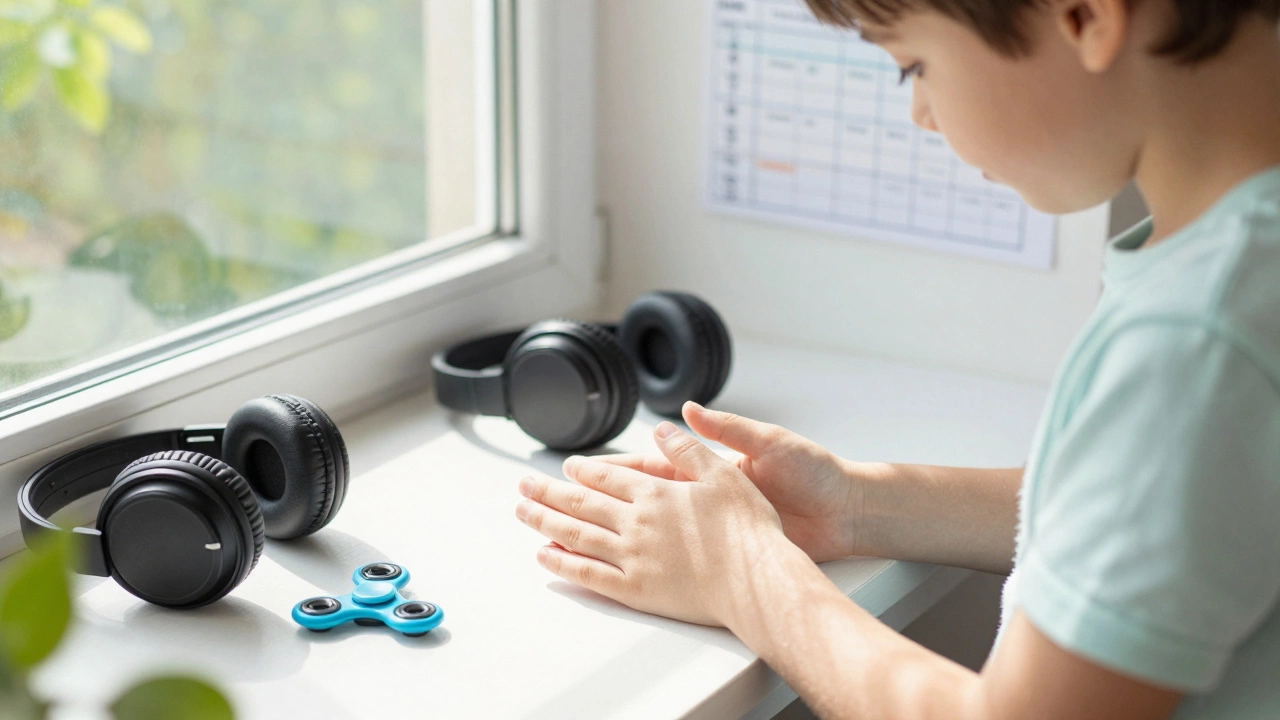
Autism isn’t a checklist. It’s a lifelong neurological difference that affects how people perceive the world. Some students need silence to focus. Others seek out loud noises. Some avoid eye contact but have perfect recall of facts. Some are nonverbal but write poetry. The spectrum is wide, and no two autistic students are alike. Schools that succeed with autistic learners focus on sensory needs, communication supports (like picture cards or speech apps), and respecting personal boundaries. Forcing eye contact or punishing stimming? That’s not discipline. That’s harm.
Developmental Delays
Developmental delays happen when a child doesn’t reach milestones like walking, talking, or socializing at the expected age. These are often noticed before age 5. Some kids catch up with support. Others need ongoing help. Early intervention is key. A child who’s slow to speak might benefit from play-based therapy. A child who struggles to hold a spoon might learn through sensory-rich activities. The goal isn’t to rush them. It’s to meet them where they are and build from there.
Chronic Health Conditions
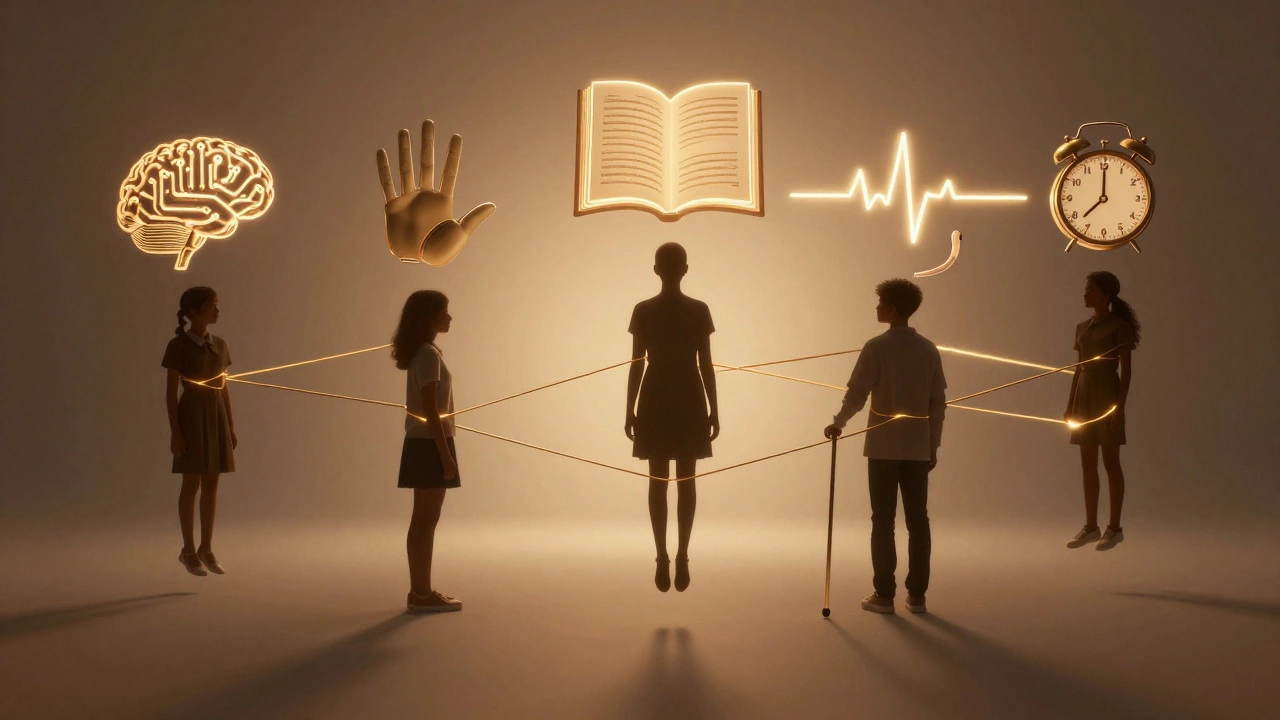
These aren’t disabilities you can see. Diabetes, epilepsy, cystic fibrosis, and severe allergies affect learning every day. A student with epilepsy might need to rest after a seizure. A child with diabetes might need to check blood sugar mid-lesson. A student with asthma might need to leave class to use an inhaler. Schools need clear health plans, trained staff, and flexibility. Missing a test because of a flare-up? That’s not laziness. It’s medical reality.
Traumatic Brain Injury
After a head injury, even a minor one, a student’s brain can change overnight. Memory fades. Focus breaks. Emotions spike. They might have been top of the class before the accident-and now struggle to remember their locker combination. This isn’t permanent for everyone, but recovery is unpredictable. Teachers need to track progress, adjust expectations, and be patient. There’s no manual for this. Just compassion and consistency.
Orthopedic Impairments
These are physical conditions caused by injuries, diseases, or congenital issues that affect bones, joints, or muscles. Think amputations, scoliosis, or joint replacements. A student with scoliosis might need a special chair. A student with a prosthetic limb might need extra time to get to class. The focus here is accessibility: ramps, elevators, adjustable furniture, and flexible scheduling. It’s not about pity. It’s about removing barriers.
Invisible Disabilities
This group is often overlooked. Chronic pain, fibromyalgia, lupus, chronic fatigue, and mental health conditions like PTSD or bipolar disorder don’t show up on a scan. A student might look fine-but they’re exhausted. They might miss school for days and then return, hoping no one noticed. Teachers need to trust what students say. No one wants to be labeled “lazy.” A quiet student who says, “I’m not well today,” deserves space-not suspicion.
Neurodivergence Beyond Autism
Not all neurodivergent students are autistic. ADHD, dyslexia, Tourette’s syndrome, and even giftedness can be forms of neurodivergence. A student with Tourette’s might make sudden noises. A gifted student might be bored in class and act out. These aren’t behavior problems-they’re brain differences. Schools that embrace neurodiversity don’t try to fix students. They redesign environments. Flexible seating. Choice in assignments. Quiet zones. These help everyone-not just those with a diagnosis.
There’s no perfect system. Every school, every teacher, every parent is learning as they go. But the best schools don’t wait for a diagnosis. They build classrooms where differences are expected, not hidden. They train staff not just to manage disability-but to celebrate how differently people learn. And they remember: a label doesn’t define a child. A child’s courage, curiosity, and creativity do.
Are all disabilities visible?
No. Many disabilities are invisible-like chronic pain, mental health conditions, epilepsy, or fatigue. A student might look perfectly fine but need rest, quiet, or extra time. Assuming someone is fine because they don’t use a cane or hearing aid can lead to misunderstanding and unfair expectations.
Can a student have more than one type of disability?
Yes. Many students have multiple overlapping conditions. For example, a child with cerebral palsy might also have a speech disorder and epilepsy. Or a student with autism might also have anxiety and dyslexia. Schools must look at the whole person, not just check boxes. Support plans should be personalized, not generic.
Do students with disabilities always need special education?
Not necessarily. Many students with disabilities thrive in mainstream classrooms with small adjustments-like extra time on tests, access to audiobooks, or a quiet space to regroup. Special education is for those who need more intensive support. The goal is inclusion, not segregation. Most students benefit from universal design: teaching methods that work for everyone.
What’s the difference between a learning disability and a learning difficulty?
A learning difficulty might be temporary-like struggling with math after missing school. A learning disability is neurological and lifelong. It’s not caused by lack of teaching or poor environment. It’s a difference in how the brain processes information. Dyslexia, for example, isn’t solved by more practice. It’s managed with the right tools and teaching strategies.
How can teachers support students without a formal diagnosis?
Start with observation. If a student consistently struggles with reading, focus, or social cues, try small, low-cost adjustments: allow typing instead of handwriting, give written instructions, reduce noise, offer movement breaks. These help everyone. If things don’t improve, talk to parents and consider a formal assessment. You don’t need a diagnosis to be kind or flexible.