




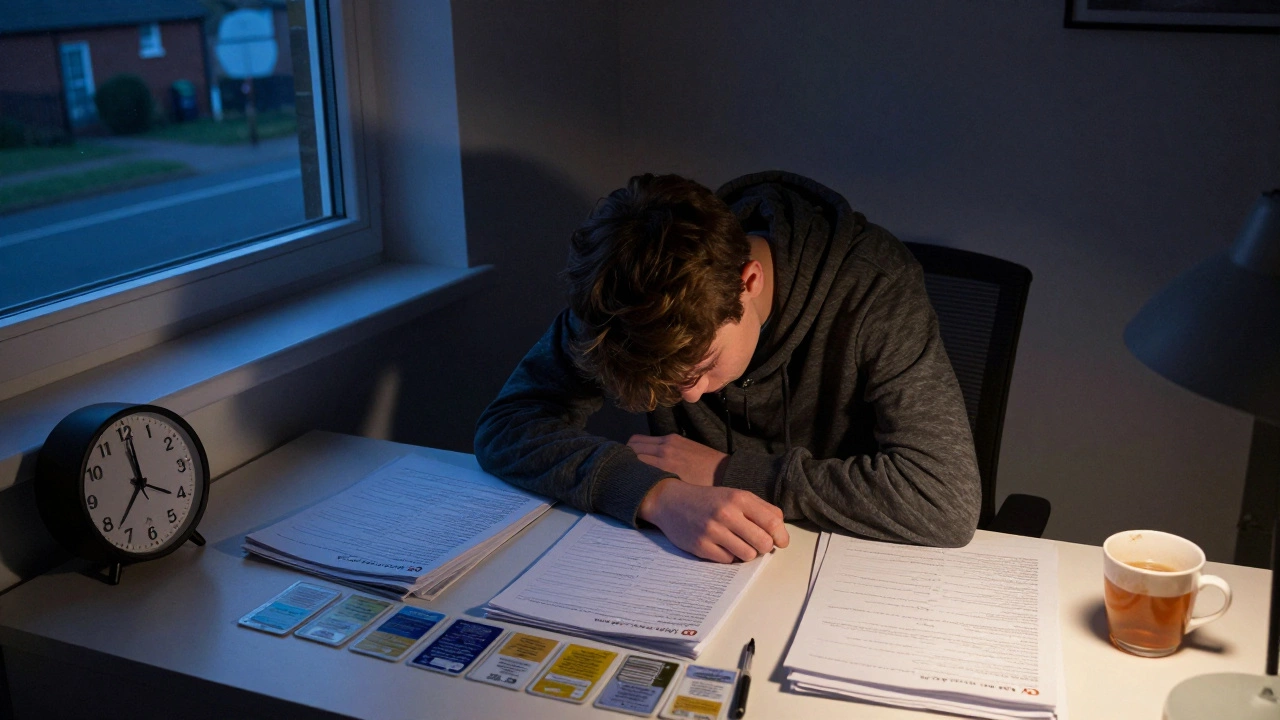
When students in England stare at their GCSE revision timetables, wondering if they’re doing enough, it’s easy to wonder: what country has the hardest education system? Is it Finland, with its no-homework approach? Or South Korea, where teens study until midnight? The answer isn’t simple-but if you’re grinding through past papers and flashcards right now, you’re probably in one of the toughest systems on the planet.
South Korea: The 16-Hour School Day
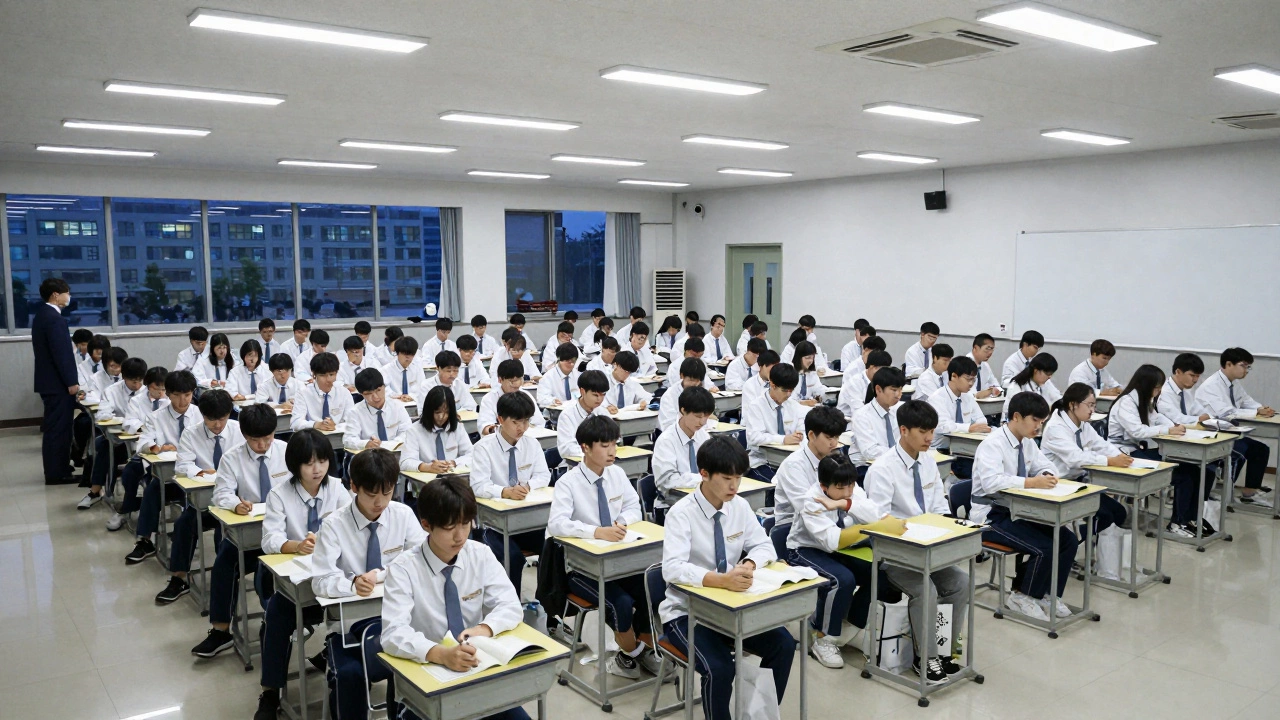
South Korea consistently ranks at the top of global education rankings, but behind the high PISA scores is a system that runs on sheer endurance. Students start school at 7:30 a.m., and many don’t leave until 10 p.m.-after private tutoring, or hagwon. These after-school academies aren’t optional; they’re expected. Over 90% of Korean middle and high school students attend them. The pressure isn’t just about grades-it’s about survival. Your final exam score in the College Scholastic Ability Test (CSAT) determines your future. One test. One day. One shot. Families spend up to 30% of their income on tutoring. Sleep is a luxury. Mental health crises are common. And yet, the system works: South Korea has one of the highest university enrollment rates in the world.
China: The Gaokao and the Weight of a Single Exam
In China, the Gaokao is more than an exam-it’s a national event. Held over two to four days, it’s taken by over 12 million students every year. Your score decides whether you go to Tsinghua University or work in a factory. There’s no retake. No appeals. No second chances. Students prepare for years. Some drop out of social life entirely. Parents sleep outside exam centers. In 2023, the national average score was 468 out of 750. A score below 500 closes doors to top universities. The system is brutal, but it’s also meritocratic. If you score high enough, your background doesn’t matter. That’s the trade-off: total pressure for total opportunity.
Japan: Discipline, Silence, and the Weight of Expectation
Japan’s education system is quiet but relentless. Students attend school five days a week, often with clubs that run until 6 p.m. and weekend cram sessions. The focus isn’t just on memorization-it’s on conformity. Standing perfectly still during morning assembly, bowing correctly, speaking only when called on-these are as important as math tests. The university entrance exams are notoriously difficult, with a pass rate for top schools like Tokyo University under 10%. Many students spend a full year after high school in yobiko, prep schools that drill them for entrance exams. The cultural expectation is clear: failure isn’t just academic-it’s shameful. Depression rates among Japanese teens are among the highest in the OECD.
Finland: The Myth of the Easy System
You’ve probably heard Finland is the easiest. No homework. No standardized tests. Kids start school at seven. But that’s not the whole story. Finland’s system is hard-but in a different way. The bar for becoming a teacher is insane. Only 10% of applicants get into teacher training programs. Teachers have master’s degrees and complete research projects before they step into a classroom. The curriculum is dense, focused on critical thinking, not rote learning. Students are expected to self-regulate, manage their time, and dig deep into complex topics. It’s not about stress-it’s about depth. Finnish students don’t take GCSEs, but they outperform most countries on PISA tests in reading, science, and math. The hardest part? Learning how to think, not just memorize.
India: The JEE and the Pressure of a Billion
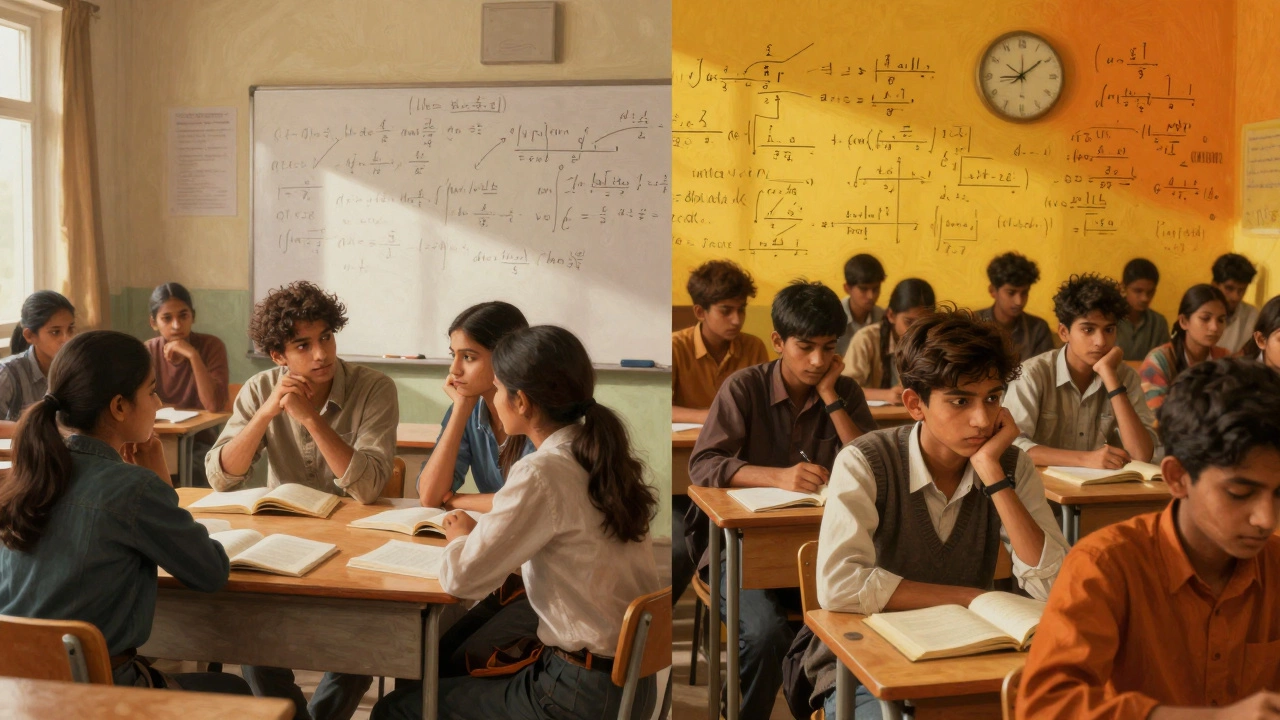
In India, the Joint Entrance Examination (JEE) for engineering is the world’s largest competitive exam. Over 1.5 million students take it every year for just 10,000 seats at the Indian Institutes of Technology (IITs). The pass rate is less than 2%. Students wake up at 4 a.m. and study until midnight. Coaching centers in Kota, Rajasthan, house tens of thousands of teens in dorms, isolated from family, surrounded by walls covered in formulas. Many suffer anxiety, burnout, and even suicide. The system is broken in places-but it’s also the only ladder for millions of rural students to escape poverty. The hardest part isn’t the math. It’s the silence after you fail.
Why GCSE Revision Feels Like a Battle
If you’re revising for GCSEs right now, you’re not alone. You’re part of a system that’s tough, but not the toughest. The UK’s education system is structured, fair, and predictable. You have multiple exam sittings. You get feedback. You can retake. You have resources like past papers, revision guides, and online tutorials. Compared to the Gaokao or CSAT, your stakes are lower. But that doesn’t make it easy. GCSEs are your first real taste of high-stakes testing. You’re being judged on 9 subjects. Your future options-A Levels, apprenticeships, college-depend on it. That pressure is real. And if you’re wondering if anyone else is struggling as much as you are, the answer is yes. Millions of students around the world are sitting at desks right now, tired, anxious, and pushing through.
What Makes a System ‘Hard’?
It’s not just about hours spent studying. Hardness comes from:
- Consequences: Can one test change your life forever?
- Expectations: Is failure seen as personal, not academic?
- Resources: Do you have support, or are you on your own?
- Structure: Is there flexibility, or is the path rigid?
South Korea and China score high on consequences and expectations. Finland scores high on structure and resources. The UK? It’s somewhere in the middle. You have structure, you have support, and you have a chance to improve. That’s not nothing.
What Can You Learn From the Hardest Systems?
You don’t need to study 16 hours a day to do well in GCSEs. But you can borrow a few things from the toughest systems:
- Consistency beats cramming. Korean and Chinese students don’t cram-they build habits. Study 90 minutes a day, every day. That’s better than 10 hours once a week.
- Review, don’t just read. Japanese students write summaries. Indian students solve problems repeatedly. Try teaching the topic to someone else. Or record yourself explaining it.
- Track your progress. Use past papers like a scoreboard. Don’t just mark them-analyze why you got something wrong. Patterns matter more than scores.
- Protect your sleep. Finnish students sleep 8-9 hours. Their brains work better. Your brain needs rest to consolidate memory. Don’t sacrifice sleep for extra revision.
Final Thought: Your System Isn’t the Worst
When you’re stuck on a trigonometry problem or stressing over a history essay, it’s easy to think you’re in the hardest system. But you’re not. You’re in one that gives you second chances. You’re in one that lets you ask for help. You’re in one that lets you breathe. The hardest systems don’t give you that. They demand perfection-and punish mistakes. Your system asks for effort. And effort? That’s something you can control.
Which country has the hardest education system in the world?
South Korea and China are often cited as having the hardest education systems. South Korea’s system is defined by long school days, mandatory private tutoring, and the high-stakes CSAT exam that determines university placement. China’s system centers on the Gaokao, a single exam taken by over 12 million students that decides their entire academic and career future. Both systems combine extreme pressure, minimal room for error, and deep cultural expectations around academic success.
Why is the UK education system considered less harsh than others?
The UK system, especially at GCSE level, allows for retakes, provides structured revision resources, and offers multiple assessment opportunities across subjects. Unlike systems like China’s Gaokao or South Korea’s CSAT, where one exam determines your future, UK students have coursework, modular exams, and the option to improve grades. There’s also greater access to teachers, tutors, and support services, making the pressure more manageable and less life-defining.
Do students in Finland really have no homework?
Yes, Finnish students typically have little to no homework in primary and lower secondary school. But that doesn’t mean their education is easy. The focus is on deep, meaningful learning during school hours. Teachers are highly trained, class sizes are small, and the curriculum emphasizes critical thinking over memorization. Students spend less time studying outside school, but they’re expected to engage deeply with complex ideas while in class.
How does GCSE revision compare to exam prep in other countries?
GCSE revision is structured, supported, and spread across multiple subjects and exam sessions. In contrast, countries like India (JEE) and South Korea (CSAT) require students to prepare for one or two all-or-nothing exams over months or years, often with no second chances. GCSE students have access to past papers, revision guides, and school support. The stakes are high, but the system is designed to allow improvement, not just selection.
What can GCSE students learn from top-performing education systems?
GCSE students can adopt three key habits: consistency (studying daily instead of cramming), active recall (testing yourself instead of rereading notes), and sleep protection (prioritizing rest over extra hours). Countries like Japan and China emphasize repetition and discipline-use past papers to build pattern recognition. Finland shows that deep understanding beats memorization. You don’t need to burn out to succeed-you need to be smart about how you study.