






3-2-1 Memory Technique Tracker
Use this tool to break down your study material using the 3 Facts, 2 Connections, 1 Question method. Add entries as you study, then review them based on a spaced repetition schedule.
Add New Study Chunk
Review Queue
You’ve just finished reading a chapter. You close the book, feel confident, and maybe even nod at your own brilliance. Then, two days later during a practice quiz, your mind goes blank. Sound familiar? That gap between feeling like you know something and actually retaining it is where most students lose marks. It’s not because you’re lazy or unintelligent; it’s because passive reading is a terrible way to store information in long-term memory.
Enter the 3-2-1 memory technique, a simple active recall strategy that forces your brain to retrieve specific details rather than just recognizing them. Unlike highlighting or re-reading, which feel productive but often aren’t, this method requires you to extract three key facts, two connections, and one lingering question from any piece of material. It’s quick, it’s brutal on your comfort zone, and it works because it mimics how exams actually test you: by asking you to pull information out of your head, not point to it on a page.
The Science Behind Active Recall
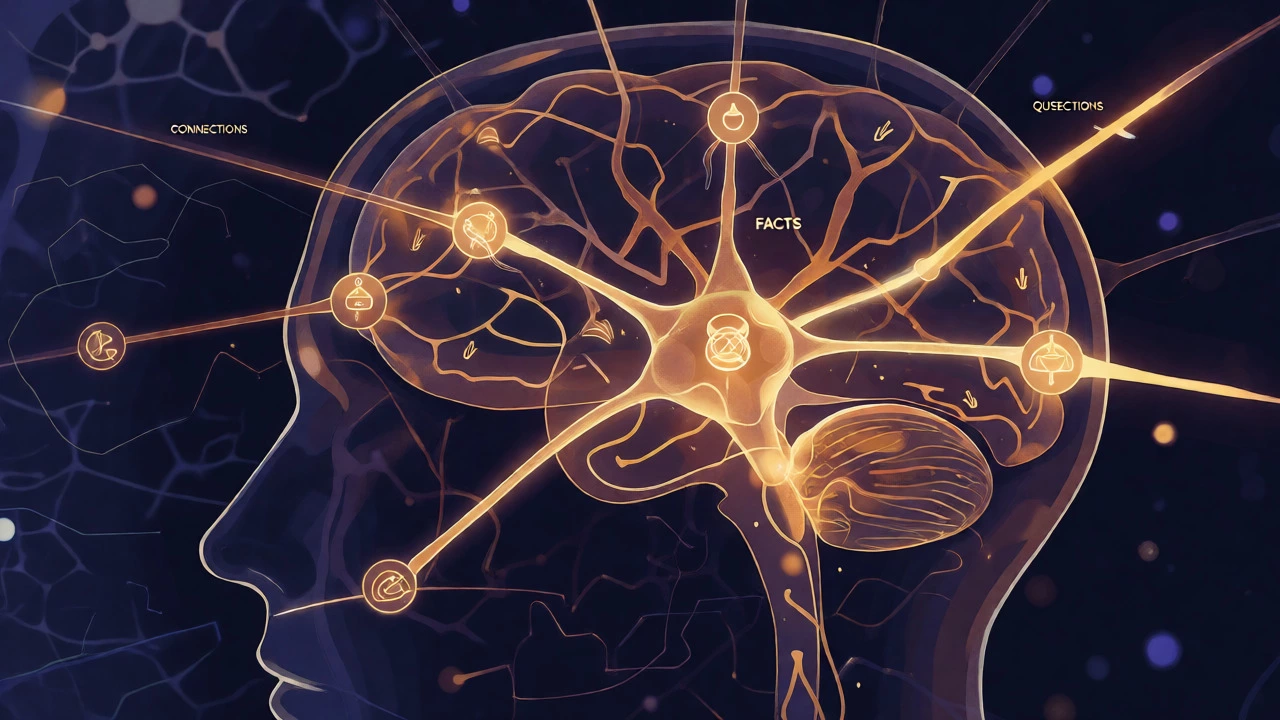
Why does this work when staring at notes doesn’t? Your brain isn’t a hard drive that saves files automatically. It’s more like a muscle that strengthens through use. When you read passively, you are engaging in recognition. You see the word "mitochondria" and think, "Yes, I know that." But recognition is shallow. Retrieval is deep. The testing effect is a psychological phenomenon where information is better remembered if it is generated from one's own mind rather than simply reread. Every time you struggle to remember a fact, you strengthen the neural pathway to that fact.
The 3-2-1 method leverages this by turning every study session into a low-stakes test. You aren’t just consuming content; you are interrogating it. This shift changes your role from a passive recipient to an active participant. It also helps combat the illusion of competence-that dangerous feeling where you mistake familiarity for mastery. If you can’t write down three distinct points without looking, you don’t know the material yet. Period.
How to Apply the 3-2-1 Method Step-by-Step
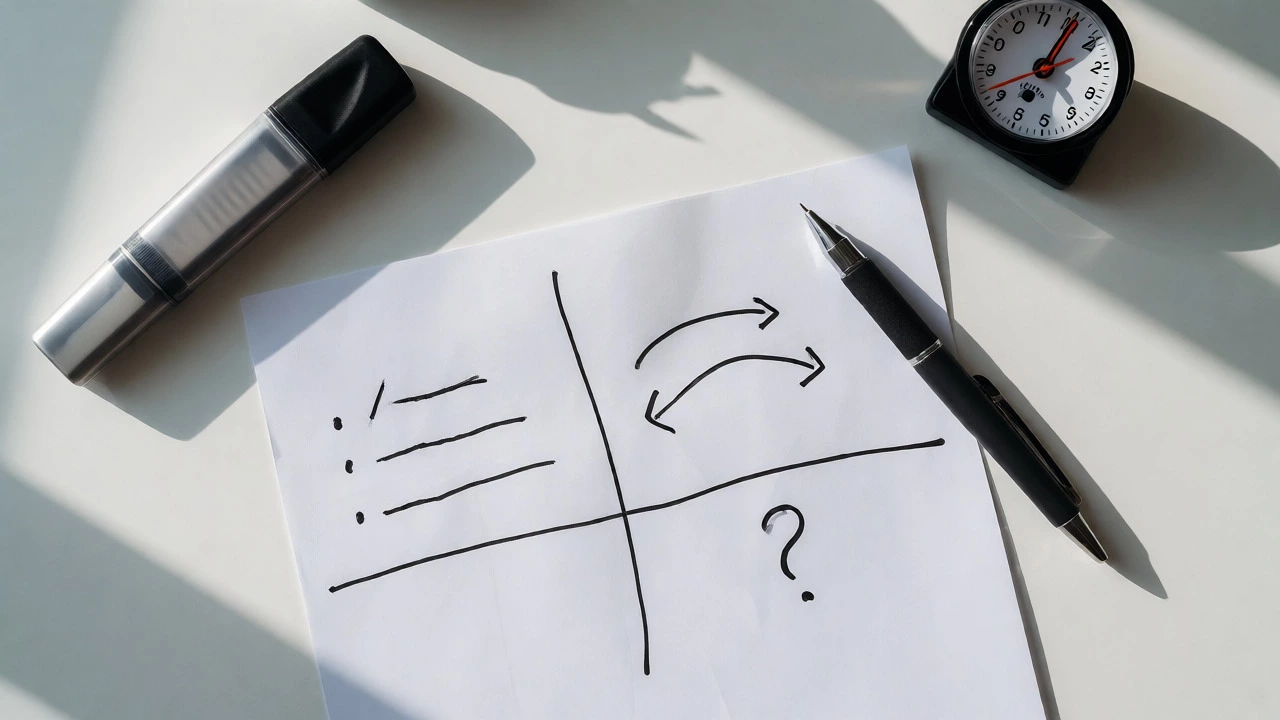
So, how do you actually do it? Don’t overcomplicate it. Grab a blank sheet of paper or open a fresh note-taking app. Here is the exact workflow:
- Read or Watch: Engage with a manageable chunk of material. This could be one textbook section, a 10-minute lecture video, or a set of flashcards. Keep it small enough that you can hold it in working memory.
- Cover the Source: Look away from the text or pause the video. Do not look back yet.
- Write 3 Facts: List three specific pieces of information you just learned. These should be concrete details-dates, definitions, formulas, or names-not vague summaries like "it was about history." Specificity matters.
- Write 2 Connections: Link those facts to something you already know. How does this new concept relate to previous chapters? Does it contradict a common misconception? Can you visualize it using a metaphor? This step builds semantic networks in your brain.
- Write 1 Question: Identify what you still don’t understand. What part was confusing? What detail did you forget? This creates a roadmap for your next review session.
- Check and Correct: Uncover the source. Compare your list against the original. Did you get the facts right? Were your connections logical? Mark errors immediately.
This process takes five to ten minutes per chunk. It feels slower than skimming, but it saves hours of re-learning later. Think of it as paying a small tax now to avoid a massive fine during the exam.
Why Connections Matter More Than Facts
Most students focus heavily on the "3 Facts" part of the equation. They memorize lists. But the real magic happens in the "2 Connections" step. Isolated facts are fragile. They slip away easily. Connected knowledge is sticky. When you link a new idea to an existing one, you create multiple pathways to retrieve it. If one path gets blocked by stress or fatigue, another remains open.
For example, let’s say you are studying the French Revolution. Fact 1 might be "The storming of the Bastille occurred in 1789." Connection 1 could be linking this to the American Revolution (another late-18th-century democratic uprising). Connection 2 might link it to modern protests you’ve seen in the news. Now, if you blank on the date, you might remember the American context, which triggers the association, which leads you back to the French event. You are building a web, not a list.
| Method | Cognitive Effort | Retention Rate | Time Efficiency |
|---|---|---|---|
| Re-reading Notes | Low | Low (Illusion of Competence) | High initially, Low overall |
| Highlighting | Very Low | Very Low | Medium |
| 3-2-1 Technique | High (Active Recall) | High (Strong Neural Pathways) | Medium initially, High overall |
| Spaced Repetition | Medium-High | Very High | High |
Integrating Spaced Repetition with 3-2-1
The 3-2-1 technique is powerful on its own, but it becomes unstoppable when paired with spaced repetition. This is a learning technique where you review material at increasing intervals over time. Instead of cramming everything on Monday night, you review your 3-2-1 sheets after one day, then three days, then a week.
Here is a practical schedule for exam prep:
- Day 1: Learn new material. Create your 3-2-1 sheet.
- Day 2: Review yesterday’s sheet. Try to answer the "1 Question" without looking. Add new material.
- Day 4: Review Day 1 and Day 2 sheets together.
- Day 7: Review all previous sheets. Focus only on the questions you got wrong.
This spacing aligns with the forgetting curve, a concept first described by psychologist Hermann Ebbinghaus. By reviewing just before you would naturally forget, you reset the clock and deepen retention. The 3-2-1 sheet acts as your anchor for each review session. You don’t need to re-read the whole chapter; you just need to revisit your own synthesis of it.
Troubleshooting Common Pitfalls
Even simple techniques can go wrong if misapplied. Here are the most common mistakes students make with 3-2-1:
- Vague Facts: Writing "It talked about cells" instead of "Mitochondria produce ATP through cellular respiration." Vagueness hides gaps in knowledge. Be precise.
- Looking Back Too Soon: The struggle is the point. If you peek at the book while writing your three facts, you are cheating yourself. Sit with the discomfort of not knowing for at least 30 seconds.
- Ignoring the Question: Students often skip the "1 Question" because they don’t want to admit confusion. But that question is gold. It tells you exactly what to ask your teacher or tutor. Never leave it blank.
- Doing It Once: One session isn’t enough. Without spaced repetition, you will forget 50% of it within 24 hours. Schedule reviews.
If you find yourself stuck, try changing the format. Instead of writing, try explaining the 3-2-1 out loud to a rubber duck or a friend. Teaching is the ultimate form of retrieval. If you can explain it simply, you know it deeply.
Who Should Use This Technique?
This method is versatile. It works for GCSE revision, A-Level subjects, university essays, and professional certifications. It is particularly effective for subjects heavy on conceptual understanding, such as History, Biology, Psychology, and Law. For purely mathematical problems, adapt the method: 3 steps of the solution, 2 alternative approaches, 1 potential error trap.
It’s also great for adults returning to education. If you have limited study time due to work or family, efficiency is key. You can’t afford to waste hours re-reading pages you already sort of know. The 3-2-1 method gives you immediate feedback on what you actually retained, allowing you to target weak spots quickly.
Frequently Asked Questions
Is the 3-2-1 technique better than flashcards?
They serve different purposes. Flashcards are excellent for rote memorization of isolated facts, like vocabulary or dates. The 3-2-1 technique is superior for understanding complex concepts and seeing how ideas connect. Many top students use both: flashcards for raw data and 3-2-1 for deeper comprehension.
Can I use this for online lectures?
Absolutely. Pause the video every 10-15 minutes. Write your 3 facts, 2 connections, and 1 question based on that segment. This prevents the passive "zombie mode" that often happens during long Zoom lectures.
What if I can't think of two connections?
That’s normal. Start small. Connect the new fact to a personal experience, a news story, or a previous topic in the same course. If you truly can’t find a connection, that’s a red flag that you don’t fully understand the concept yet. Go back and re-read specifically to find that link.
Does this work for math or science equations?
Yes, but adapt it. Instead of general facts, list: 3 conditions where the formula applies, 2 common mistakes students make with it, and 1 variable that causes the most errors. This contextualizes the abstract math.
How long should each study chunk be?
Keep chunks small. Aim for 15-20 minutes of focused reading or watching. If the chunk is too large, your working memory gets overwhelmed, and you’ll end up writing vague summaries instead of specific facts.