






Scholarship Difficulty & Strategy Analyzer
Analysis Results
Tailored Action Plan:
You’ve heard the stories. The student who got full tuition, room, and board for a master’s degree at Oxford because they wrote one brilliant essay. The teenager who walked away with $200,000 for college before even picking a major. These aren’t just lucky breaks; they are the results of navigating some of the most competitive selection processes in the world. But when you ask what is the hardest type of scholarship to get, you’re not just asking about money. You’re asking about prestige, exclusivity, and the sheer statistical improbability of winning.
The short answer? It depends on how you define "hard." If you mean low acceptance rates, the neediest elite fellowships win. If you mean difficulty of preparation, local community awards might actually beat national giants because there is no playbook. Let’s break down the landscape of high-stakes funding to see where the real barriers lie.
The Titans: National Merit Fellowships
When people talk about the "impossible" scholarships, they usually point to the big names. These are the awards that define careers and open doors that stay shut for everyone else. They are difficult not just because few people win them, but because the pool of applicants is already pre-screened to be exceptional.
The acceptance rate for the Rhodes Scholarship hovers around 0.03% to 0.05%. That means for every 1,000 eligible candidates, fewer than five get chosen. Why is it so hard? Because you are competing against valedictorians, Olympic athletes, published authors, and political activists from your entire country. In the US alone, over 1,000 students apply for roughly 32 spots each year. The interview process is rigorous, often involving multiple rounds with faculty members who have decades of experience spotting genuine potential versus polished performance.
Another heavyweight is the Gates Cambridge Scholarship, which funds outstanding applicants to pursue any full-time postgraduate course at the University of Cambridge. Similar to Rhodes, it seeks individuals who will contribute to global progress. The competition is fierce because it attracts top minds from every continent, creating a diverse but incredibly dense field of competitors.
The Lottery vs. The Marathon: Full-Ride Undergraduate Awards
If you are still in high school, the conversation shifts slightly. The "hardest" scholarship here isn't always the one with the lowest percentage of winners, but the one with the highest barrier to entry regarding specific criteria.
Consider the Gates Millennium Scholars Program (GMS), which provides comprehensive financial support to outstanding minority students. While technically closed to new applications for several years due to restructuring, its legacy defines the category of demographic-specific full-rides. Current equivalents include the Posse Foundation scholarships or QuestBridge matches. These are hard because they require a perfect blend of academic excellence, demonstrated financial need, and community impact. You cannot just be smart; you must be resilient. You cannot just be poor; you must be a leader. The intersection of these traits is rare.
Then there is the National Merit Scholarship, which is awarded to high school seniors based on their PSAT/NMSQT scores. This is different. It is harder to qualify for initially because you must score in the top 1% of test-takers nationally. Once you are a "Semi-Finalist," the odds improve, but maintaining a perfect GPA and writing compelling essays under pressure is exhausting. Many students burn out trying to keep up the facade of perfection required to stay in the running.
The Hidden Difficulty: Local and Niche Scholarships
Here is a counterintuitive truth: sometimes the hardest scholarship to get is the $5,000 award from your local rotary club or industry association. Why? Because there is no algorithm.
National scholarships have predictable rubrics. They want high GPAs, high test scores, and clear leadership examples. You can optimize for this. You know what the judges want. Local scholarships, however, are often decided by a small committee of three people who may prioritize personal connection, local reputation, or a specific quirky criterion like "best use of recycling in daily life."
Without a clear path, anxiety spikes. You don’t know if they value your volunteer work at the animal shelter more than your part-time job at the grocery store. This ambiguity makes them psychologically harder to tackle. Plus, the applicant pool is smaller, meaning every mistake stands out. If you miss a deadline or submit a typo-ridden essay to a national program, you are lost in the sea of thousands. To a local judge, that typo is a red flag that you didn’t care enough to check your work.
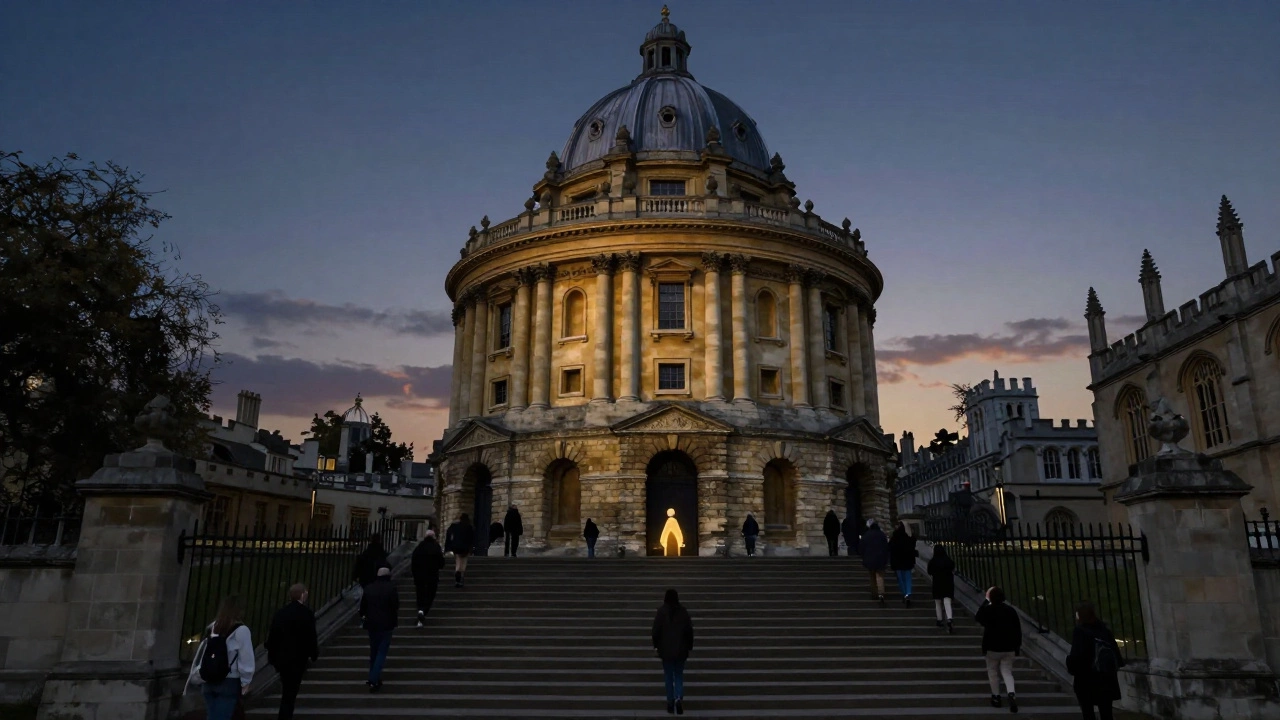
Why Are Some Scholarships So Competitive?
To understand the difficulty, you have to look at the economics. Scholarships fall into two buckets: endowment-driven and donation-driven.
- Endowment-Driven: Awards like Rhodes or Gates Cambridge come from massive, historic funds. The money is guaranteed. The scarcity comes from the brand. They can afford to be picky because they have hundreds of qualified candidates for every spot. Their goal is not just to give money; it is to curate an alumni network of future leaders.
- Donation-Driven: Smaller scholarships rely on annual donations. If the donor stops giving, the scholarship disappears. This creates instability. For the applicant, this means the rules can change yearly. One year they want an essay on climate change; the next, they want a video project. Adapting to shifting goals adds a layer of complexity that large institutions don’t have.
Comparison of Elite Scholarship Difficulty
| Scholarship Name | Level | Est. Acceptance Rate | Primary Barrier | Coverage |
|---|---|---|---|---|
| Rhodes Scholarship | Postgraduate | <0.05% | Global prestige & leadership depth | Full ride + stipend |
| Gates Cambridge | Postgraduate | <0.05% | Academic excellence + social impact | Full costs + travel |
| National Merit | Undergraduate | ~1% (Initial Qual) | Standardized test scores (PSAT) | $2,500 - Full Ride |
| Fulbright Program | Graduate/Professional | ~15% (Varies by country) | Cultural exchange fit & proposal quality | Tuition + Living |
| Local Community Award | All Levels | Variable (Often <5%) | Subjective judging & lack of data | $500 - $5,000 |

Strategies for Beating the Odds
If you are aiming for the hardest scholarships, generic advice won’t cut it. You need a strategy that acknowledges the reality of the competition.
- Build a Narrative, Not a Resume: Judges read thousands of essays listing achievements. They remember stories. Connect your disparate experiences-coding club, soccer team, volunteer tutoring-into a single coherent theme. What is the through-line? Maybe it’s "using technology to bridge communication gaps." Every bullet point on your resume should serve that narrative.
- Secure Strong Letters Early: For elite awards, letters of recommendation must go beyond "this student is nice." They need to compare you to peers across years. Ask professors who know your intellectual curiosity, not just your attendance record. Give them plenty of time-at least three months-and provide them with a brag sheet that reminds them of your specific contributions to their class.
- Practice the Interview: The Rhodes and Gates interviews are not interrogations; they are conversations. However, they probe for consistency. If your essay says you love public policy, but you can’t discuss the current budget deficit in the interview, you will lose credibility. Mock interviews with mentors who challenge your views are essential.
- Diversify Your Portfolio: Never bet everything on one "hardest" scholarship. Apply to ten mid-tier awards while chasing the one dream award. The stress of relying on a single outcome leads to sloppy work. Financial aid packages, university-specific grants, and smaller private scholarships add up quickly and reduce the pressure on the big-ticket items.
Common Pitfalls to Avoid
Many talented students fail not because they lack qualifications, but because they misunderstand the game.
Pitfall 1: Perfectionism Paralysis. Waiting until your essay is "perfect" means missing the deadline. Submit good work on time rather than great work late. Committees prefer finished products over abandoned masterpieces.
Pitfall 2: Ignoring Instructions. It sounds obvious, but it happens constantly. If the prompt asks for 500 words, do not write 600. If they ask for a PDF, do not send a Word doc. These small errors signal a lack of attention to detail, which is fatal for roles that require precision.
Pitfall 3: Faking Passion. Selection committees are experts at detecting insincerity. Do not apply for a medical scholarship because you think it looks good. Apply because you genuinely want to heal people. Your enthusiasm must be authentic, or it will feel hollow during the interview stage.
Final Thoughts on Pursuing Elite Funding
Getting the hardest scholarship is less about being the smartest person in the room and more about being the most prepared, self-aware, and persistent. It is a marathon that tests your character as much as your intellect. Whether you are aiming for Oxford or a local community grant, the principles remain the same: tell your true story, follow the rules meticulously, and prepare thoroughly for every interaction. The money is important, but the process of applying for these awards often shapes you into the kind of leader they are looking for in the first place.
What is the acceptance rate for the Rhodes Scholarship?
The acceptance rate for the Rhodes Scholarship is extremely low, typically ranging between 0.03% and 0.05%. This means that fewer than 1 in 2,000 eligible applicants are selected each year, making it one of the most competitive awards globally.
Is it harder to get a undergraduate or graduate scholarship?
Generally, elite graduate scholarships like Rhodes or Gates Cambridge are statistically harder to win due to lower acceptance rates. However, undergraduate scholarships like National Merit have higher initial barriers to entry (top 1% test scores). Graduate awards require deeper professional experience and clearer career trajectories, while undergraduate awards focus on potential and academic promise.
Do I need a perfect GPA to get a hard scholarship?
A near-perfect GPA is usually required for merit-based elite scholarships. However, it is not the only factor. Leadership, community service, and unique personal narratives can compensate for a slightly lower GPA, especially if the drop was due to extenuating circumstances explained in your application.
How early should I start preparing for elite scholarships?
You should start building your profile in high school or early undergraduate years. Specific application preparation should begin 6-12 months before the deadline. This allows time for drafting essays, securing strong letters of recommendation, and practicing for interviews.
Are local scholarships easier to win than national ones?
Not necessarily. While the pool of applicants is smaller, local scholarships often lack transparent criteria. Judging can be subjective, and personal connections or local reputation may play a larger role. National scholarships have stricter, more standardized rubrics, which can make them easier to optimize for despite higher competition.