






It’s January. The Christmas decorations are down, the holidays are over, and the GCSE exams are coming. You’re staring at a pile of textbooks wondering: Why revise GCSE? It’s not just about passing. It’s not even just about getting good grades. It’s about what those grades open up - and what they lock you out of.
GCSEs Are Your First Real Gatekeeper
Think of GCSEs like a passport. Not the kind you use to travel abroad, but the kind you need just to get into the next room. Without at least five GCSEs at grade 4 or above - including English and Maths - you can’t apply for most apprenticeships, college courses, or even some entry-level jobs. Schools don’t tell you this until it’s too late. But by the time you’re 16, your GCSE results decide whether you walk into a sixth form, a college, or straight into a job with no future path.
Here’s the truth: 78% of employers say they use GCSE grades as a basic filter. That’s not opinion - it’s data from the Department for Education’s 2024 Labour Market Survey. If your Maths grade is a 3, you’re already out of the running for half the roles advertised in your town, even if you’re brilliant with your hands or great with people. GCSEs aren’t perfect. But they’re the system we have. And right now, revising isn’t optional. It’s survival.
Revising Builds Skills You’ll Use for Life
People think revision is just memorising facts. It’s not. It’s learning how to learn.
When you sit down to revise History, you’re not just memorising dates. You’re learning how to spot patterns, connect causes and effects, and build an argument from evidence. That’s the same skill you’ll need in college when writing essays, in a job when pitching an idea, or even when deciding which mortgage deal is right for you.
Revising Science teaches you how to break down complex problems into steps. Revising English Literature trains you to read between the lines - to understand what’s really being said, not just what’s written. These aren’t just exam skills. They’re life skills. And you won’t develop them by hoping the exam will be easy. You develop them by showing up, day after day, even when you’re tired.
Your Future Self Will Thank You - Or Hate You
Imagine yourself two years from now. You’re 18. You’ve got your results. You’re sitting in a college admissions office. The person across from you is asking why you chose their course. You say, “I didn’t know what else to do.”
Or you say, “I worked hard. I revised every weekend. I asked for help when I got stuck. I didn’t just wait for luck.”
One of those versions leads to confidence. The other leads to regret. And regret doesn’t fade. It grows. It shows up every time you see someone else get the opportunity you wanted - the apprenticeship, the college place, the scholarship - and you know you didn’t fight for it.
Revising isn’t about being the smartest person in the room. It’s about being the most consistent. The person who shows up when no one’s watching. That’s the person who wins.
It’s Not About Perfection - It’s About Progress
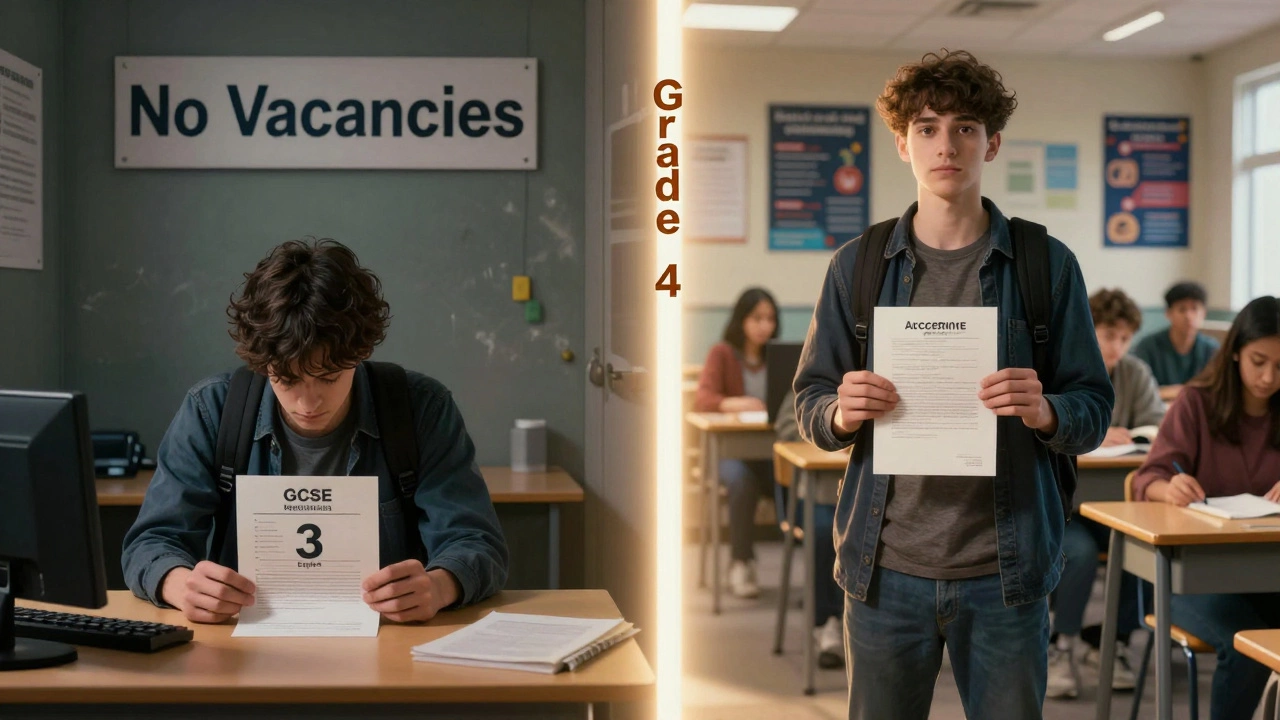
You don’t need to get an A* in everything. You don’t even need to like the subject. But you do need to get past the grade 4 threshold in core subjects. That’s the line. Anything below that? You’re stuck. Anything above? You’re free.
Here’s a simple rule: Focus on the subjects that matter most. English and Maths are non-negotiable. If you’re aiming for science, tech, or healthcare - get a solid grade in Science. If you want to go into business, law, or media - English is your anchor. Don’t waste hours on subjects that won’t open doors. Redirect that energy.
And here’s what no one tells you: Progress beats perfection. If you go from a grade 2 to a grade 4 in Biology, that’s a win. That’s a door opening. You don’t need to be top of the class. You just need to be past the minimum. That’s it.
What Happens If You Don’t Revise?
Let’s be real. Not revising doesn’t mean you’ll fail. It means you’ll barely scrape through - if you even pass. And that’s the problem.
Students who don’t revise properly end up in resits. Resits cost time. They cost money. They cost confidence. And they leave you behind everyone else who did the work early.
One student I know - let’s call her Leah - skipped revision because she thought she’d “do fine.” She got a grade 3 in English. That meant she couldn’t start her Level 3 course. She had to retake it the next year. That delayed her by 12 months. She missed out on a summer internship. She started her apprenticeship a year late. And that year? It changed everything.
Not revising doesn’t mean you’re lazy. It means you’re unprepared. And in a system that moves fast, being unprepared means falling behind - and it’s hard to catch up.
How to Start Today (No Fluff)
You don’t need a 10-hour study schedule. You don’t need fancy apps or highlighters. You just need to start.
- Grab your exam board’s specification (Edexcel, AQA, OCR - it’s free online). Find the list of topics for each subject.
- Pick one subject. Pick one topic. Spend 30 minutes today reviewing it. Just one.
- Write down three things you didn’t know before. That’s your win.
- Repeat tomorrow. Same subject. Different topic.
That’s it. No pressure. No guilt. Just progress. After 10 days, you’ve covered 10 topics. That’s more than half the course. You’re not cramming. You’re building.
Revising Is an Act of Self-Respect
Why revise GCSE? Because you deserve more than a second chance. Because you’re not just a student - you’re someone with potential. And potential doesn’t mean much if you never show up for yourself.
Revising isn’t about pleasing teachers or parents. It’s about proving to yourself that you can stick with something hard. That you can grow. That you’re not stuck.
Every hour you spend revising is an hour you’re choosing your future. Not your luck. Not your teacher’s expectations. Not your friends’ grades. Your future.
So ask yourself again: Why revise GCSE?
Because if you don’t, someone else will - and they’ll walk through the doors you left open.
What If I’m Already Behind?
It’s not too late. Even if you’ve done nothing so far, you still have time. The key isn’t how much you’ve done - it’s how much you’ll do next.
Start with your weakest subject. Not your favourite. Not the one you think is easiest. The one you’re most scared of. Spend 20 minutes a day on it. Use YouTube videos from BBC Bitesize or Save My Exams. They’re free. They’re clear. They’re made by teachers who’ve seen this exact problem a thousand times.
Don’t try to fix everything at once. Fix one thing. Then another. Progress is invisible until it’s not.
How Do I Stay Motivated?
Motivation doesn’t come from inspiration. It comes from action.
Set a tiny goal: “I will revise for 15 minutes today.” Do it. Then write it down. That’s your win. Tomorrow, do it again. After five days, you’ll feel different. Not because you’ve mastered everything - but because you’ve proven to yourself that you can show up.
Find one person to check in with. A friend, a sibling, a tutor. Just say: “I’m doing 15 minutes a day. Tell me if I skip.” Accountability doesn’t have to be big. Just real.
What If I Hate Studying?
Then don’t study. Revise.
Studying sounds like sitting at a desk for hours. Revising is different. It’s testing yourself. It’s making flashcards. It’s teaching the topic to your pet. It’s drawing mind maps. It’s doing past papers and checking your answers.
Revising isn’t about reading. It’s about doing. And doing is easier than sitting still.
What Do Universities and Employers Actually Look For?
They don’t care if you got an A* in Drama. They care if you got a 4 or above in English and Maths. That’s it. For most jobs and courses, those two subjects are the gatekeepers.
After that, they look for consistency. Did you improve over time? Did you take responsibility? Did you ask for help when you needed it? Those are the quiet signals that matter more than grades.
GCSEs aren’t a test of intelligence. They’re a test of commitment. And commitment is something you can build - even if you’ve never had it before.