






Adult Learning Strategy Diagnostic Tool
Observed Challenges
Select the difficulties the learner is experiencing
Recommended Teaching Approach
Personalized strategies based on diagnosis
Select challenges above and click "Analyze" to receive tailored teaching strategies.
Imagine sitting in a classroom where the pace feels like a sprint, but you are walking. For many adults labeled as "slow learners," this is their daily reality. The stigma attached to learning difficulties can be crushing, especially when you are trying to build a career or gain new skills later in life. But here is the truth: being a "slow learner" rarely means low intelligence. It usually points to specific processing differences, gaps in foundational knowledge, or anxiety that blocks information from sticking.
Teaching these individuals requires a shift in mindset. You aren't just delivering content; you are rebuilding confidence and creating accessible pathways for understanding. If you are an educator, a tutor, or even a supportive partner, your approach makes all the difference. This guide breaks down practical, empathetic strategies to help adult learners succeed at their own pace.
Understanding the "Slow Learner" Label
First, let’s toss out the term "slow learner." It’s vague and often misleading. In adult education, we look closer at what is actually happening. Is it Dyslexia, which affects reading and decoding? Is it ADHD, which impacts focus and working memory? Or is it simply a lack of prior exposure to certain concepts due to interrupted schooling?
Many adults have spent years masking their struggles. They might use clever workarounds to hide gaps in basic math or literacy. When they finally seek help, they are often terrified of judgment. Your first job is not to teach algebra or grammar; it is to create a safe space where mistakes are viewed as data, not failure. Acknowledge their effort before you correct their errors. This psychological safety is the foundation upon which all other learning is built.
Diagnose the Root Cause Before Teaching
You cannot fix a problem you haven’t identified. Jumping straight into lessons without understanding why a student is struggling leads to frustration for both parties. Start with a diagnostic conversation, not a test.
- Identify Knowledge Gaps: An adult struggling with advanced Excel formulas might actually be stuck on basic arithmetic operations. Trace the issue back to its source. Use simple, low-stakes assessments to find the exact point where understanding breaks down.
- Check for Learning Disabilities: If the struggle seems pervasive across different subjects, consider professional evaluation for conditions like dyscalculia or auditory processing disorders. These require specialized accommodations, not just slower pacing.
- Assess Emotional Barriers: Anxiety is a major cognitive blocker. High stress levels flood the brain with cortisol, which inhibits the hippocampus-the area responsible for memory formation. Ask yourself: Is this student overwhelmed? Do they feel judged?
Once you know the barrier, you can tailor your approach. A student with a knowledge gap needs scaffolding. A student with anxiety needs reassurance and smaller steps. A student with a processing disorder needs multi-sensory input.
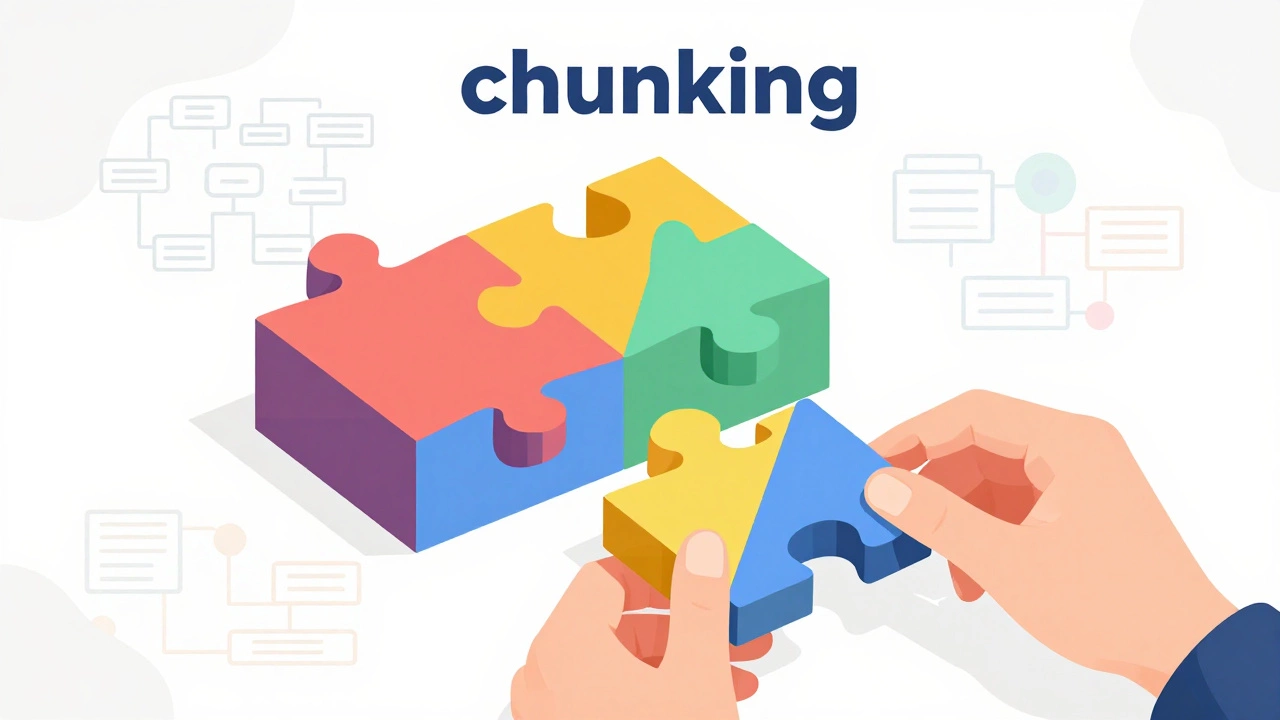
Break Down Complex Tasks (Chunking)
Adults with learning challenges often get overwhelmed by large amounts of information. Their working memory-think of it as the brain’s RAM-might fill up quickly. To prevent overload, use the technique of "chunking."
Instead of teaching a whole essay structure in one session, break it down. First, focus only on the thesis statement. Once that clicks, move to the introduction. Then the body paragraphs. Celebrate each small victory. This method reduces cognitive load and allows the learner to master one piece before adding another. It’s like building a house brick by brick rather than trying to lift the entire structure at once.
Use visual aids to support this process. Flowcharts, mind maps, and color-coded notes can help externalize information, taking pressure off the brain’s internal storage. For example, if teaching financial literacy, use a physical pie chart to show budget allocation instead of just listing percentages. Visuals provide a second pathway for information to enter the brain.
Leverage Multi-Sensory Learning Techniques
Relying solely on lectures or textbooks excludes many learners. Engage multiple senses to reinforce memory. This is known as multi-sensory instruction, and it is highly effective for adults who struggle with traditional rote learning.
| Sense | Strategy | Example |
|---|---|---|
| Visual | Use diagrams, colors, and videos | Highlight key terms in yellow; use flowcharts for processes. |
| Auditory | Read aloud, discuss, and use podcasts | Record lessons so students can listen repeatedly; encourage verbal explanation. |
| Kinesthetic | Hands-on activities and movement | Use flashcards physically; walk through a timeline on the floor. |
For instance, if you are teaching English grammar, don’t just write rules on a board. Have the student sort sentence cards into groups (kinesthetic). Then, read the sentences aloud (auditory). Finally, draw the sentence structures (visual). By engaging three channels, you increase the likelihood that the concept will stick. Repetition is key, but vary the mode of repetition to keep it fresh and engaging.
Build Confidence Through Micro-Wins
Confidence is the fuel for learning. Many adult slow learners have experienced decades of academic failure. They expect to fail, so they do. Your goal is to disrupt this cycle by engineering success.
Start with tasks they can easily complete. If a student struggles with writing, begin with dictation or fill-in-the-blank exercises. As they succeed, gradually increase the difficulty. This is called scaffolding. Each small win releases dopamine, which motivates the brain to seek more learning opportunities.
Praise effort, not just outcomes. Say, "I noticed you tried three different ways to solve that problem-that shows great persistence," rather than just "Good job." Specific feedback helps them understand what behaviors lead to success. Avoid comparing them to others. Their journey is unique. Focus on their personal progress over time.

Create a Supportive and Patient Environment
Patience is not just a virtue; it is a teaching tool. Rushing a learner signals that their pace is unacceptable. Instead, model calmness. If you get frustrated, they will shut down. Take breaks when needed. Allow extra time for processing questions. Silence does not mean confusion; it often means thinking.
Encourage self-advocacy. Teach the learner to say, "Can you explain that in a different way?" or "I need a moment to think about this." Empowering them to control their learning experience reduces anxiety and builds independence. Remind them that everyone learns differently, and there is no shame in needing extra support.
Utilize Technology as an Aid, Not a Crutch
Technology can level the playing field for adult learners. Tools like text-to-speech software, speech-to-text dictation, and organizational apps can bypass specific barriers. For someone with dysgraphia (difficulty writing), typing or speaking answers allows them to demonstrate knowledge without the physical hurdle of handwriting.
However, ensure technology supports learning goals rather than replacing them. Use apps for spaced repetition to aid memory retention. Online platforms often allow self-paced learning, which is ideal for those who need to review material multiple times. Just make sure the interface is intuitive and not overly complex, which could add another layer of frustration.
Focus on Real-World Application
Adults learn best when they see the relevance of what they are studying. Abstract concepts often fall flat. Connect lessons to their daily lives, jobs, or hobbies. If teaching math, use examples involving cooking recipes, home repairs, or budgeting. If teaching language, practice ordering food or filling out job applications.
This contextualization makes the information meaningful and memorable. It answers the question, "Why do I need to know this?" When learners see immediate utility, motivation increases. They are not just memorizing facts; they are acquiring tools for better living.
Is "slow learner" a medical diagnosis?
No, "slow learner" is not a clinical diagnosis. It is a descriptive term often used in educational settings. Underlying causes may include learning disabilities like dyslexia or ADHD, intellectual disabilities, emotional trauma, or simply gaps in early education. A professional evaluation can identify specific conditions that require targeted interventions.
How long should a lesson be for an adult slow learner?
Lessons should be shorter and more frequent. Aim for 20-30 minute focused sessions with regular breaks. Attention spans vary, but breaking up learning prevents cognitive fatigue. Consistency is more important than duration. Daily short practice yields better results than weekly long marathons.
What if the student gets frustrated and wants to quit?
Acknowledge their feelings without judgment. Validate their frustration: "It’s okay to feel stuck; this is hard." Then, pivot to a simpler task or a different activity to regain momentum. Remind them of past successes. Sometimes, stepping away for a few days to reduce pressure can help reset their perspective.
Can adults overcome learning disabilities?
While learning disabilities are lifelong, adults can develop highly effective coping strategies and skills. With the right support, tools, and techniques, many individuals achieve high levels of competence and success. The brain remains plastic throughout life, meaning it can form new neural connections and adapt.
How important is repetition in teaching slow learners?
Repetition is crucial. It strengthens neural pathways and moves information from short-term to long-term memory. However, avoid boring rote repetition. Vary the context and format of review. Use games, discussions, and practical applications to keep engagement high while reinforcing the same core concepts.