






Learning Path Analyzer
Recommended Model:
Why this works for you:
Picture this: It’s 7:30 AM on a Tuesday. You’re sitting in your pajamas, coffee in hand, staring at a laptop screen where an instructor is explaining complex calculus. Or maybe you’re commuting on a crowded train, headphones on, listening to a recorded lecture about marketing strategy. This isn’t a dystopian future; it’s the daily reality for millions of students and professionals worldwide. The question isn’t just whether online learning exists-it’s whether it actually works better than the traditional classroom model we’ve relied on for centuries.
The debate over online learning versus traditional education has shifted dramatically since the global pivot to remote instruction during the pandemic. What was once considered a convenient alternative is now a primary mode of delivery for higher education, corporate training, and even K-12 schooling. But does convenience equal quality? Is the flexibility of studying from anywhere a blessing or a curse for academic success? The answer isn’t a simple yes or no. It depends entirely on who you are, what you’re trying to learn, and how well you manage your own time.
The Flexibility Factor: Freedom vs. Discipline
The most obvious advantage of digital education is flexibility. In a traditional brick-and-mortar setting, your schedule is dictated by the institution. Classes run at specific times, exams happen on set dates, and attendance is often mandatory. If you work full-time, care for children, or live in a rural area far from campus, these rigid structures can be barriers to entry.
Asynchronous learning, a core component of modern online courses that allow students to access materials and complete assignments on their own schedule, removes these barriers. You can watch lectures at midnight or take a quiz during your lunch break. For adult learners returning to school or parents balancing family duties, this adaptability is transformative. According to data from the National Center for Education Statistics, enrollment in fully online programs has grown steadily, driven largely by non-traditional students seeking career advancement without pausing their lives.
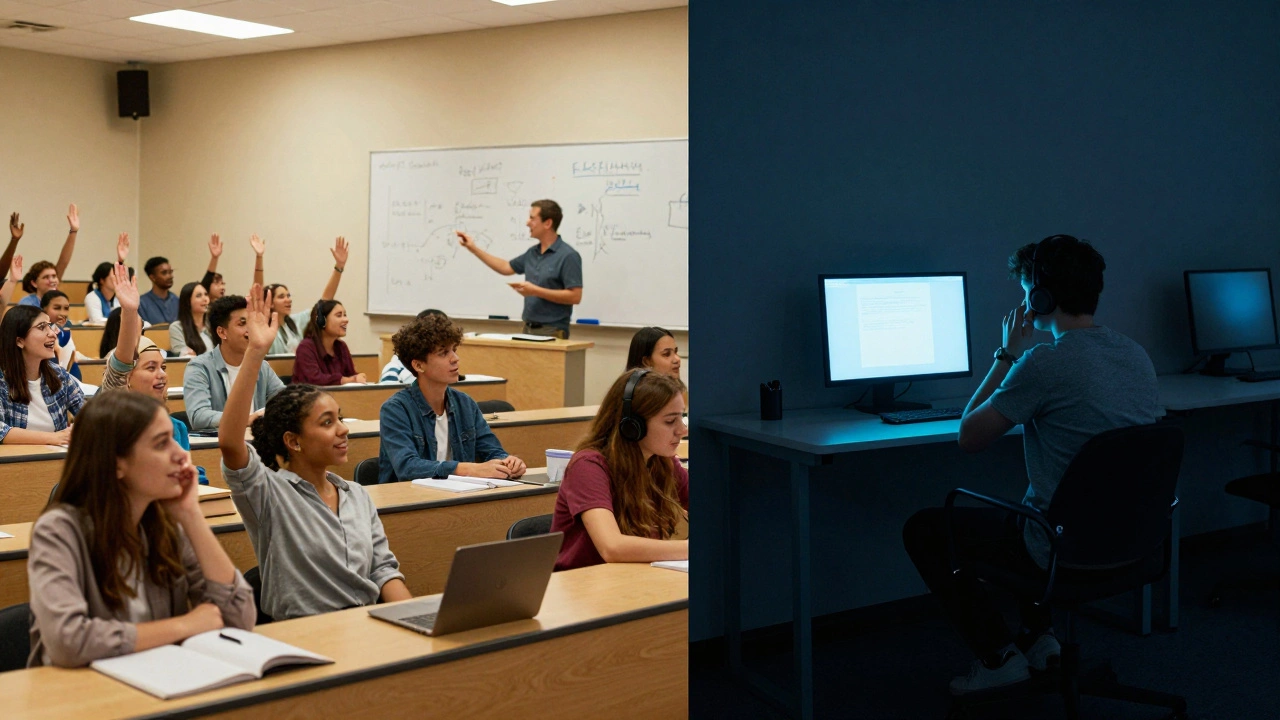
However, this freedom comes with a heavy price tag: self-discipline. Without the external structure of a physical classroom, procrastination becomes your biggest enemy. Many students struggle with "Zoom fatigue" or simply lose motivation when there’s no peer pressure to show up. Traditional classrooms provide a built-in accountability system. Your professor sees you; your classmates see you. In the digital void, it’s easy to disappear for weeks without anyone noticing until it’s too late. If you aren’t naturally organized, the flexibility of online learning can quickly turn into chaos.
Engagement and Interaction: Connection vs. Isolation
Learning is inherently social. Humans have taught each other around fires, in town squares, and in lecture halls for millennia because interaction sparks understanding. When you raise your hand in a physical class, you get immediate feedback. You can read the room, gauge confusion, and engage in spontaneous debates. These micro-interactions build community and deepen comprehension.
In a virtual environment, these nuances are often lost. Video calls can feel stiff, and chat boxes rarely replicate the energy of a lively discussion. Students frequently report feeling isolated or disconnected from their peers and instructors. This lack of social presence can impact mental health and retention rates. A study published in the *Journal of Educational Psychology* highlighted that students in purely online environments reported lower levels of belonging compared to those in face-to-face settings.
That said, technology has evolved to bridge some of this gap. Interactive platforms now offer breakout rooms, real-time polling, and collaborative whiteboards. Discussion forums, when moderated effectively, can allow shy students who might never speak up in person to contribute meaningfully. Additionally, online learning democratizes access to experts. You don’t need to fly to Cambridge to hear a renowned historian speak; you can join their webinar from your living room. While the connection may not feel as warm, the breadth of access is unparalleled.
Cost and Accessibility: Savings vs. Hidden Fees
Let’s talk money. One of the strongest arguments for digital education is cost. Traditional campuses require tuition, housing, meal plans, transportation, and expensive textbooks. Online programs often eliminate many of these expenses. You save on rent near campus, gas money, and sometimes even tuition if institutions offer discounts for digital-only degrees. For working adults, this means they can continue earning while they learn, avoiding the debt trap that plagues many traditional graduates.
However, the savings aren’t always straightforward. High-quality online programs require robust internet connections, reliable computers, and sometimes specialized software. Not everyone has access to high-speed broadband, creating a "digital divide" that disproportionately affects low-income families and rural communities. Furthermore, while textbooks might be cheaper or free, subscription fees for learning management systems or proctoring services can add up. It’s crucial to look beyond the sticker price and calculate the total cost of ownership for your education.
The Hybrid Model: Getting the Best of Both Worlds
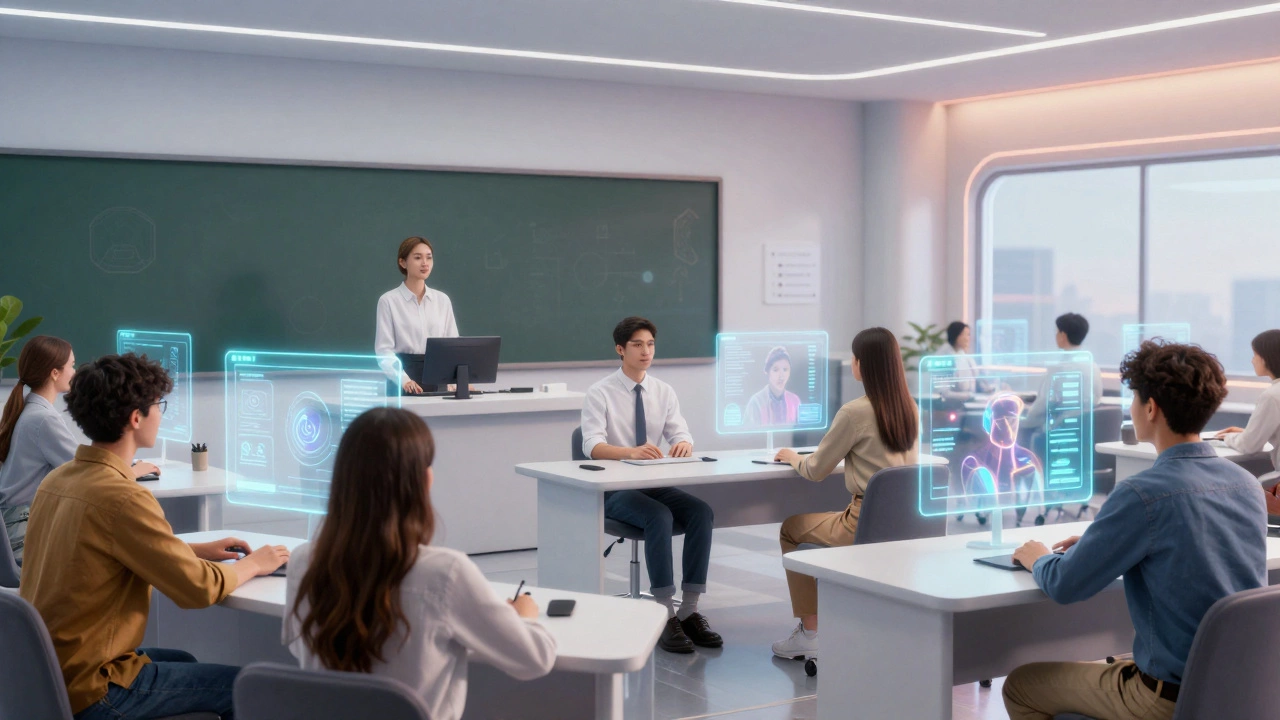
If you’re torn between the flexibility of online learning and the engagement of face-to-face instruction, you’re not alone. This tension has given rise to Hybrid learning, also known as blended learning, which combines online digital media with traditional classroom methods. In this model, students might attend lectures online but come together for labs, seminars, or group projects in person.
This approach is gaining traction because it addresses the weaknesses of both pure models. It offers the scheduling flexibility of digital coursework while preserving the human connection essential for deep learning. Universities like Arizona State and Southern New Hampshire University have successfully scaled hybrid programs, showing that retention and satisfaction rates can improve when students have choice and variety in how they engage with material.
| Feature | Traditional Classroom | Fully Online | Hybrid/Blended |
|---|---|---|---|
| Schedule Flexibility | Low (Fixed times) | High (Self-paced options) | Moderate (Mixed schedule) |
| Social Interaction | High (Face-to-face) | Low to Moderate (Virtual) | Medium (Combined) |
| Cost Efficiency | Lower (Housing, transport costs) | Higher (Saves on commute/housing) | Moderate |
| Self-Discipline Required | Low (External structure) | Very High | Moderate |
| Hands-On Practice | Excellent (Labs, studios) | Limited (Simulations only) | Good (In-person labs) |
Subject Matter Matters: Not All Topics Are Equal
Whether online learning is "better" or "worse" often depends on what you’re studying. If you’re learning coding, digital marketing, or history, the medium matters less. These subjects rely heavily on information consumption, critical thinking, and independent practice-all of which translate well to screens. Coding bootcamps, for instance, thrive online because the output (working code) is easily verifiable regardless of location.
Conversely, fields requiring tactile skills or complex interpersonal dynamics struggle in purely virtual formats. Nursing students need to practice injections on patients. Medical students must perform surgeries. Theater majors need stage space. While VR simulations are improving, they cannot yet replace the sensory experience of physical practice. If your goal is to become a surgeon, a chef, or a physical therapist, online learning should be supplementary, not primary. Always evaluate the curriculum: does it include adequate hands-on components, or are you relying solely on theory?
Employer Perception: The Credential Question
A common concern among prospective students is how employers view online degrees. Ten years ago, there was a stigma attached to non-traditional credentials. Today, that bias has largely evaporated. Major companies like Google, Amazon, and IBM prioritize skills and portfolios over where you learned them. Accreditation is the key metric here. As long as your online program is regionally accredited by a recognized body, employers generally treat it the same as a campus-based degree.
In fact, completing an online program can signal valuable soft skills to recruiters. It demonstrates self-motivation, time management, and digital literacy-traits highly prized in today’s remote-friendly workforce. However, networking opportunities may still lag behind traditional universities. Campus alumni networks are powerful, and building those relationships requires intentional effort in an online setting. Joining LinkedIn groups, attending virtual career fairs, and reaching out to professors via email can help compensate for the lack of hallway conversations.
How to Choose the Right Path for You
So, is online learning better or worse? It’s neither. It’s different. To decide if it’s right for you, ask yourself these questions:
- What is my learning style? Do I thrive with structure and routine, or do I prefer autonomy and flexibility?
- What are my constraints? Do I have limited time, budget, or geographic mobility?
- What am I studying? Does the subject require hands-on practice or extensive collaboration?
- Am I self-disciplined? Can I stick to a schedule without external supervision?
If you answered yes to needing flexibility and autonomy, and your field allows for theoretical learning, online education could be a game-changer. If you crave social interaction, need strict deadlines to stay on track, or are entering a hands-on profession, a traditional or hybrid model might serve you better.
The best educators aren’t defined by the platform they use, but by their ability to connect with students and facilitate growth. Whether that happens through a chalkboard or a cloud server is secondary to the quality of instruction and your own commitment to learning. In 2026, the lines between physical and digital education are blurring. The smartest move isn’t to pick a side, but to choose the tool that aligns with your goals, lifestyle, and learning preferences.
Is an online degree respected by employers in 2026?
Yes, provided the institution is properly accredited. Most major employers now focus on skills and portfolio rather than the delivery method of education. Online degrees from reputable universities carry the same weight as campus-based ones.
Which subjects are best suited for online learning?
Subjects that rely on theoretical knowledge, analysis, and digital tools work best. Examples include computer science, business administration, liberal arts, psychology, and digital marketing. Hands-on fields like nursing, engineering, and performing arts often require hybrid or in-person components.
How can I stay motivated in an online course?
Create a dedicated study space, set a consistent schedule, and use productivity tools like calendars and task managers. Engage actively in discussion forums and form virtual study groups with peers to maintain social accountability.
Are online courses cheaper than traditional ones?
Often, yes. While tuition may be similar, you save significantly on housing, commuting, meals, and physical textbooks. However, factor in costs for reliable internet, hardware, and any required software subscriptions.
What is the difference between synchronous and asynchronous learning?
Synchronous learning happens in real-time, such as live video lectures or webinars where you interact with the instructor and peers simultaneously. Asynchronous learning allows you to access pre-recorded materials and complete assignments on your own schedule within set deadlines.