





Exam Performance Simulator
Adjust the sliders below to see how different strategies affect your predicted exam score and retention.
Memory Retention
Recall Speed
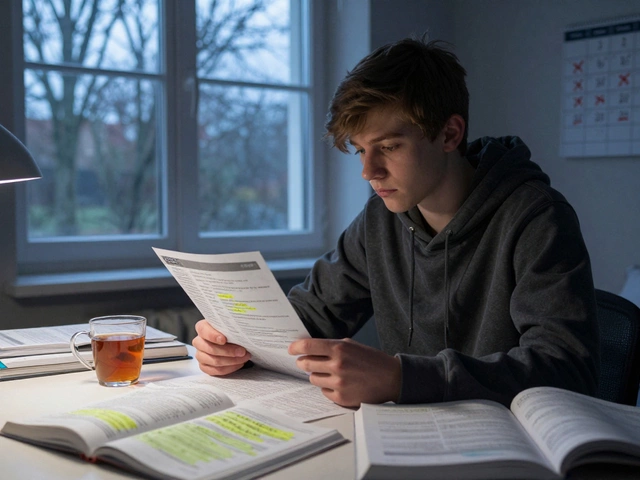
You’ve got the test tomorrow morning. It’s 11 PM. Do you power through another three hours of flashcards until your eyes burn, or do you shut the laptop and crash? This isn’t just a choice between being tired or being unprepared; it’s a battle between two different types of brain function. Most students instinctively choose to cram, thinking more input equals more output. But neuroscience tells a different story. Your brain doesn’t just store facts like a hard drive; it processes them. And processing requires downtime.
Here is the reality check: if you have to choose one thing tonight, pick sleep. Not because studying is useless, but because an exhausted brain fails to retrieve what it already knows. You might know the answer, but your recall speed will tank. Let’s break down why pulling an all-nighter usually hurts you more than it helps, and how to actually use sleep as a study tool.
The Science of Memory Consolidation
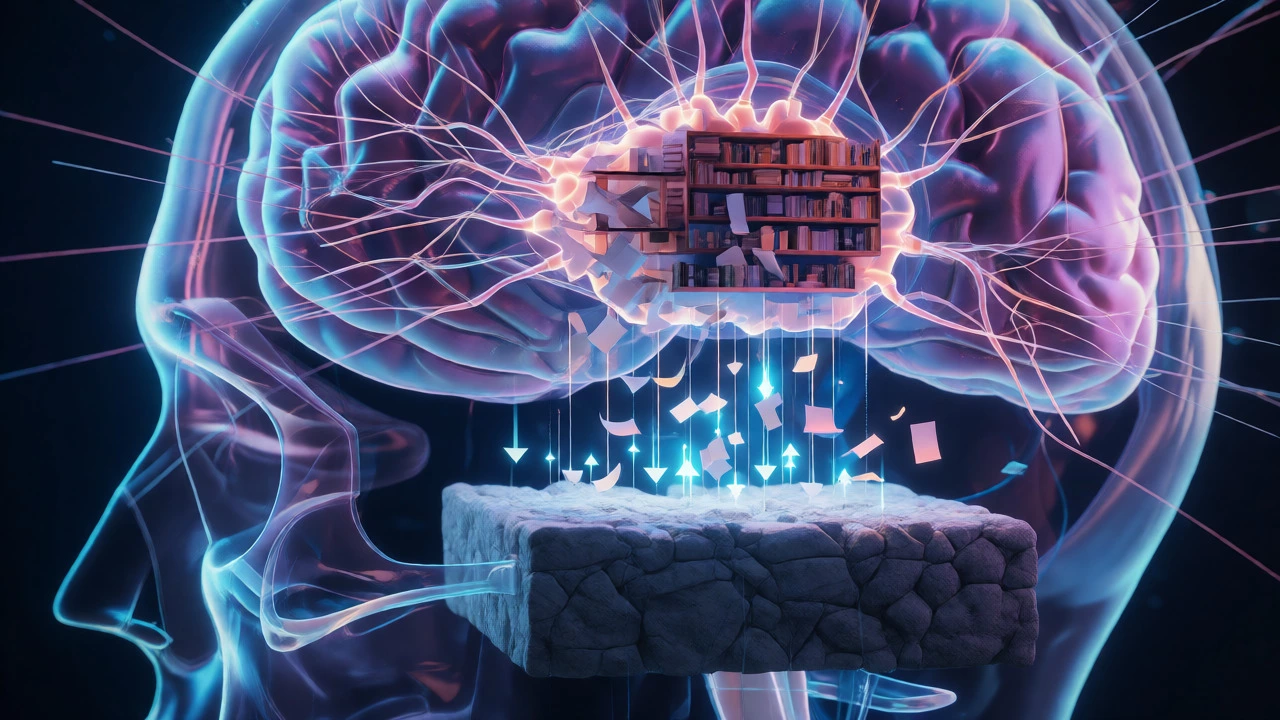
Think of your brain like a computer that needs defragmenting. When you learn something new during the day, it sits in a temporary holding area called the hippocampus. This space is small and fragile. If you keep adding new information without letting the system rest, you risk overwriting old data or simply failing to save anything at all.
Sleep is the process that moves this temporary information into long-term storage in the neocortex. This transfer happens primarily during deep sleep stages, specifically slow-wave sleep. During this phase, your brain replays the day’s learning events at high speed, strengthening the neural connections associated with those facts. Without this replay, the memories remain weak and easily lost.
If you skip sleep, you are essentially hitting "cancel" on the save button. You spent six hours reading, but you only saved about 40% of it. The other 60% evaporates because the consolidation process never ran. Studies from Harvard Medical School have shown that students who slept after studying performed significantly better on tests of factual recall compared to those who stayed awake for the same duration post-study. The difference wasn’t marginal; it was substantial enough to change letter grades.
Why Cramming Feels Effective (But Isn’t)
So why does cramming feel so productive? Because it creates a sense of familiarity. When you read a page five times in an hour, it starts to look familiar. You recognize the words. You think, "I know this." But recognition is not recall. On an exam, you don’t get multiple-choice options pointing to the right answer; you have to generate it from scratch.
Cramming relies on short-term working memory. This buffer holds about seven items at a time. Once you overload it, new information pushes out old information. By the time you reach the last chapter of your textbook, you’ve likely forgotten the first three chapters unless you actively reviewed them. This is known as the serial position effect-you remember the beginning and the end, but the middle gets fuzzy.
| Feature | Cramming (Massed Practice) | Spaced Study + Sleep |
|---|---|---|
| Memory Type Used | Short-term / Working Memory | Long-term Declarative Memory |
| Retention After 1 Week | Low (approx. 20-30%) | High (approx. 70-80%) |
| Recall Speed | Slow due to fatigue | Fast due to strong neural pathways |
| Error Rate | Higher (careless mistakes) | Lower (better focus) |
| Stress Level | Very High (cortisol spike) | Moderate (managed anxiety) |
The table above highlights a critical point: cramming boosts immediate performance slightly because the material is fresh in your working memory. But for an exam happening the next day, where you need to synthesize complex ideas, that shallow familiarity crumbles under pressure.
The Cost of Cognitive Fatigue
Beyond memory, sleep deprivation wrecks your executive function. This is the part of your brain responsible for logic, planning, and error checking. Have you ever tried to solve a math problem when you’re dead tired? You make silly arithmetic errors. You misread the question. You stare at a word you know perfectly well, but it looks like gibberish.
Research indicates that after 24 hours without sleep, your cognitive impairment is equivalent to having a blood alcohol content of 0.10%. That is legally drunk in most countries, including Ireland. Would you take an exam while drunk? Probably not. Yet, many students walk into finals feeling exactly that impaired.
When you are fatigued, your prefrontal cortex-the CEO of your brain-goes offline. You lose the ability to prioritize tasks or manage time effectively during the test. You might spend twenty minutes stuck on one difficult question, panicking, instead of skipping it and coming back later. These aren’t knowledge gaps; they are operational failures caused by lack of rest.
How to Use Sleep as a Study Tool
Okay, so you shouldn’t stay up all night. Does that mean you stop studying early? No. It means you study smarter by leveraging sleep cycles. Here is a practical strategy for the night before an exam:
- Stop heavy learning 2 hours before bed. Give your brain time to wind down. Blue light from screens suppresses melatonin, making it harder to fall asleep. Put the phone away.
- Review lightly. Spend 15 minutes skimming your summary notes. Don’t try to learn new concepts now. Just activate the relevant networks.
- Prioritize Deep Sleep. Aim for at least 6 hours, ideally 7-8. Deep sleep happens mostly in the first half of the night. If you go to bed at 3 AM, you miss the bulk of this crucial window.
- Nap strategically. If you really didn’t study enough, a 90-minute nap the next afternoon can help reset your attention span. Avoid naps longer than 20 minutes earlier in the day, as they can cause grogginess.
This approach treats sleep as an active part of the curriculum, not a pause button. You are literally letting your brain file the paperwork while you dream.

What About Last-Minute Panic Studying?
Is there ever a case for cramming? Yes, but with caveats. If you have absolutely zero prior exposure to the material, some cramming is better than none. However, limit it to high-yield topics. Focus on definitions, key formulas, and broad themes rather than intricate details.
Use the "Pareto Principle" here: 80% of the exam value often comes from 20% of the core concepts. Identify those core concepts and memorize them. Then, set a hard alarm. Do not let the session bleed into your sleep time. If you must choose between knowing one extra detail and getting an extra hour of sleep, choose the sleep. The clarity you gain from rest will help you reason through questions even if you don’t know the exact fact.
Also, consider caffeine carefully. A cup of coffee might help you wake up, but too much increases anxiety and jitters, which mimics the symptoms of panic. Stick to your usual amount. Don’t experiment with new stimulants on exam day.
Common Myths About Exam Night
Let’s debunk a few things people say around the library tables:
- "My brain works better at night." Unless you have a diagnosed circadian rhythm disorder, your biological clock favors alertness during daylight hours. Exams are usually in the morning. Training yourself to be sharp at midnight doesn’t help when the test starts at 9 AM.
- "I’ll catch up on sleep after the exam." Recovery sleep takes days. One bad night disrupts your hormonal balance and immune system for weeks. Chronic sleep debt accumulates, affecting your future study sessions.
- "Energy drinks are healthy." They are sugar bombs with high doses of caffeine. They provide a quick spike followed by a crash. Water and a balanced snack are better for sustained energy.
Ultimately, the goal of an exam is to demonstrate what you know. You cannot demonstrate what you haven’t consolidated, and you cannot think clearly if you are running on fumes. Treat your brain like a high-performance engine. You wouldn’t run a car race on empty. Don’t run your exam on no sleep.
Is 4 hours of sleep enough before an exam?
No, 4 hours is generally insufficient for optimal performance. While you may survive the test, your cognitive abilities, particularly memory retrieval and logical reasoning, will be significantly impaired. Aim for at least 6 hours to allow for basic sleep cycles, though 7-8 hours is ideal for full recovery and consolidation.
Does drinking coffee help if I am sleep-deprived?
Coffee can mask the feeling of tiredness and improve alertness temporarily, but it does not restore cognitive function or memory consolidation. It may also increase anxiety and jitteriness, which can negatively impact fine motor skills and focus during an exam. Use it cautiously and stick to your normal dosage.
Should I review my notes right before sleeping?
A brief, low-stress review of key points immediately before bed can be beneficial. This primes the brain for consolidation during sleep. However, avoid intense studying or learning new complex material right before bed, as this can raise cortisol levels and make it harder to fall asleep.
Can napping replace a full night's sleep?
Naps are useful supplements but cannot fully replace nighttime sleep. A 20-minute power nap can boost alertness, and a 90-minute nap can cover a full sleep cycle, aiding memory. However, naps do not provide the extended duration needed for complete physiological and psychological restoration that a full night’s sleep offers.
What is the best time to stop studying the night before?
Stop intensive studying at least 1-2 hours before your planned bedtime. This allows your brain to decompress and reduces blue light exposure from screens. Use this time for relaxation techniques, light stretching, or preparing your materials for the next day to reduce morning stress.